








Enterprise Identity and Access Management is the discipline of designing, engineering, and operating the controls that govern who can access what, when, and under what conditions, across workforce, customer, and machine identities.
It spans Identity Governance and Administration (IGA), Privileged Access Management (PAM), Single Sign-On (SSO), Multi-Factor Authentication (MFA), conditional access, and Joiner-Mover-Leaver lifecycle automation, mapped to NIST 800-53 AC and IA control families and NIST SP 800-207 Zero Trust Architecture.
BluEnt is an enterprise IAM engineering partner specializing in Microsoft Entra ID and Okta. Our team designs the identity architecture, configures the tenant, engineers the JML lifecycle, and operationalizes the conditional access policies that anchor a Zero Trust program.
Engagements scope to your platform of choice. Most enterprises run Entra ID, Okta, or both side-by-side (Entra ID for the Microsoft estate, Okta for SaaS-first workforce or customer identity).
Every engagement delivers four artifacts: a current-state identity architecture map covering workforce, customer, and machine identities; an engineered JML lifecycle from HRIS through provisioning and deprovisioning; conditional access policies tuned to your risk model and regulated workloads; and quarterly access reviews automated through your IGA tool.
BluEnt is the implementation and engineering partner for Entra ID and Okta. Privileged Access Management (CyberArk, BeyondTrust) and secrets management (HashiCorp Vault) are delivered as supporting capabilities where the engagement requires. We do not provide threat detection, threat hunting, or incident response; those remain with your SOC and IR partner.
Trusted By
Organizations That Trust BluEnt With Their Data

- Gift Card Management, Reporting, Data Integration, Analytics Solutions, Book Keeping NetSuite Reporting, NetSuite Records Maintenance, Income Statement, Audit Support

- Gift Card Management, Reporting, Data Integration, Analytics Solutions

- Invoicing, AP Reports, Sales Data Analytics

- MuleSoft Integration, Analytics & Dashboards - [Tableau, MS SQL Server, SSIS]

- ERP Onboarding and Implementation, Data Migration, Custom Report Building, Audit Support and Finalization, Draft Financials Statements, Bidding Website Development

- Data Analytics and Dashboards

- V-Bucks Gift Card Sales Analytics, Reconciliation, Financial Tracking and Reporting
- Web Asset Creation

- HubSpot Campaign Management, Workflow Automation, UX/UI Development, Mobile App Development, Application Development

- Data Analytics and Dashboards, Website Development, Website Maintenance, Application Development, HubSpot Automation and Integration, Asana Management

- SEO, Website UX/UI Development, Data Management, Third-Party Integration, Website Maintenance

- Shopify Website Development, Klaviyo Email Marketing, Email Campaign Setup, Third-Party Shopify App Integration
- Website and SEO Audit, Shopify Website Maintenance, SEO and Analytics

- Website Design and Development, Website Maintenance

- Website Design and Development, Website Maintenance

- Website Design and Development, Website Maintenance, SEO and Analytics
Is This Your Situation?
BluEnt is the right IAM partner if any of the following describe your current state. Identity failures are the most common audit findings in regulated environments and are increasingly the most expensive to remediate retroactively.
-
Joiner-Mover-Leaver workflows leak entitlements: leavers retain access for days or weeks; movers accumulate access without removal; joiners get manual ad-hoc grants.
-
Privileged accounts are not vaulted, are shared between admins, or have static passwords that have not been rotated in months.
-
Multi-Factor Authentication coverage is uneven across applications and bypassed by legacy authentication protocols still enabled in your tenant.
-
Conditional access policies were configured by different teams over time, contain conflicting rules, and produce friction without measurably reducing risk.
-
An auditor requested evidence of quarterly access reviews and segregation of duties enforcement, and you cannot produce a defensible record.
-
Customer-facing applications use bespoke authentication, lack MFA, and have no consistent risk-based step-up logic.
If two or more of these apply, this page is the right starting point. For the cloud control plane that depends on identity, see Cloud Security Services. For the audit-readiness side of identity, see Cybersecurity Compliance Services.
What Makes BluEnt Different
IAM partners come in three shapes: tool resellers (who deploy Okta or Entra ID without operating model), pure-play consultancies (who write strategy but do not configure tenants), and offshore body shops (who staff but do not architect). BluEnt occupies the engineering and governance gap between them.
| Without an Engineering-Led IAM Partner | With BluEnt |
|---|---|
|
Tool deployed, lifecycle still manual. |
JML lifecycle automated end-to-end from HRIS to every system. |
|
Static admin passwords shared in a spreadsheet. |
PAM with vaulting, JIT elevation, session recording, and credential rotation. |
|
MFA enabled but bypassed by legacy auth. |
Legacy authentication blocked; MFA enforced with risk-based step-up. |
|
RBAC sprawl with hundreds of role definitions. |
RBAC consolidated, ABAC introduced for context-sensitive decisions, attribute sources curated. |
|
Access reviews handled by an annual email blast. |
Continuous access reviews, attestation workflows, segregation-of-duties enforcement. |
|
Different identity stores for workforce, customer, machine. |
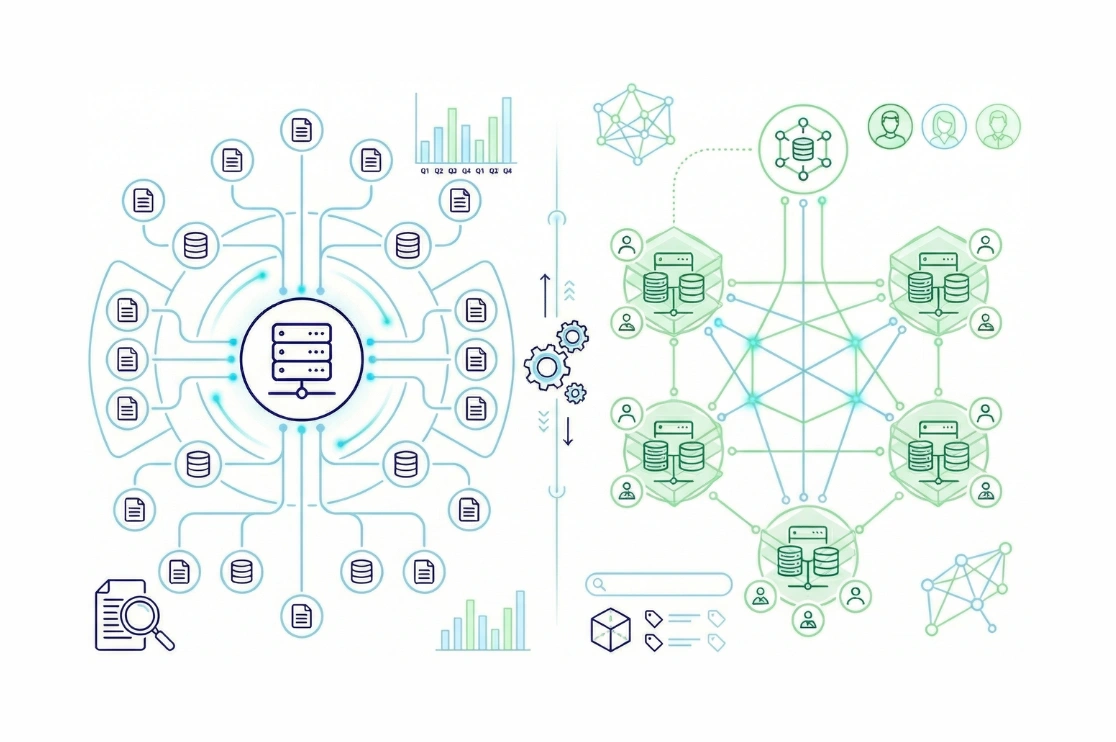
Federated architecture with consistent policy, audit trail, and lifecycle across all identity types. |
For the cloud-platform identity layer, see Cloud Security Services. For audit evidence on identity controls, see Cybersecurity Compliance Services.
Identity Controls Catalog
BluEnt engineers’ identity on Microsoft Entra ID and Okta as primary platforms, with supporting tooling for PAM and secrets management, where the engagement requires.
The catalog below names the control area, the NIST 800-53 control IDs, the engineering work BluEnt performs, and the tooling commonly used. Mapping is consistent so evidence collected once supports SOC 2, HIPAA, GDPR, and PCI DSS audits in parallel.
| Control Family | Control IDs | What BluEnt Engineers | Tooling Examples |
|---|---|---|---|
| Workforce Identity and SSO | AC-2, IA-2, IA-5 | Single identity store for workforce. Federation to all SaaS and on-prem applications via SAML, OIDC, or SCIM. Just-in-time provisioning. Group-based access. Birthright entitlements from HRIS. | Microsoft Entra ID, Okta Workforce. |
| Customer Identity (CIAM) | AC-2, IA-2, IA-8, SC-8 | Customer identity store with progressive profiling, social login, MFA, risk-based step-up, account linking. GDPR consent management integration. Bot detection and account takeover defense. | Okta Customer Identity Cloud, Microsoft Entra External ID. |
| Privileged Access Management (Supporting) | AC-6, AU-2, AU-12, IA-5 | Vaulting of all privileged credentials. Just-In-Time elevation. Session recording with searchable transcripts. Approval workflow for high-risk operations. Credential rotation on a defined schedule. Delivered as a supporting capability alongside the Entra ID or Okta core. | CyberArk Privileged Cloud, BeyondTrust, HashiCorp Vault. |
| Multi-Factor Authentication | IA-2(1), IA-2(2), IA-2(11) | MFA enforced for all interactive logins. Phishing-resistant MFA (FIDO2, WebAuthn) for administrators. Number matching against MFA fatigue attacks. Legacy authentication protocols blocked. | Entra ID MFA, Okta Verify, YubiKey, Microsoft Authenticator with number matching. |
| Conditional Access Policy Engineering | AC-3, AC-4, AC-17 | Risk-based access decisions: device compliance, location, application sensitivity, user risk score, sign-in risk. Conditional access policy library, version controlled, with explicit business justification. | Entra ID Conditional Access, Okta Adaptive MFA. |
| Identity Governance and Administration (IGA) | AC-2, AC-5, AC-6(7) | Quarterly access reviews driven from HRIS triggers. Segregation of duties enforcement at provisioning. Toxic combination detection. Attestation campaigns with manager sign-off. Automated revocation on review failure. | Entra ID Governance, Okta Identity Governance, with SailPoint or Saviynt where the engagement requires. |
| Joiner-Mover-Leaver Lifecycle Automation | AC-2, AC-2(3), AC-2(11) | End-to-end automation from HRIS event to provisioning, role change, and deprovisioning across all systems within a defined SLA. Active session revocation on leaver. PAM credential rotation on admin departure. | Workday or SuccessFactors as identity source of truth, Entra ID Provisioning, Okta Lifecycle Management, custom SCIM connectors. |
| Machine and Service Identity | AC-3, IA-9, SC-12, SC-17 | Service identity using cloud-native managed identities where possible. Workload PKI with automated certificate rotation. Secrets management for application credentials. mTLS in service mesh. | Azure Managed Identity, AWS IAM Roles, GCP Workload Identity, HashiCorp Vault for secrets, Istio mTLS. |
For cloud-specific identity (CSPM, CIEM), see Cloud Security Services. For audit evidence on identity controls, see Cybersecurity Compliance Services.
How to Choose a Cybersecurity Partner
Procurement teams and CISOs ask the same six questions of IAM partners. The answers below are the criteria BluEnt is built to meet.

Deep Entra ID and Okta expertise
BluEnt’s primary IAM expertise is Microsoft Entra ID and Okta — the two platforms that anchor most enterprise identity stacks today. We engineer both individually and side-by-side (Entra ID for the Microsoft estate, Okta for SaaS-first workforce or customer identity). Supporting tooling (CyberArk, BeyondTrust, HashiCorp Vault, SailPoint) is delivered where the engagement requires.

Lifecycle automation, not just SSO
SSO is table stakes. The harder work is Joiner-Mover-Leaver automation from HRIS to every system, with attestation workflows and segregation-of-duties enforcement. Look for SCIM connector experience and IGA tool depth, not just SSO.

PAM as a discipline, not just a tool
Privileged Access Management is operating model first, tool second. The right partner designs the privileged-access process (request, approval, JIT, session recording, revocation) before configuring CyberArk or BeyondTrust.

Conditional access as code, not console clicks
Conditional access policies sprawl when configured by hand over time. The right partner version-controls policies, documents business justification, and reviews policy effectiveness against actual risk reduction quarterly.

Customer identity (CIAM) as a separate discipline
Workforce identity and customer identity have different requirements. CIAM needs progressive profiling, social login, account takeover defense, and GDPR consent. Look for partners with explicit CIAM experience, not workforce-only identity.

Audit defensibility built in
Identity is where every audit (SOC 2, HIPAA, GDPR, PCI DSS) starts. The right partner builds audit evidence into the identity platform itself, mapped to NIST 800-53 AC and IA controls.
Score your cybersecurity program in under seven minutes
The free Cybersecurity Maturity Assessment scores your program across six domains aligned to NIST CSF 2.0 and produces a prioritized remediation roadmap. No sales call required to receive the report.
How We Deliver: A Five-Stage Methodology
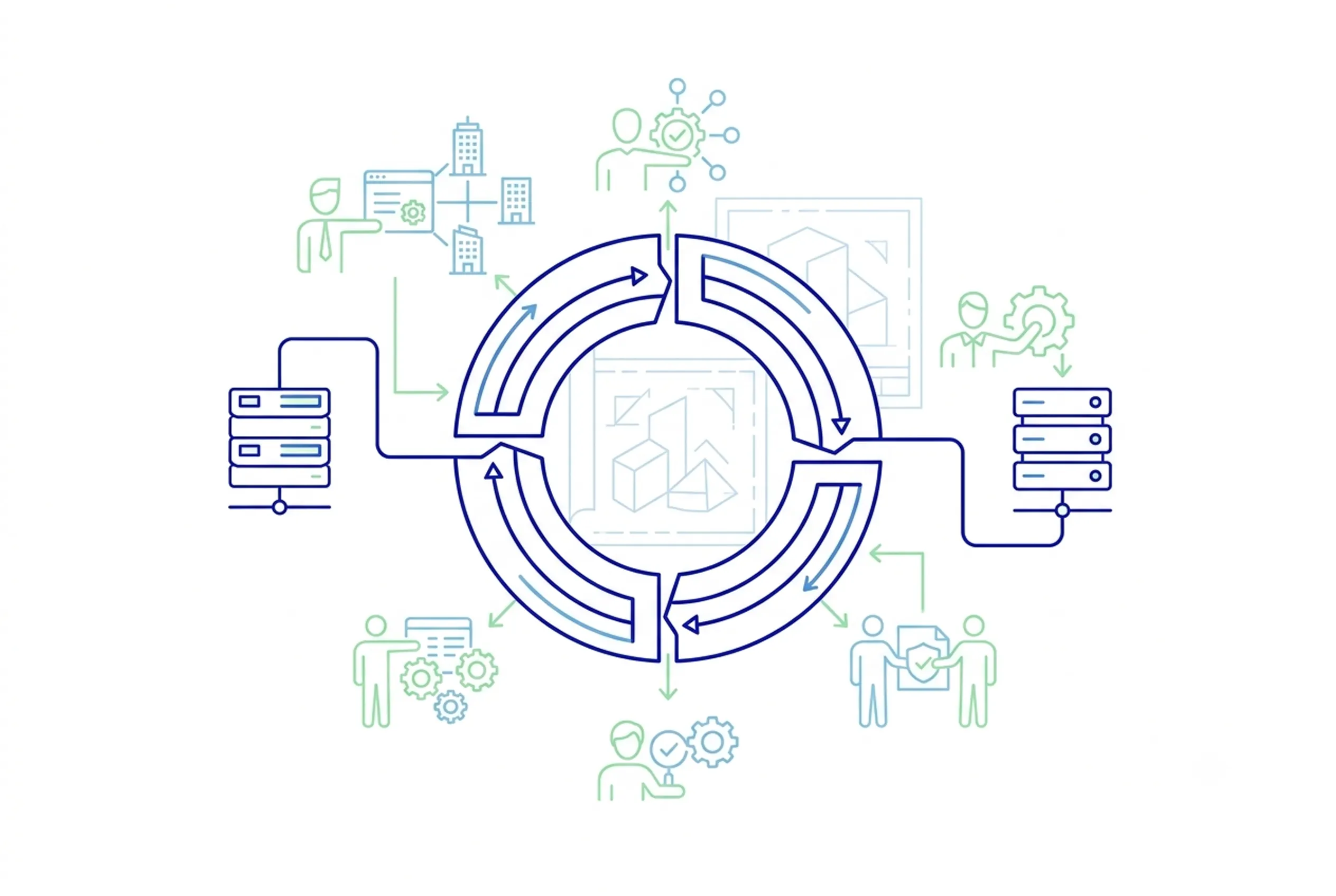
Every BluEnt IAM engagement follows the same five-stage methodology, scaled to the size of the workforce, the breadth of customer-facing applications, and the regulatory profile.
Stage 1: Identity Posture Assessment
We inventory identity stores, applications, federation patterns, MFA coverage, conditional access policies, PAM scope, and JML processes. Output is a current-state map and a control gap register against NIST 800-53 AC and IA families.
Stage 2: Identity Architecture Design
We design the target architecture: workforce identity store, customer identity store, PAM strategy, MFA enforcement, conditional access policy library, IGA process, and JML automation. Architecture is documented as code where possible.
Stage 3: Identity Engineering and Migration
We engineer the controls into the platforms: SSO rollout to all applications, MFA enforcement, conditional access policy deployment, PAM vault setup with credential migration, IGA tool configuration, JML connectors from HRIS to every system.
Stage 4: Identity Operations
BluEnt owns continuous identity operations: access reviews, attestation campaigns, conditional access policy reviews, PAM vault operations. Privileged-session telemetry is forwarded to your chosen SOC and SIEM for 24×7 monitoring; BluEnt does not provide the detection or response function itself.
Stage 5: Quarterly Identity Effectiveness Review
Each quarter we run an identity effectiveness review: orphaned accounts, JML SLA performance, conditional access policy effectiveness, PAM utilization, MFA coverage drift. Findings drive the next quarter’s engineering backlog.
For the cloud control plane this identity layer underpins, see Cloud Security Services. For audit evidence on identity controls, see Cybersecurity Compliance Services.
Capabilities at a Glance
Eight IAM capability areas frame the practice. Microsoft Entra ID and Okta are the primary platforms; supporting tooling (PAM, IGA, secrets management) is delivered where the engagement requires.

Workforce Identity and SSO Engineering
Microsoft Entra ID and Okta Workforce as primary platforms. Federation, JIT provisioning, group-based access, birthright entitlements from HRIS.

Customer Identity (CIAM) Engineering
Okta Customer Identity Cloud and Microsoft Entra External ID. Progressive profiling, MFA, risk-based step-up, account takeover defense, GDPR consent integration.

Privileged Access Management (Supporting)
CyberArk, BeyondTrust, or HashiCorp Vault delivered alongside the Entra ID or Okta core. Vaulting, JIT elevation, session recording, approval workflow, credential rotation.

Multi-Factor Authentication Strategy
Phishing-resistant MFA (FIDO2, WebAuthn) for admins, number matching against MFA fatigue, legacy auth blocked, MFA bypass detection.

Conditional Access Policy Engineering
Entra ID Conditional Access and Okta Adaptive MFA. Risk-based access decisions based on device compliance, location, application sensitivity, and user or sign-in risk.

Identity Governance and Administration
Entra ID Governance and Okta Identity Governance as primary. Quarterly access reviews, SoD enforcement, attestation campaigns, automated revocation. SailPoint or Saviynt where the engagement requires.

Joiner-Mover-Leaver Lifecycle Automation
End-to-end automation from HRIS to every system within defined SLA. Active session revocation on leaver. PAM credential rotation on admin departure.

Machine and Service Identity
Cloud-native managed identity (Azure Managed Identity, AWS IAM Roles, GCP Workload Identity). Workload PKI with automated certificate rotation. Secrets management via HashiCorp Vault. Service mesh mTLS.
For the cloud platforms these identity controls govern, see Cloud Security Services. For audit evidence, see Cybersecurity Compliance Services. For risk programs around vendor identity, see Risk Management.
Industries We Serve
BluEnt delivers IAM across four regulated verticals. Identity requirements look different in each because the underlying data, regulations, and operational constraints differ.

Architecture, Engineering, and Construction
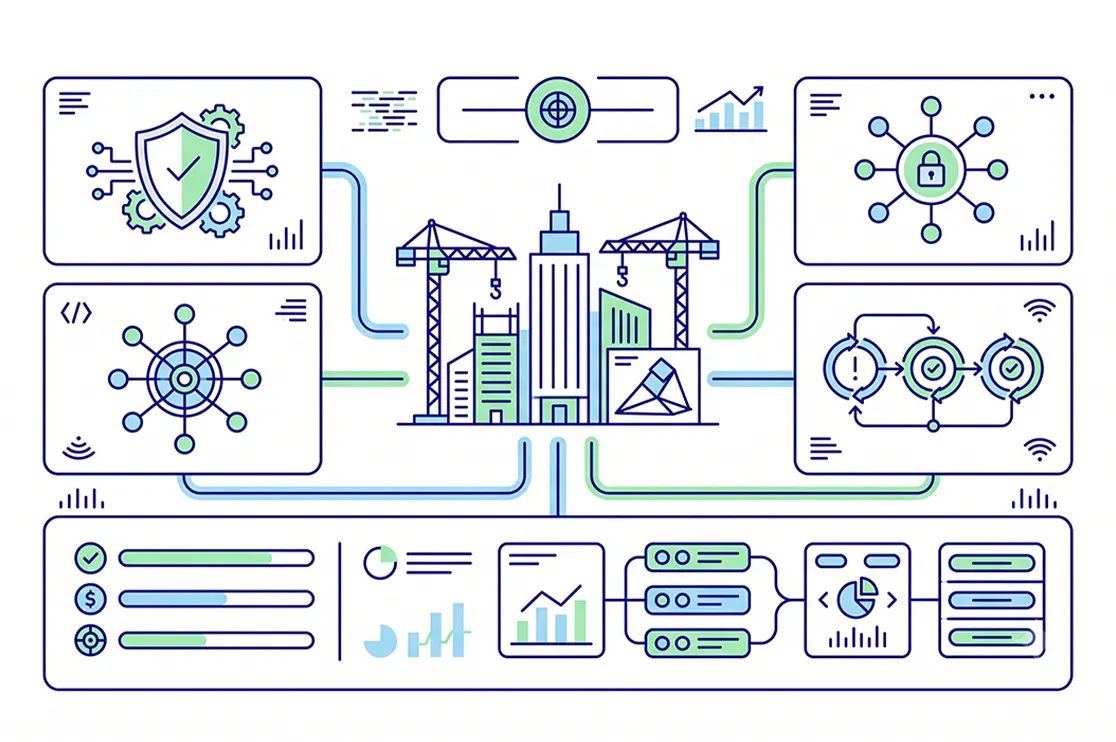
AEC firms run subcontractor populations that often outnumber internal staff, with identities provisioned and deprovisioned constantly across project lifecycles. FAR and DFARS require strict access controls on US federal projects. ISO 19650-5 governs information security on BIM platforms. BluEnt designs subcontractor identity governance with project-bound entitlements, automatic deprovisioning at project close, and supplier-portal hardening against payment fraud.

Healthcare and Life Sciences
Clinician identity churns rapidly with locum and rotational staff. Role assignments span clinical applications, research databases, and connected medical devices. HIPAA Security Rule 164.312(a)(1) requires unique user identification, automatic logoff, and encryption. BluEnt engineers identity governance with clinician-role templates, automatic deprovisioning at contract end, and access reviews aligned to HIPAA audit requirements.

E-Commerce and Retail
Customer identity volume drives architecture. Account takeover, credential stuffing, and bot attacks shape the CIAM strategy. PCI DSS v4.0 Requirement 8 mandates MFA for all access to the cardholder data environment, including service accounts. BluEnt unifies workforce identity (employees, store staff, partners) and customer identity, with risk-based step-up authentication and ATO defense.

Manufacturing and Industrial
OT operators, plant engineers, and IT engineers each have distinct identity requirements, often with separate identity stores that drift over time. NIS2 Directive elevates identity governance for essential entities. NIST SP 800-82 Rev. 3 covers ICS access. BluEnt federates OT and IT identity stores, designs role templates per plant function, and engineers JIT elevation for OT operations to satisfy NIS2 reporting timelines.
Vertical-specific compliance programs are detailed on Cybersecurity Compliance Services. For risk programs that include identity-related vendor risk, see Risk Management.
Cybersecurity Services Across Six Markets
BluEnt delivers identity programs across six markets, each with regulatory expectations that shape how identity, MFA, and access reviews are configured.

United States HIPAA Security Rule 164.312(a)(1) (unique user identification), NIST CSF 2.0 PR.AA, NIST SP 800-53 Rev. 5 AC and IA families, NIST SP 800-63B for digital identity guidelines, NY DFS 23 NYCRR 500.12 for MFA, FedRAMP IA controls.
United Kingdom UK GDPR Article 32 access controls, NCSC Cyber Assessment Framework B.2 Identity and access management, Cyber Essentials requirements for user access control, NHS DSPT identity standards.
Australia APRA CPS 234 Information Security Section 35 access management, ASD Essential Eight Restrict Administrative Privileges and Multi-Factor Authentication, ISM access control controls.
Canada PIPEDA security safeguards, Quebec Law 25 access logging, OSFI guideline B-13 access management section, CCCS Top 10 IT Security Action Use unique credentials and Apply MFA.
Netherlands and EU GDPR Article 32 access controls, NIS2 access management requirements, eIDAS 2.0 European Digital Identity Wallet, ENISA identity guidance, ISO 27001 Annex A 5.15 to 5.18 (access control).
Broader Europe NIS2 national transpositions, BSI IT-Grundschutz access controls, BSI C5 cloud identity requirements, SecNumCloud identity sovereignty rules, Italian NIS implementation.
For region-aware cloud identity, see Cloud Security Services. For region-specific compliance evidence, see Cybersecurity Compliance Services.
Make Identity the Most Defensible Layer in Your Program
Identity has moved from an IT housekeeping function to the foundation of Zero Trust architecture. The enterprises that get it right treat identity as one program (workforce, customer, machine), automate the lifecycle end-to-end, and engineer audit evidence into the identity platform itself. The result is fewer audit findings, lower password-reset volume, and a security program that survives the next breach disclosure.
BluEnt’s primary IAM expertise is Microsoft Entra ID and Okta. PAM (CyberArk, BeyondTrust), secrets management (HashiCorp Vault), and IGA (SailPoint, Saviynt) are delivered as supporting capabilities where the engagement requires.
Whether you are consolidating identity stores, rolling out PAM, deploying conditional access, or building a customer identity platform, our team works alongside yours from day one. We do not deliver threat detection, threat hunting, or incident response; those remain with your SOC and IR partner.
Explore the IT Security and Cybersecurity Practice
Frequently Asked Questions
What is the difference between IAM, PAM, and IGA?
Identity and Access Management (IAM) is the umbrella discipline of authenticating and authorizing users to applications. Privileged Access Management (PAM) is a specialized layer for highly sensitive accounts (administrators, service accounts, vendor access) with vaulting, session recording, and JIT elevation. Identity Governance and Administration (IGA) is the lifecycle and audit layer: provisioning, access reviews, segregation of duties, attestation. A complete program needs all three.
What is RBAC versus ABAC, and which should I use?
Role-Based Access Control assigns permissions to roles and users to roles. Attribute-Based Access Control evaluates context (user attributes, resource attributes, environmental attributes) at the time of access. Most enterprises use RBAC as the foundation and add ABAC for context-sensitive decisions (e.g., contractor access during business hours from a managed device). RBAC alone leads to role explosion at scale.
How do you reduce role explosion?
Role explosion happens when every exception spawns a new role. The fix is layered: birthright entitlements from HRIS attributes, role mining to consolidate similar roles, ABAC for context-sensitive cases, and exception workflows with explicit expiry. BluEnt typically reduces role count by half within ninety days while improving access accuracy.
What does Joiner-Mover-Leaver automation actually look like?
An HRIS event (hire, role change, termination) triggers an automated workflow that provisions, modifies, or deprovisions identity and entitlements across every system within a defined SLA (typically same-day for hires, four-hour for terminations of privileged users). Manager attestation captures change moments. PAM credentials rotate on admin departure. Audit trail is preserved end-to-end.
Is MFA enough, or do we need passwordless?
MFA is necessary but not sufficient. SMS-based MFA is vulnerable to SIM swapping. Push-based MFA is vulnerable to MFA fatigue. Phishing-resistant MFA (FIDO2, WebAuthn, hardware security keys) is the current standard for administrators and high-risk users. Passwordless using FIDO2 reduces the password attack surface entirely. BluEnt typically rolls out FIDO2 for admins first, then for the broader workforce.
How does Zero Trust apply to identity?
In a Zero Trust architecture (NIST SP 800-207), identity is the primary trust signal. Every access request is authenticated, authorized, and continuously evaluated against context (device posture, location, sensitivity, risk score). Identity decisions happen at the edge, not at the network perimeter. Conditional access policies are the implementation mechanism in Entra ID and Okta.
How long does an enterprise IAM program take?
A foundational IAM program (SSO consolidation, MFA enforcement, PAM vaulting, JML automation for the top fifty applications) typically takes six to nine months. A full Zero Trust identity program covering customer identity, machine identity, and IGA across hundreds of applications is twelve to eighteen months. BluEnt sequences delivery so quick wins (legacy auth blocking, admin MFA, top-app SSO) ship in the first ninety days.
Which platforms does BluEnt specialize in?
Microsoft Entra ID and Okta are our primary platforms. We engineer both individually and side-by-side (Entra ID for the Microsoft estate, Okta for SaaS-first workforce or customer identity). Supporting tooling for PAM (CyberArk, BeyondTrust, HashiCorp Vault) and IGA (SailPoint, Saviynt) is delivered where the engagement requires.
Can BluEnt help us migrate between Entra ID and Okta?
Yes. BluEnt has migrated workforce identity in both directions (Entra ID to Okta, Okta to Entra ID) and customer identity between Auth0, Okta CIAM, and Entra External ID. Migration is sequenced application by application with parallel running, minimal user impact, and explicit cutover windows.
Do we need a separate CIAM platform if we already have Entra ID?
Possibly. Entra External ID covers basic CIAM well, but enterprise customer-facing applications often need progressive profiling, social login, account linking, and ATO defense at scale, which dedicated platforms (Okta CIAM, Auth0) deliver more deeply. The decision depends on application count, customer volume, and feature requirements. BluEnt assesses fit during Stage 1.
How does PAM apply to cloud accounts?
Cloud accounts (AWS root, Azure Global Admin, GCP Org Admin) are the most privileged accounts in the enterprise and need the strongest controls: vaulted, never used directly, JIT elevation only, session recording, and break-glass procedures. CyberArk, BeyondTrust, and HashiCorp Vault all support cloud-account PAM. BluEnt designs the cloud-account access pattern alongside the broader PAM program.
View Our Projects
Dive into our portfolio and witness how BluEnt transforms bold ideas into powerful digital solutions.
From enterprise-grade applications to data-driven platforms, each project tells a story of innovation,
ROI, and long-lasting impact.

HubSpot | Case Study
Asana-HubSpot Integration
Discover how BluEnt help HFS in achieving task automation with real-time data synchronization and efficient ecosystem.

Wordpress | Case Study
HFS Website Overhaul
Learn how BluEnt modernized the website to support heavy research content & deliver consistent UI/UX with better performance.
Wordpress | Case Study
Author Dashboard Transformation
Explore how BluEnt developed a unified & comprehensive dashboard for better performance tracking and report collaboration.

Wordpress | Case Study
Custom Elementor Widget
Learn how the custom elementor widget, developed by BluEnt, let HFS Research get off from its dependency over expensive…
Wordpress | Case Study
Custom WordPress Videocast Plugin
Discover how BluEnt created a custom WordPress videocast plugin to improve loading time & performance of HFS Research podcast…

Wordpress | Case Study
Report Analytic Dashboard
Discover how BluEnt designed & developed a comprehensive report analytic dashboard for HFS to generate accurate data.
Industry Trends & Innovation
Ideas That Drive Industries
Explore a 360° content hub featuring expert-written blogs, practical use cases, and FAQs,
all designed to spark innovation, solve challenges, and sharpen your competitive edge.
Whether you're shaping strategy or validating decisions, our insight-driven content
equips you with clarity, confidence, and the direction you need to stay ahead.