










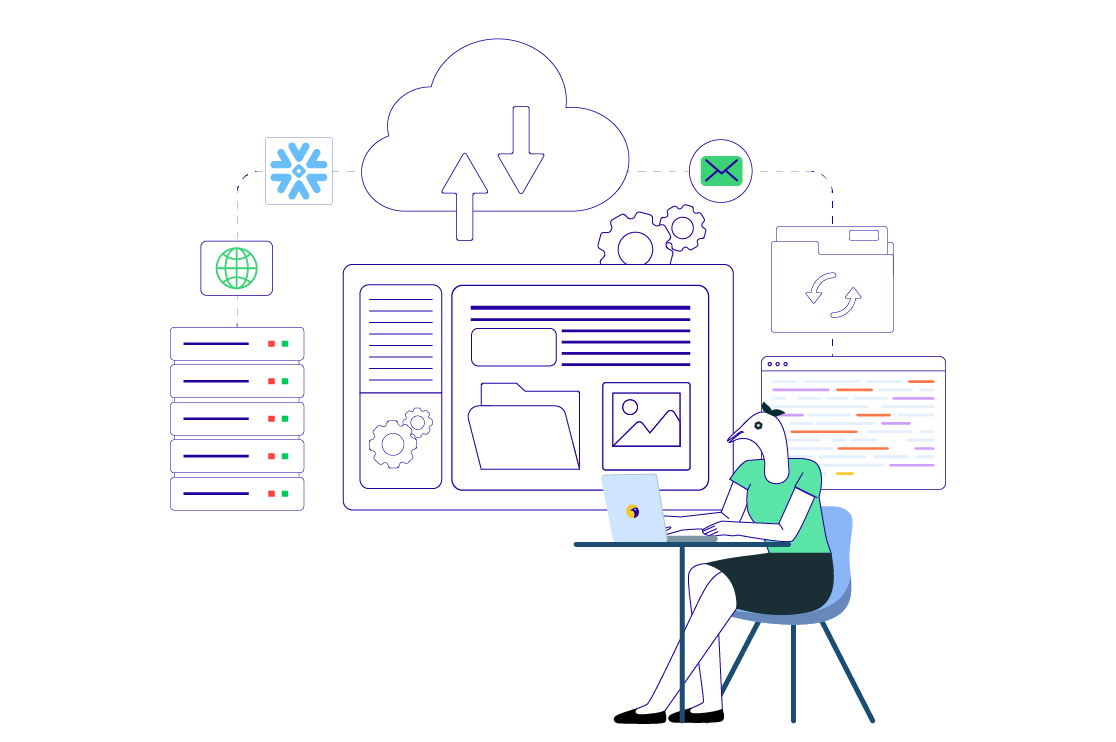
Snowflake has become the platform of choice for enterprises modernizing their data ecosystem. Its ability to scale on demand, support advanced analytics, and simplify infrastructure management makes it an attractive destination for organizations seeking agility and data-driven growth.
However, migrating to Snowflake is not simply a technology upgrade. It is a business transformation initiative.
While Snowflake delivers powerful capabilities, many enterprises underestimate the complexity involved in moving legacy data platforms to a modern cloud architecture. Hidden cost drivers, governance gaps, compatibility challenges, and operational risks often emerge mid-migration, putting timelines, budgets, and business continuity at risk.
Organizations that succeed approach Snowflake migration with a clear strategy, disciplined execution, and strong alignment between technology and business goals.
This guide explores the real challenges behind Snowflake data migration and outlines proven best practices CXOs can adopt to ensure a secure, cost-efficient, and future-ready transition.
The Snowflake Migration Hype vs. Reality
The Hype
Snowflake is widely recognized for its ability to deliver:
-
Elastic scalability without infrastructure management
-
High-performance analytics at scale
-
Support for structured and semi-structured data
-
A fully managed, cloud-native architecture
These benefits have led many organizations to view Snowflake as a fast path to modernization.
The Reality
In practice, Snowflake migration is not a lift-and-shift exercise.
Enterprise data environments have evolved over many years and often contain:
-
Complex dependencies across applications
-
Embedded business logic in legacy systems
-
Inconsistent data quality
-
Informal governance processes
Without proper planning, organizations quickly encounter unexpected challenges that delay delivery and inflate costs. The platform itself is powerful, but migration success depends on preparation, execution, and governance rather than technology alone.
Data Transfer Costs, Compatibility, and Downtime Risks
Data Transfer and Cost Considerations
Snowflake follows a consumption-based pricing model, which provides flexibility but requires strong cost governance.
While data ingestion into Snowflake is typically free, organizations may incur costs related to:
-
Cross-region data transfers
-
Data egress between cloud providers
-
Inefficient compute usage after migration
Without visibility into usage patterns, these expenses can escalate quickly.
Compatibility Challenges
Differences between legacy platforms and Snowflake frequently create migration friction, including:
-
Data type mismatches
-
SQL syntax differences
-
Stored procedure rewrites
-
Schema redesign requirements
These incompatibilities often require re-engineering rather than direct migration.
Downtime and Business Impact
Downtime during migration can disrupt:
-
Customer-facing applications
-
Operational decision-making
Even short service interruptions can lead to lost revenue and reduced stakeholder confidence. For this reason, phased migration and parallel system testing are critical to protecting business continuity.
Recommended Reading:
Hidden Governance and Security Gaps
Governance Challenges
Legacy systems often contain undocumented logic and implicit ownership models. When this knowledge is not identified early, organizations risk losing critical functionality during migration.
Common governance gaps include:
-
Unclear data ownership
-
Missing approval workflows
-
Inconsistent access controls
-
Lack of lineage documentation
Effective Snowflake migration requires governance to be redesigned, not merely transferred.
Security Risks
Snowflake offers robust security features such as role-based access, network policies, encryption, and data masking. However, security risks typically arise from misconfiguration rather than platform limitations.
During migration and early post-go-live phases, sensitive data can become vulnerable if controls are not implemented immediately and consistently.
Best Practices for Overcoming Snowflake Migration Challenges
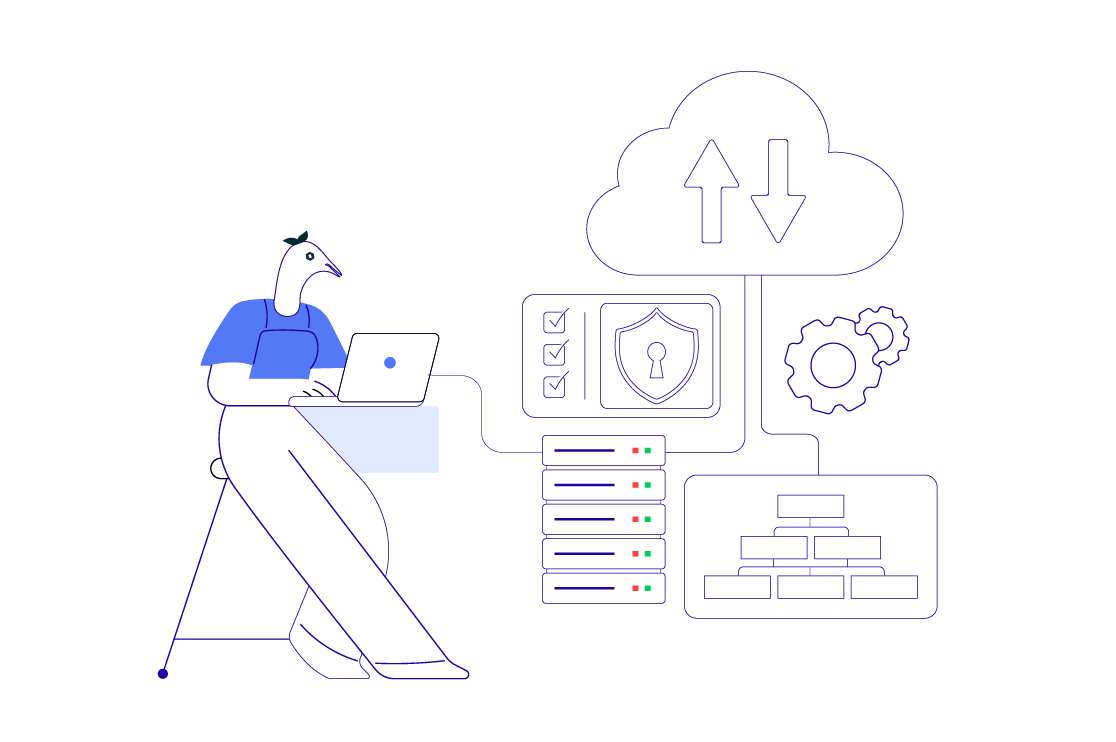
Successful Snowflake migrations follow a structured, disciplined approach focused on both technology and business outcomes.
Conduct a Comprehensive Pre-Migration Assessment
Begin with a complete inventory of:
-
Tables, views, and reports
-
Integration points and dependencies
This clarity reduces scope creep and prevents unnecessary data movement.
Prioritize Business Consumption Workloads
Migrating BI dashboards and analytics workloads early ensures business users experience continuity and early value, while backend pipelines can transition in phases.
Perform Data Profiling and Cleansing
Migrating low-quality data amplifies issues in the target system. Profiling helps identify inconsistencies, duplicates, and anomalies before they impact Snowflake performance.
Leverage Automation
Automation significantly reduces manual effort and error through:
-
SQL translation
-
Data reconciliation
-
Validation testing
This accelerates timelines while improving accuracy.
Execute Parallel Testing
Running legacy and Snowflake environments side by side enables:
-
Metric validation
-
Report reconciliation
-
Confidence building across stakeholders
Parallel testing is essential for enterprise-scale migrations.
Optimize Post-Migration Usage
After go-live, continuous optimization ensures long-term value:
-
Monitor compute consumption
-
Suspend idle warehouses
-
Apply clustering selectively
-
Leverage caching for recurring queries
Cost efficiency is achieved through governance rather than restriction.
Choosing the Right Snowflake Data Migration Partner
A successful migration often depends on the expertise guiding it. The right Snowflake migration partner should offer:
-
Deep understanding of Snowflake architecture
-
End-to-end services from assessment to optimization
-
Alignment with business objectives rather than only technical delivery
A capable partner acts as a strategic advisor, not merely an implementation resource.
Conclusion
Snowflake data migration presents a powerful opportunity to modernize enterprise analytics and unlock data-driven decision-making. However, the journey requires more than selecting the right platform.
Organizations that succeed treat migration as a structured transformation supported by strong planning, governance, automation, and continuous optimization.
When executed correctly, Snowflake enables scalable analytics, operational agility, and a future-ready data foundation that supports AI and advanced insights.
For enterprises seeking a secure, cost-controlled, and business-aligned transition, partnering with experienced Snowflake specialists can significantly reduce risk and accelerate value realization.
FAQs
Why should a business migrate to Snowflake?Businesses migrate to take advantage of Snowflake’s scalability, performance, and simplified data management. It can improve business operations by enabling real-time analytics, facilitating AI and machine learning, and allowing for efficient data sharing. It helps overcome the limitations of legacy systems, such as slow queries and scalability issues.
What are the common challenges?Some of the common challenges faced during migration to snowflake platform includes handling issues with data compatibility and semi-structured data, mapping schemas and converting code, ensuring optimal performance and managing costs after migration, and bridging any skills gaps within the organization to manage the new platform.
How do I prepare for Snowflake data migration?Firstly, you need to understand your data, applications, and everything that interacts with the data to develop a comprehensive plan. Then, prepare a comprehensive plan that addresses environmental security, data integration, and reporting needs. Plan for a rigorous validation to ensure data is correct after the migration is complete. Finalize early on whether to perform the migration in-house or with a system integrator and choose a partner with the right expertise.
What is the typical timeline for Snowflake data migration?Timelines vary significantly based on data volume and complexity. Small migrations can take days, while large, enterprise-scale projects can take weeks to months.

 Microsoft Fabric for Enterprise ESG and Sustainability Intelligence
  Microsoft Fabric 2.0: The Future of Unified Analytics in a Multi-Agent AI World
  Why Traditional Data Migration Falls Short and How AI Is Changing the Approach
  How CFOs and CIOs Actually Evaluate Cloud Data Strategy: Cost, Risk, and ROI