









As enterprises move deeper into 2026, data platforms are no longer judged only on storage or performance. They are evaluated on how quickly they enable AI, how predictably they scale costs, and how well they support governance in an increasingly regulated environment. Many CXOs now recognize that legacy data warehouses were not built for these …
Why is data trust becoming a priority for every boardroom? – a question that might come to a CXO’s mind. Data trust is a boardroom priority because it is a strategic business imperative that directly impacts a company’s financial performance, reputation, regulatory compliance, and ability to innovate with technologies like AI.
Data now sits at the center of enterprise growth, operational resilience, and competitive advantage. Organizations across the United States are relying on data more heavily than ever to guide strategy, manage risk, and accelerate innovation.
“Let’s migrate to Snowflake. Every organization is now doing it,” said the CXO.
“Yes, that’s true. Let’s do it”, others replied.
The nature of enterprise data platforms is changing fast, and leaders of business are posing the right questions as to whether their existing analytics ecosystem can keep supporting scale, AI adoption, governance, and cost efficiency.
The energy and utilities sector is experiencing one of the most complex transformations in its history. An aging infrastructure, increasing customer demands, unstable energy supply, regulation, and the worldwide drive to decarbonization is compelling organizations to reconsider the way they do things.
The trustworthy and managed data is the foundation of strategy, automation, compliance, AI, and analytics in contemporary data-driven enterprise.
Modern enterprises are generating tons of data everywhere—from ERP systems like SAP, on-premises systems like Oracle, customer-facing systems like Salesforce, or external APIs streaming real-time events.
Enterprise analytics is entering a new era of innovation. Businesses have used traditional data warehousing, standalone data lakes, and old BI models over the years due to their fragmented nature. Although these approaches provided value in the past, they are no longer adequate to sustain the data explosion experienced in industries.
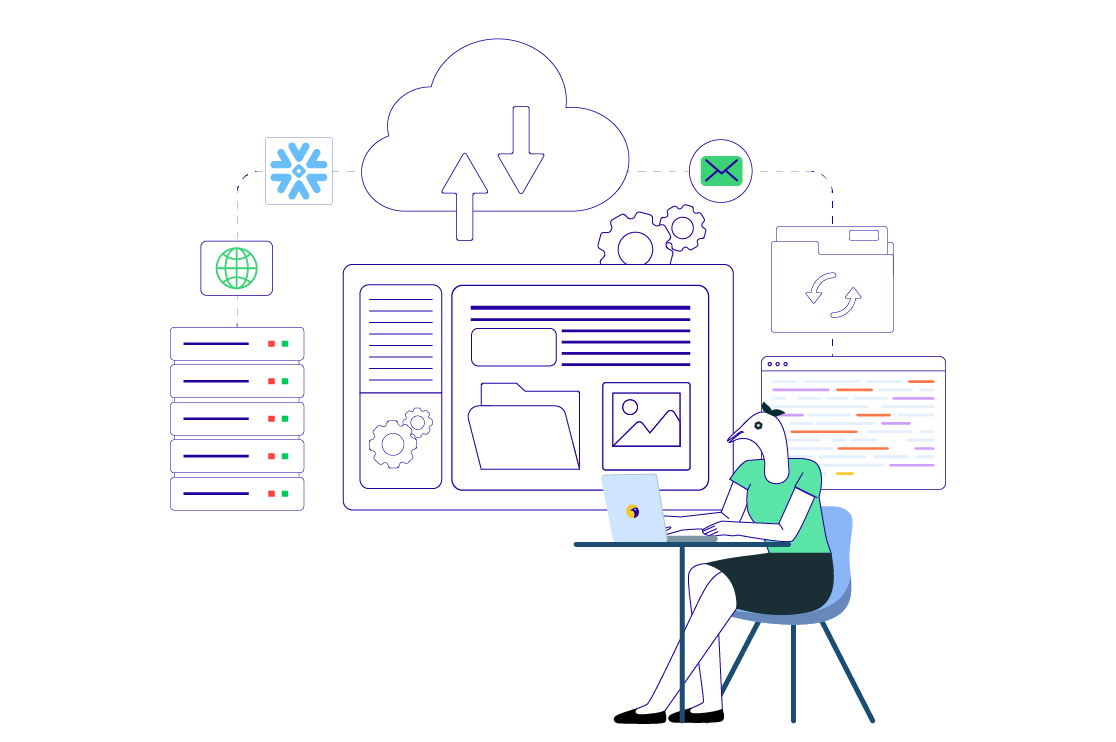
Fabric connectors, specifically in Microsoft Fabric Data Factory, are built-in tools or interfaces that facilitate the seamless integration, movement, and synchronization of data between diverse systems, applications, and databases. They act as bridges, relying on APIs, to link various data sources and consolidate information into the unified Microsoft Fabric platform for analysis and management.

 Compliances
Let's Talk Fixed form
"*" indicates required fields