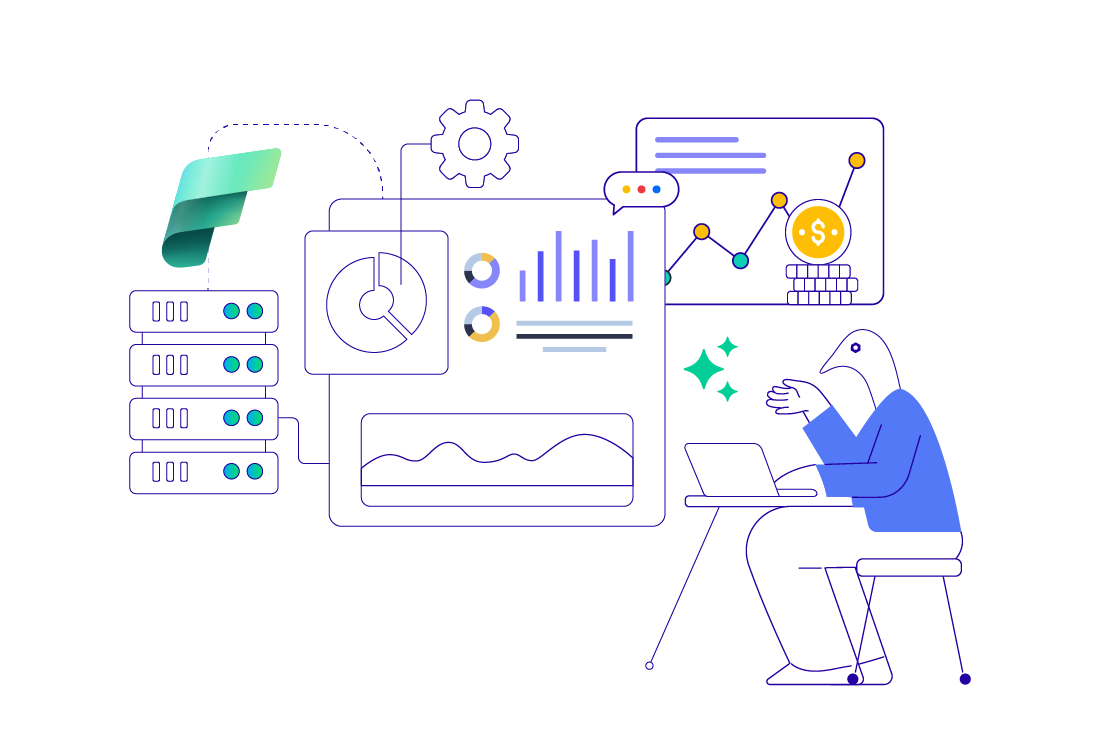










Most data strategies fail due to fragmentation, a lack of data governance, and organizational resistance to change. Microsoft Fabric addresses these issues by providing a unified, AI-powered platform that centralizes data, streamlines processes, and democratizes access to insights across the organization.
Power BI has become a cornerstone of modern business intelligence. It enables users to create interactive reports, connect to various data sources, and visualize insights without extensive technical knowledge. For many organizations, Power BI is the go-to solution for building dashboards, supporting decision-making, and democratizing analytics across teams.
Feeling tired of managing your business data’s end-to-end life? Are your competitors racing ahead of you by automating their data lifecycle?
Data integration chaos refers to the confusion, disorder, and inefficiency caused by the struggle to combine data from different sources into a unified, reliable view.
Responsible AI Governance is a board imperative because it is crucial for managing risks, driving innovation, and ensuring ethical practices in AI implementation.
As organizations become more comfortable using AI across their divisions, workflows, and products, they’re encountering a new problem: Enterprise AI specialists are in such demand that they’re too overwhelmed to handle all the pressing innovations and implementations across their organizations. The Problem: Why Current AI Teams Can’t Scale Every project is different, coming from different …
As a builder or developer, you’ve invested in stunning photorealistic 3D animation videos, smooth walkthroughs, and professional-grade renders.
When the first promises of clouds were made, they sounded revolutionary. “Pay only for what you use. Scale up or down at will. Free yourself from the burden of hardware”.
For Chief Experience Officers (CXOs), embracing Snowflake business agility as a mandate means empowering the entire organization to use timely, trusted data for innovation, cost management, and market responsiveness. This shift is essential for staying competitive in today’s data-driven landscape.
Legacy data, stored in outdated systems and formats, becomes a growth bottleneck by hindering a company’s agility, efficiency, and ability to make informed decisions.

 Compliances
Let's Talk Fixed form
"*" indicates required fields