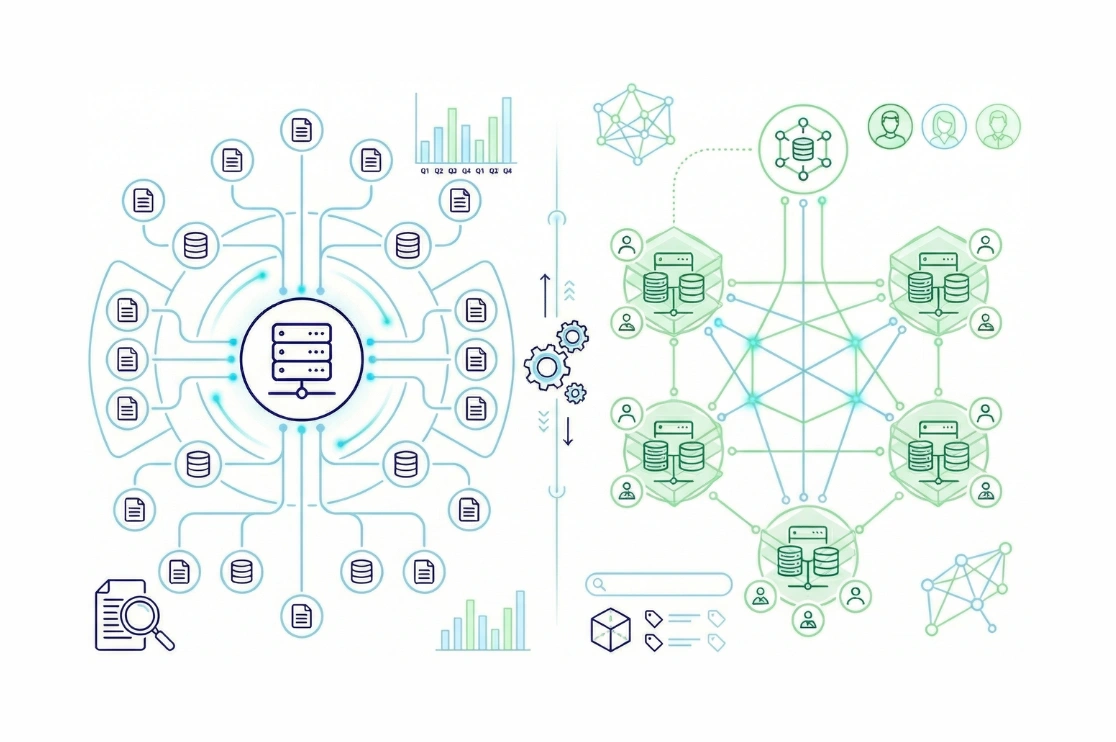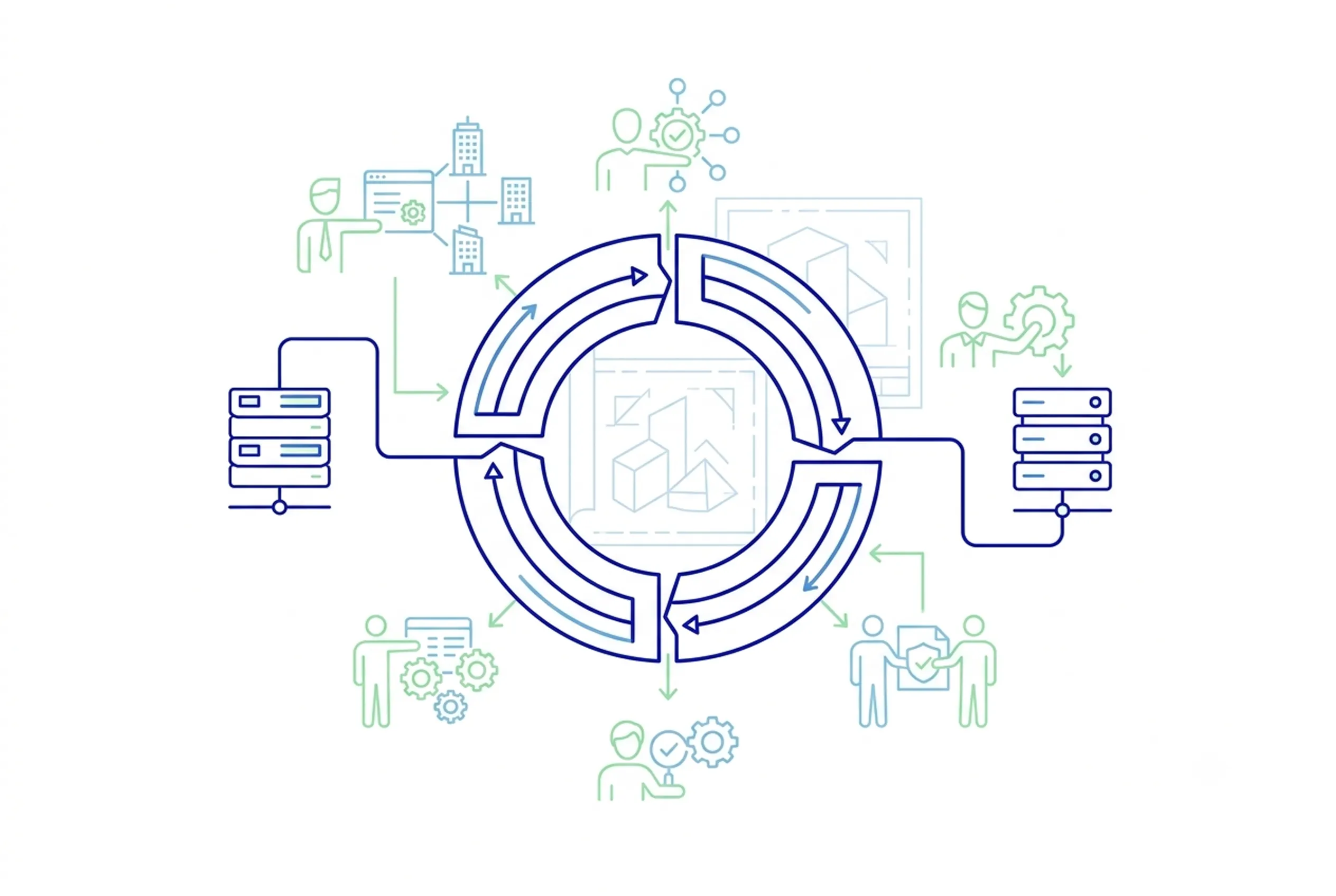









to regulatory, operational, and AI demands.
Enterprise data governance initiatives fail when strategy and execution are not in sync. The result is fragmented accountability, limited adoption, regulatory exposure, and stalled transformation initiatives.
A structured data governance strategy defines operating models, clarifies decision rights, embeds enforceable controls, and aligns governance with enterprise risks.
Why Enterprise Data Governance Strategies Fail?
Most data governance programs do not simply fail due to lack of intent. They are most likely to fail because of structure, clarity, and enforceability.
Common enterprise gaps include:
| Undefined executive sponsorship | Unclear accountability |
|---|---|
| Documented but non-operationalized policies | Data disconnected from their respective domains |
| Absence of measurable governance KPIs | No sync between governance & digital initiatives |
| Inconsistency in the master data across workflows | Lack of compliance controls |
| Lack of governance insights for AI initiatives | Disconnection between data owners |
Note: Decision makers need to understand that governance cannot operate as a compliance checklist. It must act as a control framework that’s been hardwired into the business processes.
Trusted By
Organizations That Trust BluEnt With Their Data

- Gift Card Management, Reporting, Data Integration, Analytics Solutions, Book Keeping NetSuite Reporting, NetSuite Records Maintenance, Income Statement, Audit Support

- Gift Card Management, Reporting, Data Integration, Analytics Solutions

- Invoicing, AP Reports, Sales Data Analytics

- MuleSoft Integration, Analytics & Dashboards - [Tableau, MS SQL Server, SSIS]

- ERP Onboarding and Implementation, Data Migration, Custom Report Building, Audit Support and Finalization, Draft Financials Statements, Bidding Website Development

- Data Analytics and Dashboards

- V-Bucks Gift Card Sales Analytics, Reconciliation, Financial Tracking and Reporting

- Web Asset Creation

- HubSpot Campaign Management, Workflow Automation, UX/UI Development, Mobile App Development, Application Development

- Data Analytics and Dashboards, Website Development, Website Maintenance, Application Development, HubSpot Automation and Integration, Asana Management

- SEO, Website UX/UI Development, Data Management, Third-Party Integration, Website Maintenance

- Shopify Website Development, Klaviyo Email Marketing, Email Campaign Setup, Third-Party Shopify App Integration

- Website and SEO Audit, Shopify Website Maintenance, SEO and Analytics

- Website Design and Development, Website Maintenance
- Website Design and Development, Website Maintenance

- Website Design and Development, Website Maintenance, SEO and Analytics
Governance Maturity Model
Understanding the governance maturity level is foundational to designing a viable strategy. Governance maturity determines scalability, compliance resilience and AI readiness.
The Governance maturity model has 5 levels:
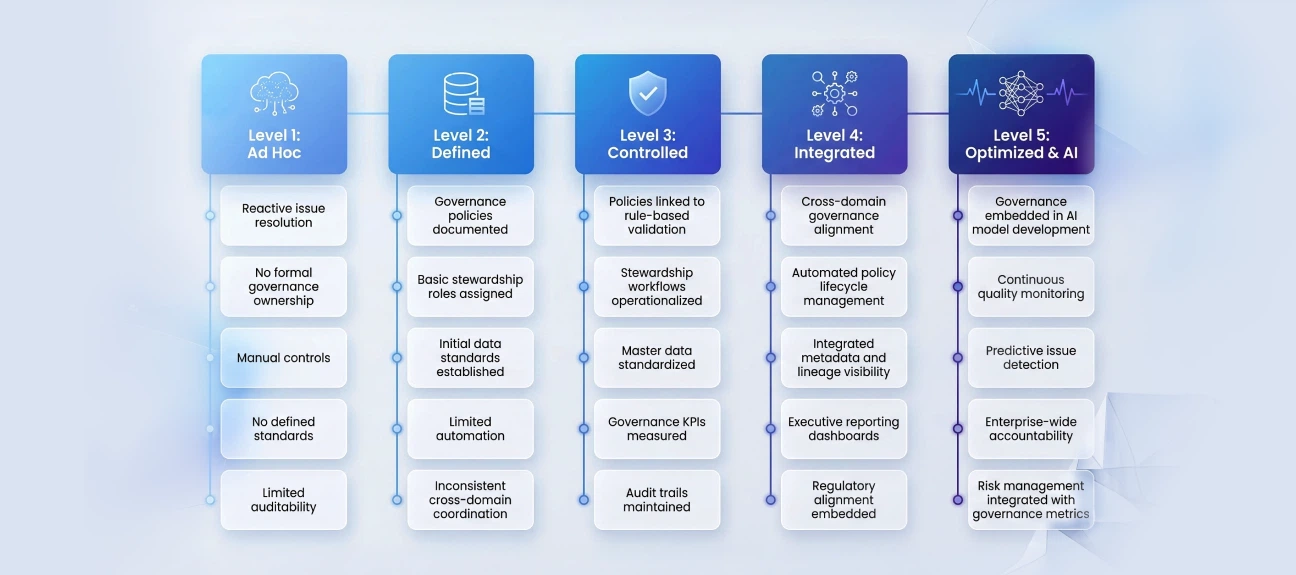
At this level, governance supports innovation while striving to maintain control.
Governance Readiness Assessment Framework
Decision makers need to understand that to achieve success in integrating an end-to-end readiness evaluation, they first must ensure to meet all its 5 well-defined dimensions.

Strategic Alignment
Governance must align with enterprise objectives and risk frameworks.
Key Evaluation Areas:
-
Executive sponsor clarity
-
Board level oversight involvement
-
Business case articulation
-
Risk appetite alignment
-
Regulatory landscape mapping
-
Digital and AI alignment

Governance Operating Model
The operating model defines accountability and authority.
Key Evaluation Areas:
-
Data ownership structure
-
Stewardship model definition
-
RACI matrix clarity
-
Escalation processes
-
Cross-functional coordination
-
Decision rights documents
-
Organizational capacity planning

Policy & Control Framework
Policies must translate into enforceable controls.
Key Evaluation Areas:
-
Policy lifecycle management
-
Standard definition consistency
-
Rule-based validation implementation
-
Exception handling protocols
-
Issue management software
-
Documentation control
-
Change management processes

Technology Enablement
Governance strategy must align with enterprise architecture.
Key Evaluation Areas:
-
Master Data Management integration
-
Metadata catalog connectivity
-
API-based interoperability
-
Cloud & hybrid deployment compatibility

Compliance & Risk Management
Governance must reduce regulatory exposure.
Key Evaluation Areas:
-
Regulatory mapping (GDRP, CCPA, SOX, HIPAA)
-
Audit trail completeness
-
Data classification consistency
-
Retention policy enforcement
-
Consent management controls
-
Cross-border data data handles all Digital and AI alignment
AI Governance and Data Readiness
Artificial Intelligence amplifies both risk and value. Governance must support AI lifecycle oversight.
To ensure strategic alignment for your enterprise data governance framework, decision makers need to focus on:
-
Training data lineage traceability
-
Data quality validation prior model ingestion
-
Bias mitigation controls
-
Model input governance policies
-
Audit logs for AI decisions
-
Ethical AI policy alignment
Organizations deploying AI without governance are prone to face model failure, reputational damage, and regulatory consequences.
Designing Enterprise Data Governance Strategy
A viable governance strategy that’s well-structured and phased.
-
Maturity Scoring
-
Stakeholder interviews
-
Policy gap analysis
-
Data domain prioritization
-
Risk exposure analysis
-
Technology landscape evaluation
Deliverable: Governance maturity report
-
Governance charter creation
-
Operating model definition
-
Policy hierarchy structuring
-
Stewardship workflow design
-
KPI and performance metric definition
Deliverable: Enterprise Governance Framework Blueprint
-
Select priority data domains
-
Configure validation rules
-
Activated stewardship workflows
-
Establish monitoring dashboards
-
Measure enforcement effectiveness
Deliverable: Controlled Pilot Governance Deployment
-
Multi-domain expansion
-
Regional alignment
-
Executive reporting integration
-
Compliance alignment scaling
Deliverable: Enterprise Governance Control System
-
AI model governance integration
-
Continuous quality monitoring
-
Predictive anomaly detection
-
Executive-level risk dashboards
Deliverable: AI-ready Governance Architecture
Measuring Governance Performance
Governance strategy must define all the measurable performance indicators.
For decision makers, performance indicators serve as the base for preparing the next step of action.
These metrics include

Policy Adherence Rate Measures how consistently teams follow defined governance policies, standards, and procedures across the business workflows.
Data Quality Score Improvement Tracks improvements in accuracy, completeness, consistency, and reliability of enterprise data over time.
Stewardship Resolution Time Indicates how quickly data stewards identify, investigate, and resolve data-related issues or governance requests.
Regulatory Compliance Incident Reduction Measures the decrease in compliance violations or regulatory risks due to stronger governance controls.
Master Data Duplication Reduction Tracks the reduction of duplicate records in master data systems to ensure a single, reliable source of truth.
AI Model Reliability Improvement Evaluates improvements in the accuracy, consistency, and stability of AI/ML model outputs over time.
Audit Remediation Cycle Time Measures how quickly audit findings are addressed and corrective actions are implemented across government processes.
Pro Tip: Governance effectiveness is greatly related to the quantitative improvement.
Who Should Be Involved?
Governance readiness is not a one way or one part job. It requires cross-functional participation.
So, who should be the involved stakeholders?
-
Chief Data Officer
-
Chief Information Officer
-
Chief Risk Officer
-
Chief Compliance Officer
-
Enterprise Architects
-
Data Governance Leads
-
Legal and Regulatory Advisors
-
AI & Analytics Leaderships
Implementation Timelines
Timeline expectations greatly rely on organizational scale and complexity.
A typical readiness assessment takes around 6 to 10 weeks, again depending on the level of assessment needed.
The overall assessment framework design and pilot activation timelines vary based on:
-
Data domain complexity
-
Regulatory exposure
-
Geographic footprint
-
Existing governance maturity
-
Technological landscape
Remember, phased implementation reduces disruption and ensures measurable progress.
The Real Gatekeeper of Your AI & Digital Future
Stakeholders need to keep one thing in mind: Data governance strategy and readiness defines whether your organization can scale digital transformation securely and responsibly.
Also, governance must be structured, enforceable, measurable, scalable, and aligned with the organizational risk and AI strategy.
Don’t give it a second thought.
Frequently Asked Questions
How does data governance drive measurable business value?
Data governance directly impacts revenue growth, cost optimization and risk reduction. It eliminates data inefficiencies, improves decision accuracy, and enables faster time-to-market for digital and AI initiatives, thereby translating into clear ROI. In essence, government transforms fragmented data ecosystems into reliable decision engines, giving leadership the confidence to act quickly and decisively.
What ROI can leadership expect from investing in data governance?
From an executive standpoint, data governance delivers both tangible and intangible returns. Over time, enterprises see improved analytics adoption, faster reporting cycles, and reduced dependency on IT for data access. The real ROI lies in shifting data from a cost center to a value generating asset that continuously fuels business growth.
How should leadership position data governance within digital transformation?
Leadership must position data governance as a core pillar of digital transformation. Many transformation initiatives fail because they overlook the importance of trusted and well-managed data. Governance provides the structure required to scale digital investment. When embedded early, governance acts as a force multiplier, enabling faster execution, reducing rework, and ensuring long term sustainment.
Who should own data governance at the executive level?
Effective data governance requires clear executive ownership combined with cross-functional accountability. While roles such as Chief Data Officer or CIO lead governance initiatives, true success depends on active participation from business leaders across functions. Leadership alignment ensures that governance policies are not designed but also enforced, creating a culture of accountability and data ownership across the enterprise.
What is the fastest way to demonstrate value from a government initiative?
To build executive confidence, organizations should focus on high-impact, business-centric use cases that deliver measurable outcomes. By prioritizing these areas, leaders can showcase early wins within a short period of time. This approach not only exhibits value but also creates momentum for broader governance adoption, positioning governance as a result-driven initiative rather than a long-term overhead.
View Our Projects
Dive into our portfolio and witness how BluEnt transforms bold ideas into powerful digital solutions.
From enterprise-grade applications to data-driven platforms, each project tells a story of innovation,
ROI, and long-lasting impact.

HubSpot | Case Study
Asana-HubSpot Integration
Discover how BluEnt help HFS in achieving task automation with real-time data synchronization and efficient ecosystem.

Wordpress | Case Study
HFS Website Overhaul
Learn how BluEnt modernized the website to support heavy research content & deliver consistent UI/UX with better performance.
Wordpress | Case Study
Author Dashboard Transformation
Explore how BluEnt developed a unified & comprehensive dashboard for better performance tracking and report collaboration.

Wordpress | Case Study
Custom Elementor Widget
Learn how the custom elementor widget, developed by BluEnt, let HFS Research get off from its dependency over expensive…
Wordpress | Case Study
Custom WordPress Videocast Plugin
Discover how BluEnt created a custom WordPress videocast plugin to improve loading time & performance of HFS Research podcast…

Wordpress | Case Study
Report Analytic Dashboard
Discover how BluEnt designed & developed a comprehensive report analytic dashboard for HFS to generate accurate data.
Industry Trends & Innovation
Ideas That Drive Industries
Explore a 360° content hub featuring expert-written blogs, practical use cases, and FAQs,
all designed to spark innovation, solve challenges, and sharpen your competitive edge.
Whether you're shaping strategy or validating decisions, our insight-driven content
equips you with clarity, confidence, and the direction you need to stay ahead.