








Enterprise data governance services built for compliance and AI.
BluEnt is a data governance consulting company that operationalizes enterprise data governance across every domain. You get enforceable policies, clear ownership, and audit-ready evidence on demand, so your data stays compliant today and ready for AI tomorrow.
Data Governance Maturity Assessment
A structured diagnostic for CDOs, CIOs, and Chief Compliance Officers. 18 questions across six governance dimensions. Receive a scored maturity profile and prioritised recommendations.
Your Details
Your Assessment Results
Overall Governance Maturity Level
Receive Your Full Report
A BluEnt governance consultant will prepare a personalised report with specific recommendations for your highest-priority gaps. Book a 60-minute discovery call to discuss your findings.
Trusted By
Organizations That Trust BluEnt With Their Data
- Gift Card Management, Reporting, Data Integration, Analytics Solutions, Book Keeping NetSuite Reporting, NetSuite Records Maintenance, Income Statement, Audit Support

- Gift Card Management, Reporting, Data Integration, Analytics Solutions
- Invoicing, AP Reports, Sales Data Analytics
- MuleSoft Integration, Analytics & Dashboards - [Tableau, MS SQL Server, SSIS]

- ERP Onboarding and Implementation, Data Migration, Custom Report Building, Audit Support and Finalization, Draft Financials Statements, Bidding Website Development

- Data Analytics and Dashboards

- V-Bucks Gift Card Sales Analytics, Reconciliation, Financial Tracking and Reporting
- Web Asset Creation

- HubSpot Campaign Management, Workflow Automation, UX/UI Development, Mobile App Development, Application Development

- Data Analytics and Dashboards, Website Development, Website Maintenance, Application Development, HubSpot Automation and Integration, Asana Management
- SEO, Website UX/UI Development, Data Management, Third-Party Integration, Website Maintenance

- Shopify Website Development, Klaviyo Email Marketing, Email Campaign Setup, Third-Party Shopify App Integration
- Website and SEO Audit, Shopify Website Maintenance, SEO and Analytics
- Website Design and Development, Website Maintenance
- Website Design and Development, Website Maintenance
- Website Design and Development, Website Maintenance, SEO and Analytics
Without data governance, your data is a liability, and your AI inherits it.
If any of these sound familiar, weak enterprise data governance is the constraint holding your teams back.
Audits turn into fire drills fast
Every GDPR, HIPAA or SOX request turns into weeks of manual evidence-gathering because controls sit outside your systems.
AI projects stall on bad data
Models and agents cannot ship because no one can vouch for the accuracy, lineage or compliance of the data feeding them.
Nobody owns the data end to end
Definitions differ by team, quality is nobody’s job, and decisions get made on numbers nobody actually trusts anymore.
Governance lives in spreadsheets
Policies sit in documents, not systems, so they are impossible to enforce and out of date the moment they are written.
It does not scale across regions
What works for one business unit breaks across clouds, geographies and local regulations, leaving gaps you cannot see.
Sensitive data hides in plain sight
Unclassified PII and PHI spread across systems and clouds, creating privacy exposure long before an audit forces the issue.
Data governance operationalized across five control layers.
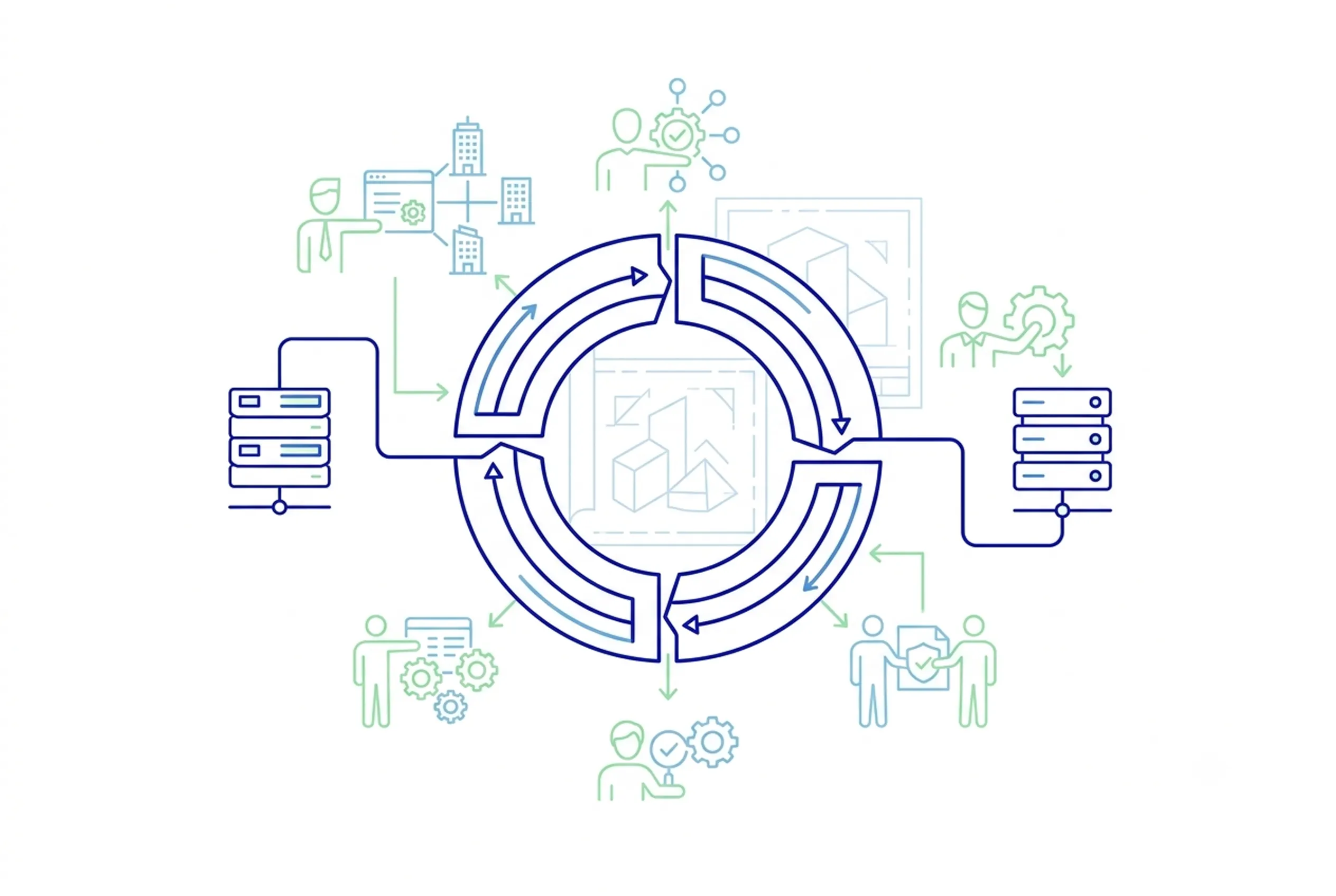
Our enterprise data governance services embed governance directly into your platforms, workflows and data pipelines, not into a policy binder no one opens after the kickoff call. AI-assisted classification, policy-as-code enforcement and automated stewardship workflows handle the repetitive work, so your team spends its time making decisions and resolving exceptions instead of tagging data and chasing compliance evidence by hand. The result is a governance program that produces measurable business outcomes: audit-ready data, trusted AI inputs and continuous compliance, not just documented intent.
Assess
Maps your data landscape, quality gaps and regulatory exposure into a fact-based baseline for the roadmap ahead.
- Data landscape and platform discovery
- Quality profiling across critical datasets
- Regulatory and compliance exposure mapping
- Ownership and stewardship gap analysis
- Risk-ranked findings report
Define
Sets clear ownership, a shared glossary and sensitivity classification so policies are enforceable, not filed away.
- Data ownership and RACI assignment
- Business glossary and domain modeling
- Sensitivity and classification tagging
- Role-based access policy design
- DAMA-DMBOK aligned framework documentation
Enforce
Embeds policy-as-code and validation into your pipelines, catching non-compliant data before it moves downstream.
- Policy-as-code embedded in pipelines
- Rule-based data validation at ingestion
- Automated stewardship and remediation workflows
- Cross-domain synchronization and enforcement
- Real-time exception alerts and routing
Monitor
Tracks quality, compliance and stewardship in real time, flagging drift before it reaches your board or auditors.
- Data quality scorecards and KPIs
- AI-driven anomaly and drift detection
- Audit-trail capture and issue tracking
- Regulatory compliance reporting on demand
- Board-ready governance dashboards
Scale
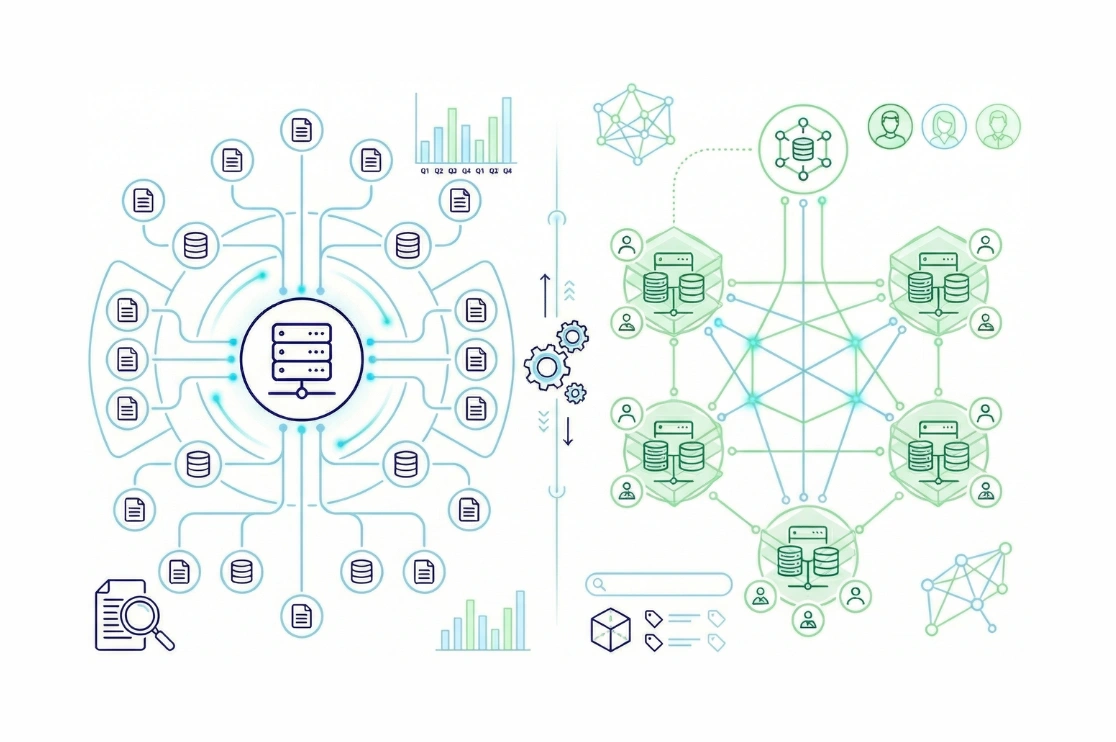
Extends proven controls into a federated model that holds across business units, clouds and regions as you grow.
- Federated stewardship model design
- Multi-domain governance orchestration
- Regional policy variation management
- Data catalog and metadata integration
- Continuous improvement and framework updates
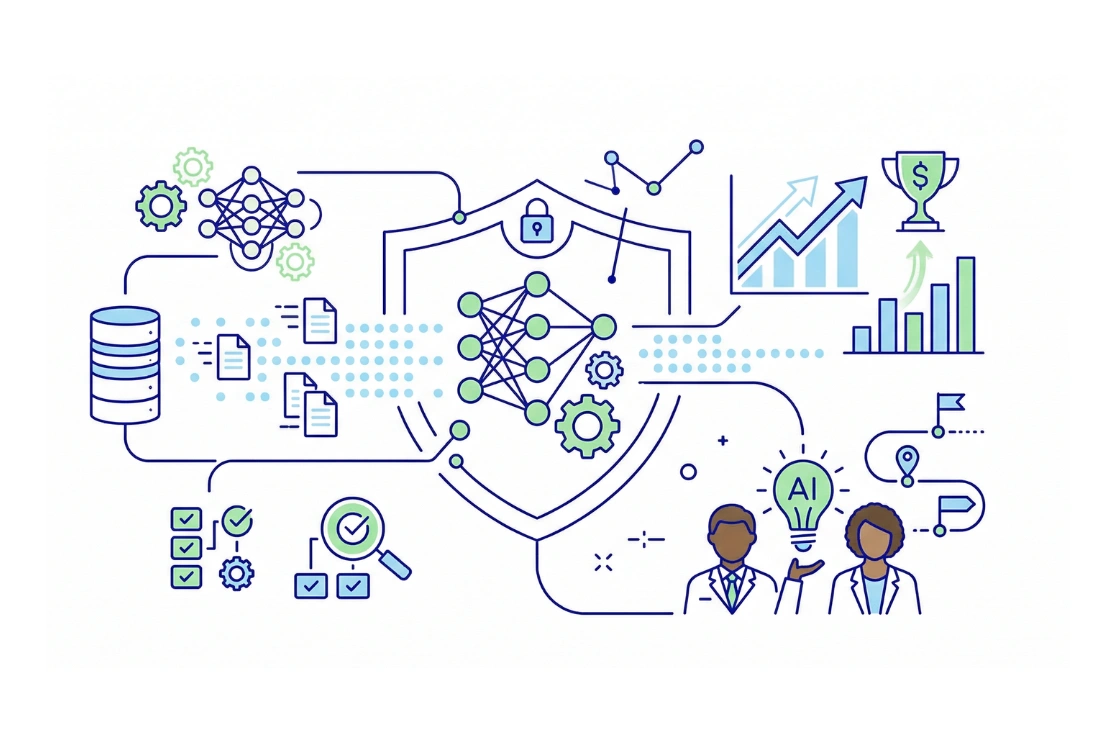
AI is woven through every layer of our governance framework: automated classification and PII detection during Assess, anomaly detection during Monitor, and policy-as-code that stops non-compliant data before it moves downstream. The result is enterprise data governance that keeps working after the consultants leave.
These data governance services turn the framework above into daily practice, not paperwork on a shelf.
Outcomes, not just a governance framework.
Audit-ready on demand
Produce controls and evidence for GDPR, HIPAA, SOX and BCBS 239 whenever auditors ask, turning audits from multi-week fire drills into a repeatable process.
Data your AI can trust
Clean, classified, lineage-tracked data that is safe to feed into models and agents, so AI projects ship instead of stalling on ungoverned inputs.
Automated stewardship
AI handles classification, tagging and quality profiling. Your governance team spends its time on decisions, not manual cataloguing.
One version of the truth
Shared definitions and golden records across CRM, ERP, finance and analytics, so decisions everyone actually trusts.

Scales globally
Enforce enterprise-wide data governance standards while allowing regional policy variations, all from one framework across clouds and jurisdictions.

Enterprise-grade security
SOC 2 audited delivery with governance and access controls built in from day one, not bolted on afterward.
Take the first step toward stronger data governance with an expert-led assessment.
Everything a governance program needs, in one partner.
Each capability below closes a specific gap in how your organization defines, enforces and scales data control, from initial readiness through AI governance. Start with the area carrying the most risk, or run all six together as one connected program built around measurable outcomes.
Data Adoption Culture
Enablement and change management that gets stewards, business teams and executives actually using the program.
- Change management and stakeholder enablement
- Data literacy training across teams
- Executive sponsorship and governance councils
- Incentive alignment for stewardship roles
- Governance champions network across departments
- Adoption metrics tracked alongside usage
Governance your teams actually follow, not a policy that sits on a shared drive.
Read More →
Data Catalog, Lineage & Metadata
A living map of every dataset, its origin and its movement, so teams know exactly what they can trust and reuse.
- Enterprise data catalog build and curation
- End-to-end lineage tracing across pipelines and systems
- Automated metadata harvesting and tagging
- Business glossary linked to technical metadata
- Impact analysis for downstream changes
- Searchable metadata across clouds and platforms
Complete visibility into where your data lives, how it moves, and who can trust it.
Read More →
Governance Strategy & Readiness
A structured assessment of your data landscape, quality and regulatory exposure that turns risk into a clear governance roadmap.
- Data landscape discovery across platforms
- Data quality and integrity evaluation
- Regulatory and compliance exposure mapping
- Ownership and stewardship gap analysis
- Governance maturity scoring and benchmarking
- Executive-ready readiness report and rollout plan
A prioritized roadmap that targets your real governance risk first, not guesswork.
Read More →
Data Quality & Trust Engineering
Continuous validation and monitoring that catches quality issues at the source, before they reach a report or decision.
- Rule-based data validation and quality scorecards
- Automated profiling and anomaly detection
- Issue tracking and remediation workflows
- Trust metrics tied to business-critical datasets
- Data quality SLAs tied to business priorities
- Root-cause analysis for recurring issues
Quality issues caught and fixed continuously, long before they reach a decision.
Read More →
Governance Operating Models
A federated operating model that keeps enterprise-wide standards consistent while giving regional teams room to adapt to local rules.
- Federated stewardship model design
- Roles, responsibilities and RACI design
- Cross-domain governance councils
- Policy-as-code embedded in pipelines
- Governance charter and decision rights design
- Escalation paths for cross-functional conflicts
One operating model that holds firm across business units, clouds and regions.
Read More →
AI Governance, Privacy & Compliance
Controls that keep AI models, personal data and regulatory obligations aligned from design through deployment.
- AI/ML model risk and bias governance
- Privacy-by-design controls (GDPR, CCPA, HIPAA)
- Regulatory compliance reporting (SOX, BCBS 239)
- Automated PII/PHI detection and classification
- AI use-case risk tiering and approval workflow
- Consent and data subject rights management
AI and data systems built audit-ready and compliant, never scrambling to catch up.
Read More →How mature is your governance?
Answer three quick questions for a directional read on where your governance program stands, and what to prioritize next.
1. Do you have clear, documented data ownership across domains?
2. Can you produce audit evidence (GDPR / HIPAA / SOX) on demand?
3. Is your data classified and quality-monitored for AI use?
Data Governance Maturity Assessment
A structured diagnostic for CDOs, CIOs, and Chief Compliance Officers. 18 questions across six governance dimensions. Receive a scored maturity profile and prioritised recommendations.
Your Details
Your Assessment Results
Overall Governance Maturity Level
Receive Your Full Report
A BluEnt governance consultant will prepare a personalised report with specific recommendations for your highest-priority gaps. Book a 60-minute discovery call to discuss your findings.
Real programs. Enterprise scale.
Challenge
A large enterprise could not launch analytics and AI because regulated data lacked ownership, classification and compliance controls.
BluEnt approach
We ran a governance maturity assessment, embedded AI-driven classification and policy-as-code enforcement, and stood up quality scorecards.
Result
Audit-ready data foundations and a clear path to safely powering AI initiatives.
Ready to build audit-ready, AI-ready data foundations?
AI-augmented data governance, not retrofitted.
We build AI into the governance workflow where it removes manual effort and catches what people miss.
Automated classification
AI scans and tags sensitive and regulated data (PII, PHI, financial) across sources, so coverage lands in weeks, not quarters.
Anomaly & quality detection
Machine learning flags quality issues and drift before they reach downstream reports, models or the board.
Metadata & catalog automation
Generative AI documents datasets and populates the catalog, so your glossary stays current without manual upkeep.
Policy-as-code enforcement
Data governance rules run as code inside pipelines, stopping non-compliant data automatically at the point of movement.
Every capability is grounded in a business outcome: faster compliance, cleaner data, and less manual work for your stewardship team.
Start with a conversation, not a year-long rollout.
Assessment call
A 30-minute review of your governance maturity and biggest gaps. No RFP required.
Prioritized roadmap
We map exposure and quick wins, so the first phase delivers value fast.
Framework & enforcement
Policies, ownership and AI-driven controls embedded into your systems.
Monitor & report
Live scorecards and dashboards give you board-ready visibility.
Scale & optimize
Extend across domains and regions, with continuous improvement built in.
Data governance tuned to your regulations.
AEC Industry
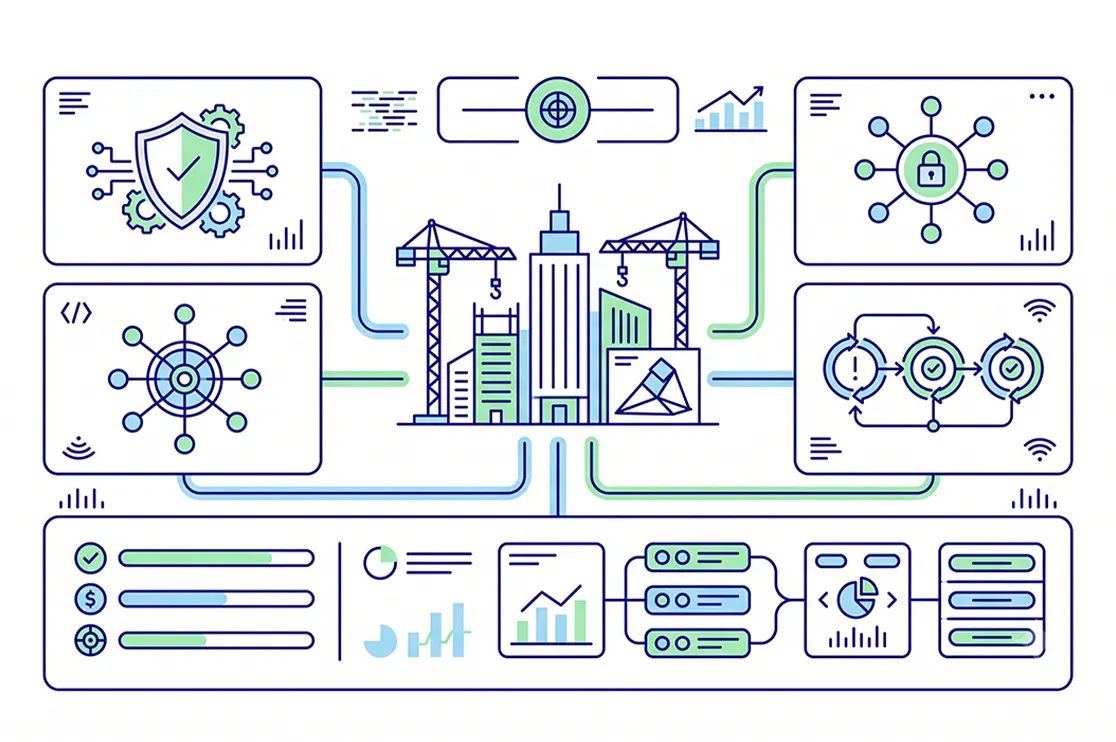
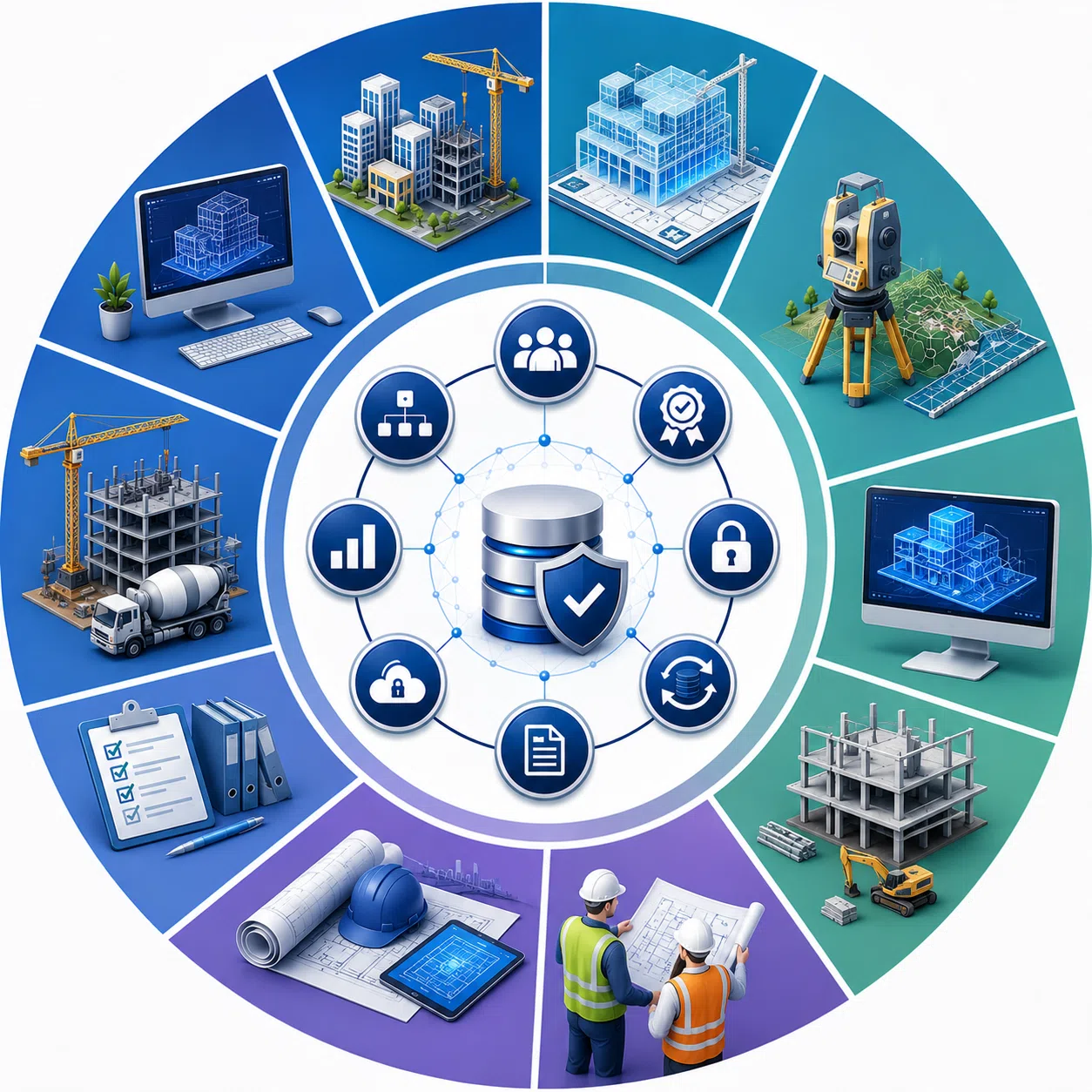
Architecture, engineering and construction firms manage fragmented project data across BIM models, design software, procurement systems and site operations. We govern that data end-to-end, tying model versions, project metadata and asset records to one source of truth, so design changes, cost data and as-built records stay accurate and ready to feed AI-driven project analytics.
Financial Services & Banking
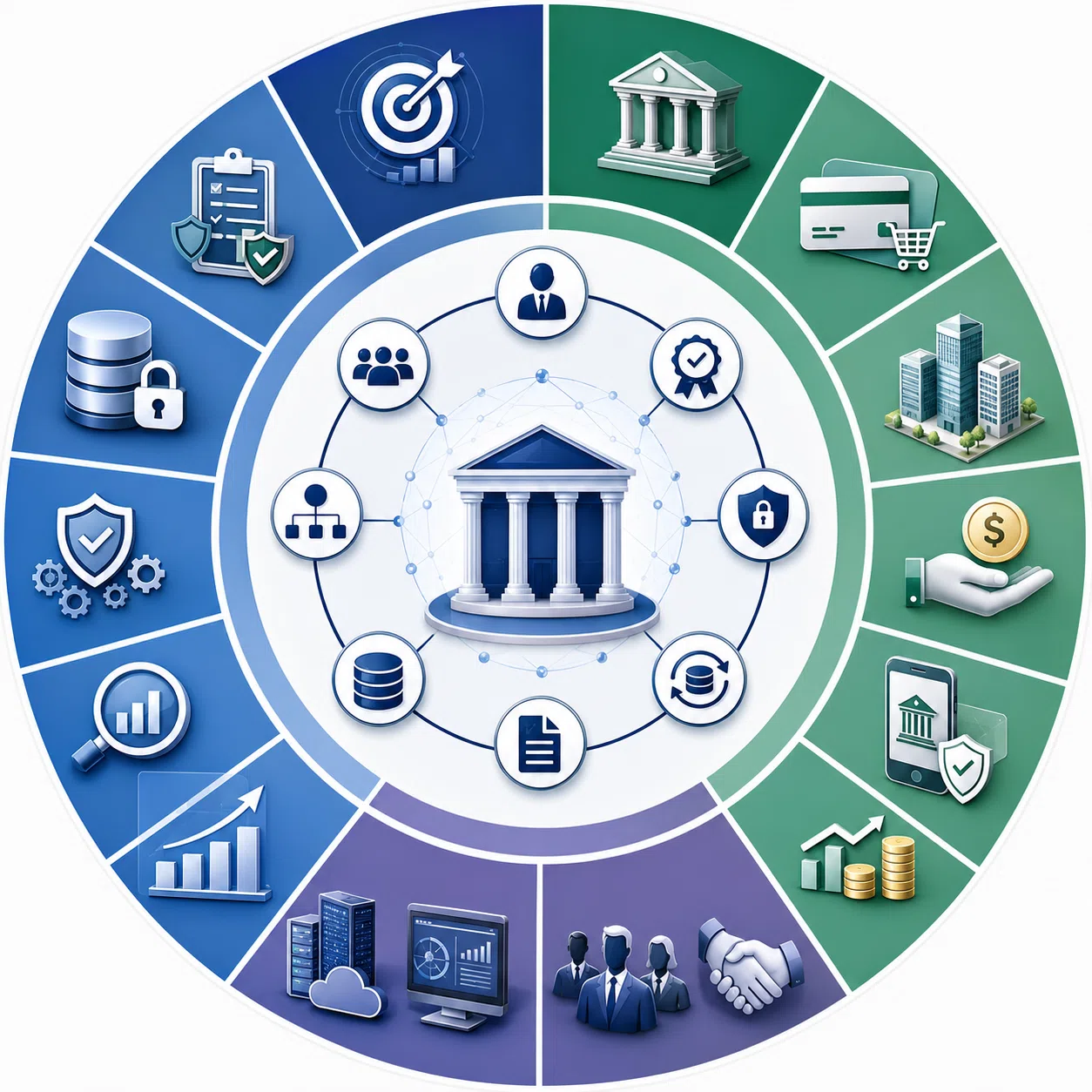
Banks and financial institutions face some of the strictest data obligations of any industry, from BCBS 239 risk data aggregation to SOX financial controls and anti-money-laundering reporting. We build governance that gives you defensible lineage, verifiable controls and audit-ready evidence on demand, so regulators, boards and risk committees can trust the numbers behind every decision.
Healthcare & Life Sciences
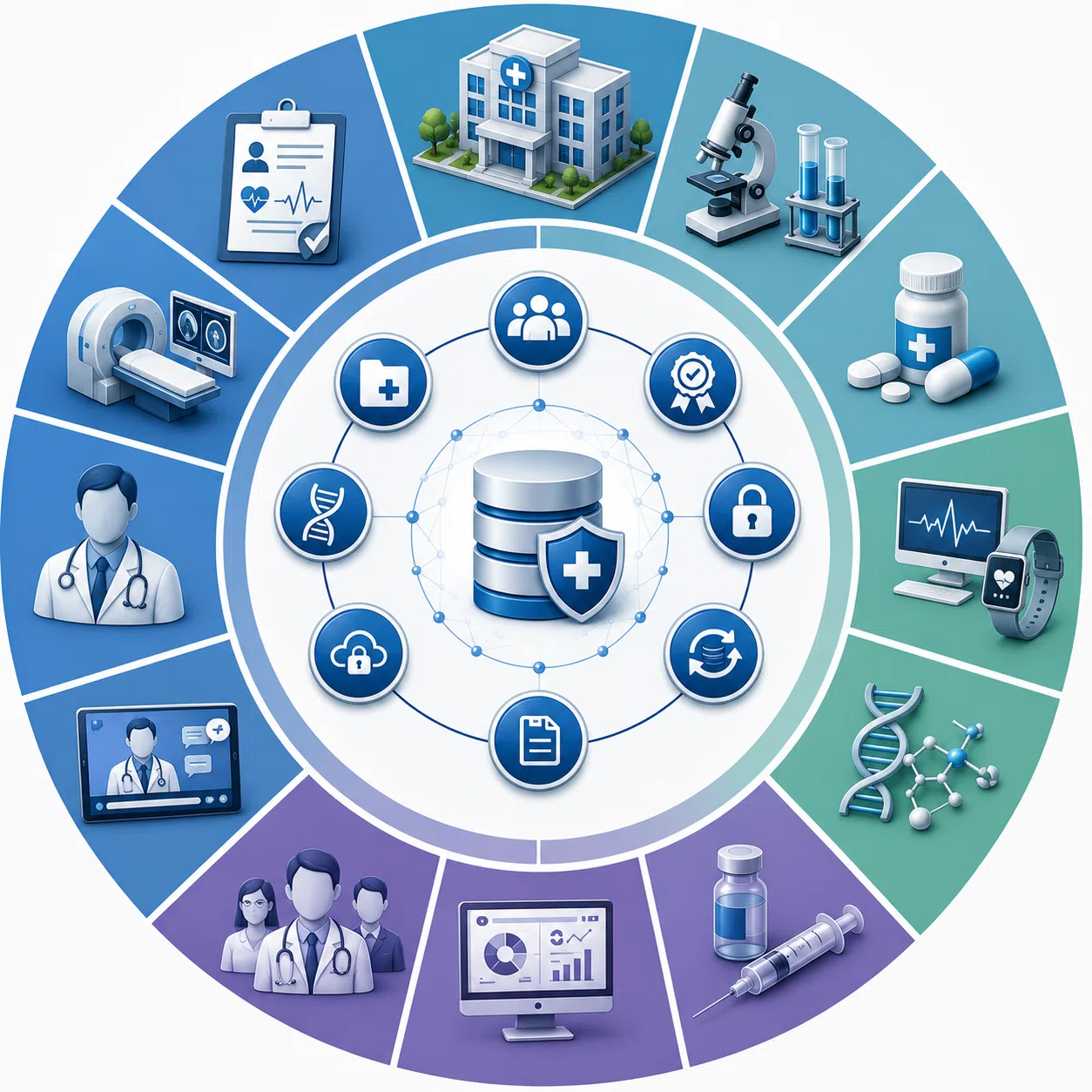
Healthcare and life sciences organizations hold some of the most sensitive data that exists, patient records, clinical trial results and genomic data among them. We implement HIPAA-grade classification, access governance and consent management that protect patient privacy while letting your teams use that data confidently for research, analytics and AI-powered clinical decision support.
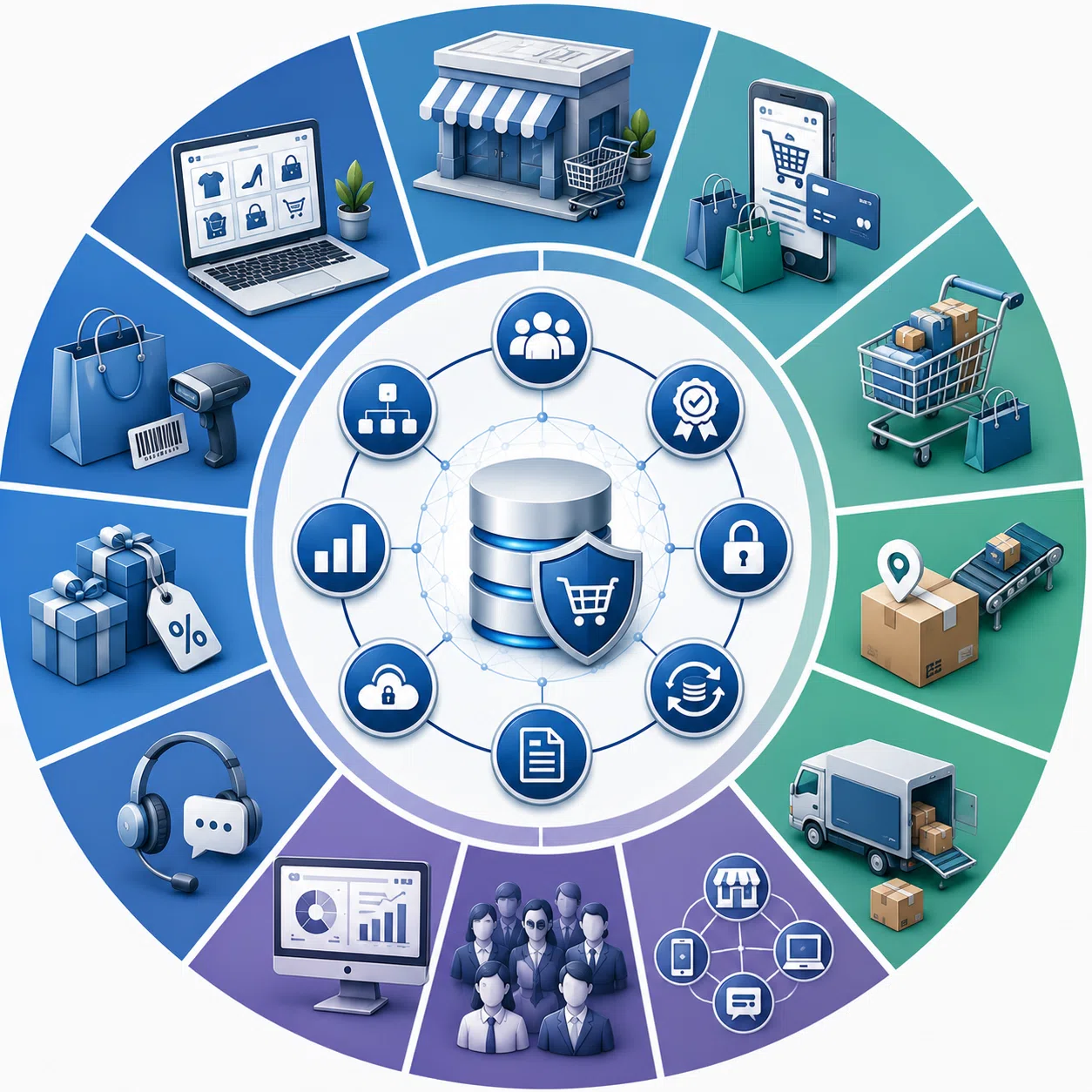
Retail & E-commerce
Retail and e-commerce brands generate customer data across storefronts, marketplaces, loyalty programs and mobile apps, often in conflicting formats with no clear owner. We build golden customer records, consent governance and classification that keep every channel GDPR and CCPA compliant, so personalization, marketing and AI recommendation engines run on data customers actually trust.
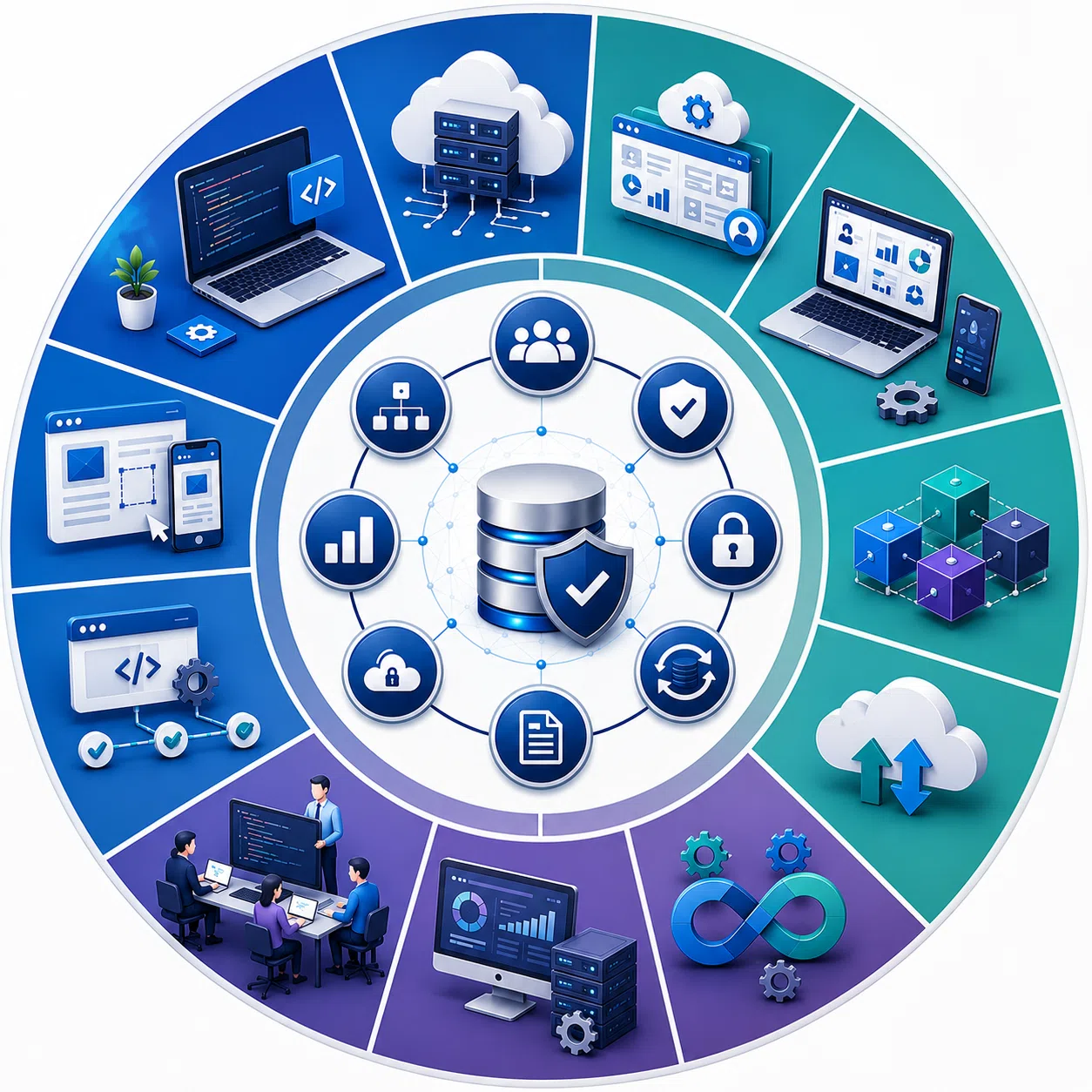
Technology & SaaS
Technology and SaaS companies scale product, usage and customer data faster than most governance programs can keep pace with, especially once new features and AI capabilities join the roadmap. We build governed data foundations, automated classification and lineage tracking that keep pace with rapid growth, so new features ship on trustworthy data instead of waiting on manual review.
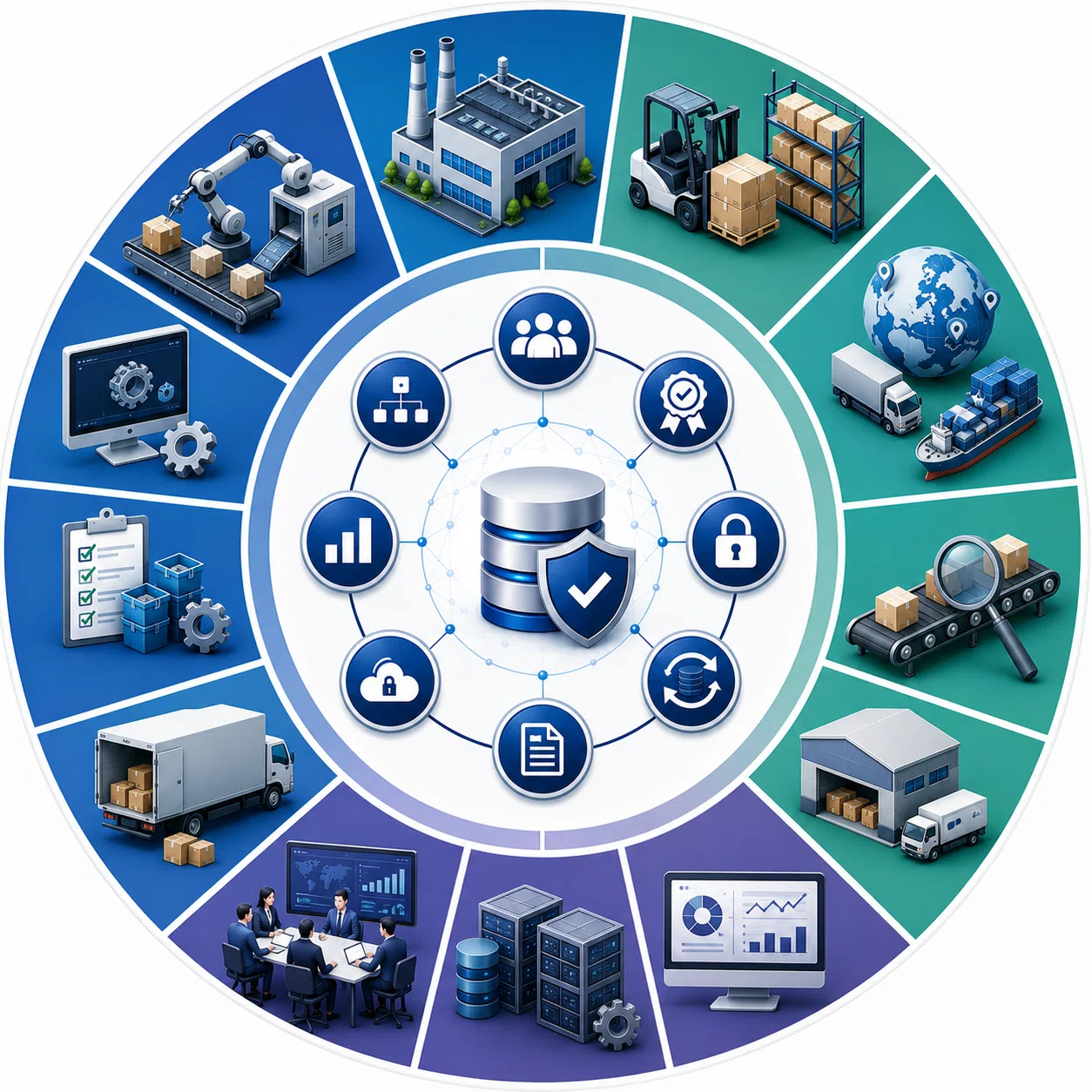
Manufacturing & Supply Chain
Manufacturers and supply chain organizations depend on consistent data across suppliers, plants, products and logistics partners, often spread across legacy ERP systems that were never built to talk to each other. We implement master data governance that keeps supplier, product and location records synchronized, so cross-system decisions on sourcing, quality and delivery hold up under scrutiny.
Your AI ambitions are only as good as your governed data.
Find out exactly where your enterprise data governance stands, and what is between you and audit-ready, AI-ready data.
Data Governance Maturity Assessment
A structured diagnostic for CDOs, CIOs, and Chief Compliance Officers. 18 questions across six governance dimensions. Receive a scored maturity profile and prioritised recommendations.
Your Details
Your Assessment Results
Overall Governance Maturity Level
Receive Your Full Report
A BluEnt governance consultant will prepare a personalised report with specific recommendations for your highest-priority gaps. Book a 60-minute discovery call to discuss your findings.
No commitment. No lengthy forms. Just an expert consultation focused on your governance challenges.
Frequently Asked Questions
What is enterprise data governance?
Enterprise data governance is the operating model (policies, ownership, controls and monitoring) that makes data across your organization accurate, secure, compliant and usable. Done well, data governance turns data from a liability into an asset your teams and your AI systems can trust.
What do BluEnt’s enterprise data governance services include?
Our enterprise data governance services cover governance strategy and readiness, data catalog, lineage and metadata, data quality and trust engineering, governance operating models, data adoption culture, and AI governance, privacy and compliance. It is end-to-end data governance consulting plus hands-on implementation.
How is data governance different from master data management?
Master data management creates a single trusted record for entities like customers, suppliers and products. Data governance is the broader framework that sets the rules master data management enforces: who owns data, how quality is measured, and how policies apply everywhere. Master data management is one capability inside a governance program.
Why does data governance matter for AI?
AI models are only as reliable as the data behind them. Without clear ownership, quality controls and lineage, AI outputs inherit bad, biased or non-compliant data. Data governance is what makes enterprise data safe to feed into models, agents and analytics.
How does data governance support regulatory compliance?
Data governance embeds regulatory requirements (GDPR, HIPAA, CCPA, SOX, BCBS 239, the EU AI Act) directly into how data is classified, accessed and audited. Instead of scrambling before an audit, you produce controls and evidence on demand.
Can enterprise data governance scale globally?
Yes. A federated model lets you enforce enterprise-wide standards while allowing regional policy variations for local regulations. BluEnt designs enterprise governance that operates across multiple business units, clouds and jurisdictions from one framework.
How do I hire BluEnt for data governance consulting?
Start with a free governance assessment. Book a 30-minute call, we review your governance maturity and gaps, and you get a prioritized roadmap. There is no RFP and no commitment required to begin.
Is BluEnt’s data governance work secure and enterprise-grade?
Yes. BluEnt is SOC 2 audited with 23+ years of enterprise delivery and offices across the US, Canada, UK, Netherlands and India. Governance and security controls are built into every governance engagement, not added afterward.
View Our Projects
Dive into our portfolio and witness how BluEnt transforms bold ideas into powerful digital solutions.
From enterprise-grade applications to data-driven platforms, each project tells a story of innovation,
ROI, and long-lasting impact.

HubSpot | Case Study
Asana-HubSpot Integration
Discover how BluEnt help HFS in achieving task automation with real-time data synchronization and efficient ecosystem.

Wordpress | Case Study
HFS Website Overhaul
Learn how BluEnt modernized the website to support heavy research content & deliver consistent UI/UX with better performance.
Wordpress | Case Study
Author Dashboard Transformation
Explore how BluEnt developed a unified & comprehensive dashboard for better performance tracking and report collaboration.

Wordpress | Case Study
Custom Elementor Widget
Learn how the custom elementor widget, developed by BluEnt, let HFS Research get off from its dependency over expensive…
Wordpress | Case Study
Custom WordPress Videocast Plugin
Discover how BluEnt created a custom WordPress videocast plugin to improve loading time & performance of HFS Research podcast…

Wordpress | Case Study
Report Analytic Dashboard
Discover how BluEnt designed & developed a comprehensive report analytic dashboard for HFS to generate accurate data.
Industry Trends & Innovation
Ideas That Drive Industries
Explore a 360° content hub featuring expert-written blogs, practical use cases, and FAQs,
all designed to spark innovation, solve challenges, and sharpen your competitive edge.
Whether you're shaping strategy or validating decisions, our insight-driven content
equips you with clarity, confidence, and the direction you need to stay ahead.