











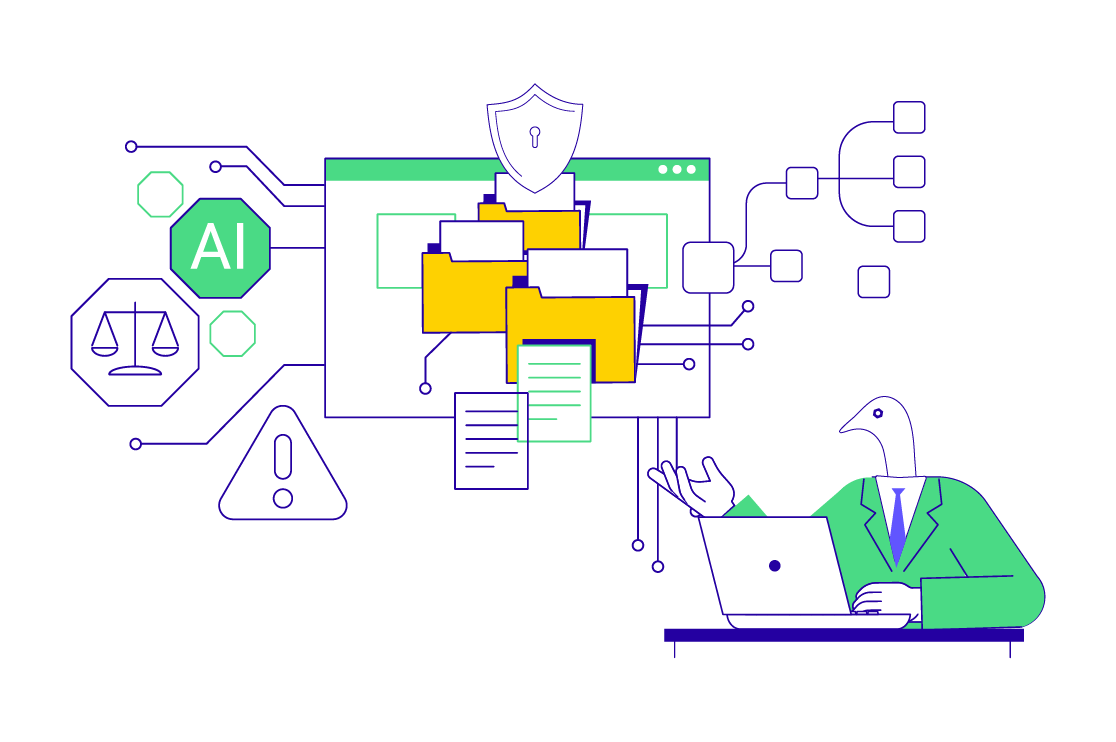
AI adoption across enterprises is accelerating at an unprecedented pace. From customer engagement and financial forecasting to product design and operational automation, AI is reshaping how organizations compete and grow.
However, the same forces that drive rapid innovation also create systemic vulnerabilities. In the rush to deploy AI, many enterprises are scaling models without adequate oversight, accountability, or control mechanisms. This creates exposure across financial, regulatory, ethical, security, and reputational dimensions.
AI governance is no longer about slowing innovation. It is about enabling organizations to innovate faster with confidence, clarity, and control. A well-designed AI governance framework allows enterprises to scale AI responsibly, meet regulatory expectations, protect stakeholders, and sustain long-term competitive advantage.
The AI Race and Its Hidden Enterprise Risks
The global AI race is intensifying. Enterprises and governments alike are competing to deploy increasingly powerful AI systems. This race dynamic encourages speed over discipline, experimentation over accountability, and output over resilience.
As a result, many risks remain hidden until they materialize at scale.
Financial and Capital Risks
The rapid expansion of AI infrastructure has introduced complex financial structures, including off-balance-sheet entities and special purpose vehicles. These mechanisms often obscure true exposure and long-term liabilities. Industry analysts have warned that unchecked AI investment could contribute to market instability if governance and transparency are not enforced.
Operational and Safety Risks
AI systems operate within complex socio-technical environments. Without rigorous testing, monitoring, and human oversight, failures can propagate quickly across business processes. History shows that complex systems fail not because of a single error, but due to layered oversights and weak governance.
Regulatory and Legal Risks
US enterprises face increasing scrutiny from regulators, investors, and customers. AI-related regulations, including emerging federal and state-level frameworks, demand transparency, accountability, and explainability. Organizations without governance structures risk non-compliance, fines, litigation, and forced system shutdowns.
Hidden and Emerging AI Risks Enterprises Often Overlook
Beyond the visible risks of speed and scale, several deeper risks demand executive attention.
Malicious Use and Proliferation
The democratization of AI tools increases the risk of misuse. Threat actors can leverage AI for cyberattacks, disinformation campaigns, and automated fraud. Enterprises deploying AI without strict access controls and monitoring may unintentionally enable harmful activity.
Loss of Human Judgment and Autonomy
Over-reliance on AI outputs can erode human critical thinking and decision-making capabilities. When AI systems function as black boxes, employees may defer judgment without understanding underlying assumptions, leading to poor strategic and operational decisions.
Data Security and Privacy Exposure
AI systems depend on large volumes of sensitive data. Risks include data leakage through permissive AI tools, training data manipulation, and unapproved employee use of external AI platforms. Without governance, enterprises lose visibility into how data is accessed, processed, and protected.
Bias and Ethical Failures
AI models trained on biased or incomplete data can reinforce discrimination in hiring, lending, healthcare, and law enforcement. Lack of transparency makes these issues difficult to detect and correct, increasing legal and reputational exposure.
Concentration of Power and Control
The cost and complexity of advanced AI development concentrates power among a small number of organizations. Without governance, enterprises risk dependency on opaque systems that limit strategic flexibility and future innovation.
Long-Term Control and Strategic Risk
As AI systems grow more autonomous, enterprises must ensure they remain aligned with human intent, business objectives, and ethical standards. Governance is the mechanism that preserves control as capability increases.
AI Governance as a Competitive Necessity
AI governance is often misunderstood as a compliance burden. In reality, it is a strategic capability that enables scale, trust, and speed.
Accelerating Innovation with Confidence
Governance streamlines AI development by standardizing workflows, improving data quality, and enabling continuous model monitoring. This reduces rework, accelerates deployment cycles, and increases adoption across business units.
Building Trust with Customers and Stakeholders
Transparent and responsible AI practices strengthen customer confidence and investor trust. Enterprises that demonstrate ethical AI use differentiate themselves in regulated and trust-sensitive markets.
Attracting and Retaining Top Talent
AI professionals prefer organizations with clear ethical standards and mature governance practices. A strong governance culture signals long-term stability and professional credibility.
Recommended Reading:
- Microsoft Data Fabric for Enterprise Compliance & Security
- Measuring the Invisible: KPIs for Data Governance
- Data Governance Solutions & Framework for Modern Enterprises
- Ensuring Data Traceability for Audit, Compliance, and Operational Resilience
- Databricks Data Governance: The CXO Playbook for Enterprise Trust
- Data Governance in 2026: What Enterprises Must Prioritize for a Secure Digital Ecosystem?
Four AI Questions Every CXO Must Ask
To integrate AI strategically, leaders must move beyond technology discussions and address business transformation.
-
What valuable activity becomes obsolete because of AI?
-
What capability becomes possible that was previously unattainable?
-
What offerings can be democratized safely at scale?
-
What experiences can be personalized responsibly?
AI governance provides the structure that allows these questions to be answered without exposing the enterprise to uncontrolled risk.
Key Areas CXOs Must Address
Successfully scaling AI across the enterprise requires more than advanced models or technical talent. It requires deliberate leadership decisions that balance innovation with accountability. CXOs play a critical role in setting direction, defining ownership, and ensuring AI delivers measurable business value without exposing the organization to unmanaged risk.
The following areas represent the core responsibilities executives must actively address when governing AI at scale.
Strategic Alignment
AI initiatives must be tightly aligned with business goals and competitive positioning. Too often, organizations deploy AI because the technology is available rather than because it clearly supports revenue growth, operational resilience, customer experience, or market differentiation.
For CXOs, strategic alignment means ensuring that every AI initiative answers a clear business question. Leaders must evaluate whether AI investments strengthen core capabilities, improve decision-making, or create defensible advantages in the market. AI programs that are not anchored to enterprise strategy tend to remain isolated pilots that consume resources without delivering sustained impact.
Governance provides the structure to prioritize AI use cases, allocate funding responsibly, and ensure leadership visibility into how AI supports long-term objectives.
Risk Management
AI introduces a new class of enterprise risk that extends beyond traditional IT concerns. Privacy violations, cybersecurity threats, regulatory non-compliance, algorithmic bias, and model drift can all result in financial penalties, legal exposure, and reputational damage.
Effective risk management requires continuous oversight rather than one-time approvals. CXOs must ensure that AI systems are regularly evaluated for compliance, performance, and unintended consequences. This includes clear escalation paths when risks are identified and defined roles for who is accountable for remediation.
A mature AI governance framework enables proactive risk identification, standardized controls, and consistent monitoring across the AI lifecycle. This approach reduces surprises and builds confidence with regulators, customers, and investors.
Data Readiness
AI systems are only as reliable as the data that powers them. Poor data quality, fragmented data ownership, and unclear data sourcing can undermine even the most sophisticated AI models.
CXOs must ensure that enterprise data is accurate, secure, accessible, and ethically sourced. This includes establishing data governance policies, defining stewardship roles, and enforcing standards for data usage across business units. It also means understanding where sensitive data is used in AI models and how it is protected.
Data readiness is not a technical detail. It is a strategic prerequisite for scaling AI responsibly and achieving consistent business outcomes.
Workforce Impact
AI adoption directly affects how people work, make decisions, and create value. Without thoughtful leadership, AI can generate resistance, fear of job displacement, and loss of trust among employees.
CXOs must actively address workforce impact by investing in skill development, redefining roles, and fostering a culture that encourages responsible AI use. Employees should understand how AI supports their work rather than replaces their judgment. Clear communication and training help teams adopt AI with confidence and accountability.
Governance ensures that human oversight remains central to high-impact decisions and that AI augments human capability rather than diminishing it.
Accountability and Transparency
As AI systems influence critical business decisions, accountability becomes essential. Enterprises must clearly define who owns AI outcomes, who approves deployments, and who is responsible when systems fail or behave unexpectedly.
Transparency is equally important. Decision-makers, auditors, and regulators increasingly expect AI systems to be explainable and traceable. CXOs must ensure that high-impact AI models can be understood, validated, and justified when challenged.
A governance framework establishes ownership structures and documentation practices that build trust internally and externally while supporting regulatory readiness.
Recommended Reading:
- Building Responsible AI with Databricks: Governance and Ethics in Practice
- How snowflake automates data quality, lineage & policy enforcement for large enterprises?
- Beyond the CDO: Making Every Leader a Data Steward
- Automated Data Lineage Tools & Frameworks: Benefits, Challenges, and Payoff for the C-Suite
- Why RBAC for C-suite Strategy Matters: Securing Enterprise Access & Accountability
- Zero Trust Data Security in Cloud Environments: Where to Start
Future-Proofing Your AI Strategy
AI capabilities, regulations, and risks continue to evolve. A future-proof AI governance framework must be adaptive, measurable, and applied consistently across the enterprise rather than confined to individual teams or projects.
Future-proofing AI is not about predicting every change. It is about building systems and processes that can adapt as expectations and technologies shift.
Establish a Dynamic AI Roadmap
An effective AI roadmap connects business priorities, technology investments, and governance requirements. CXOs should ensure that AI plans are reviewed regularly to reflect changes in strategy, market conditions, and regulatory expectations.
A dynamic roadmap helps organizations anticipate future risks, align stakeholders, and sequence AI initiatives in a way that balances speed with control.
Deploy Governance Sandboxes
Governance sandboxes provide controlled environments where teams can test high-risk or innovative AI models safely. These environments allow experimentation while enforcing guardrails around data access, model behavior, and compliance requirements.
For executives, sandboxes reduce exposure while enabling innovation. They make it possible to learn quickly without putting the broader enterprise at risk.
Define Ethical AI Principles
Ethical AI principles translate organizational values into practical guidance for how AI is designed, trained, and deployed. CXOs should ensure these principles are clearly documented and consistently applied across teams.
Standardized documentation, such as model descriptions and validation records, helps explain how AI systems behave, where their limitations exist, and how risks are managed. This clarity supports trust, auditability, and long-term governance maturity.
Data Governance Maturity Assessment
A structured diagnostic for CDOs, CIOs, and Chief Compliance Officers. 18 questions across six governance dimensions. Receive a scored maturity profile and prioritised recommendations.
Your Details
Your Assessment Results
Overall Governance Maturity Level
Receive Your Full Report
A BluEnt governance consultant will prepare a personalised report with specific recommendations for your highest-priority gaps. Book a 60-minute discovery call to discuss your findings.
Embed Security and Trust
Security must be embedded throughout the AI lifecycle. This includes strong access controls, robust cybersecurity practices, and safeguards that protect data integrity.
AI systems often become attractive targets for malicious actors. Governance ensures that security measures evolve alongside AI capabilities and that sensitive enterprise data remains protected.
Enable Continuous Monitoring
AI systems do not remain static once deployed. Model performance can degrade, data patterns can change, and risks can emerge over time.
Continuous monitoring allows organizations to track AI behavior, detect anomalies, and respond quickly when issues arise. CXOs benefit from real-time visibility into AI performance and risk posture, enabling informed decision-making and timely intervention.
Conclusion: Governing AI Is Governing the Future Enterprise
Enterprises that succeed in the AI era will not be defined by how quickly they deploy technology. They will be defined by how responsibly and strategically they scale it.
Governing AI is ultimately about governing the future of the enterprise. It requires discipline, foresight, and leadership commitment to ensure AI strengthens the organization rather than exposing it to hidden risk.
At BluEnt, we help CXOs design and operationalize AI governance frameworks that support responsible innovation at scale. Our approach integrates governance, risk management, compliance, and MLOps to ensure AI systems remain secure, explainable, and aligned with business objectives.

 Governing AI Tools in AEC: Copilot, Digital Twins, and Generative Design
  Data Governance for AI and Advanced Analytics: Building the Foundation That Works
  Centralized vs. Federated vs. Hybrid Data Governance: Which Model Fits Your Organization
  Data Governance Roles and Responsibilities in AEC Organizations