












The 2026 Governance Imperative
Enterprise data governance in 2026 is no longer a back-office data management function. It is a board-level governance concern driven by three simultaneous pressures: the obligation to govern AI systems under new and emerging regulatory frameworks; the expectation that enterprise data produces measurable analytical value; and the consequences of data breaches, model failures, and compliance violations that are now routinely reaching executive and board attention. Organizations that treat data governance as a cost of compliance are already behind organizations that treat it as a capability platform for competitive performance.
Data Governance Maturity Assessment
A structured diagnostic for CDOs, CIOs, and Chief Compliance Officers. 18 questions across six governance dimensions. Receive a scored maturity profile and prioritised recommendations.
Your Details
Your Assessment Results
Overall Governance Maturity Level
Receive Your Full Report
A BluEnt governance consultant will prepare a personalised report with specific recommendations for your highest-priority gaps. Book a 60-minute discovery call to discuss your findings.
Why 2026 Is a Pivotal Year for Enterprise Data Governance
Three developments converge in 2026 to make it the most significant year for enterprise data governance since the introduction of GDPR in 2018. Each development creates its own governance obligation; together they create an urgency that CDOs and data leaders in every industry are navigating simultaneously.
The EU AI Act Obligation Window
The EU AI Act (Regulation 2024/1689) entered into force on 1 August 2024. The compliance timeline established by the Act means that organizations placing high-risk AI systems on the EU market must have demonstrable AI governance, including the data governance requirements in Article 10, in place from 2 August 2026. For organizations in the Netherlands and those serving EU customers from the UK, Canada, Australia, or elsewhere, this is a live compliance deadline, not a future planning horizon.
Article 10’s data governance requirements for high-risk AI systems include: documented data collection and preparation practices, training dataset bias examination, data gap identification, and fitness-for-purpose assessment. These are data governance deliverables. Organizations that do not have a functioning data governance program cannot produce these by 2026 through policy work alone.
The AI Program Maturity Problem
Organizations that invested in AI and machine learning programs in 2022 to 2024 are now experiencing the consequences of deploying those programs on ungoverned data.
Model performance degradation, training data bias issues, feature pipeline failures, and the inability to audit AI decisions are now operational problems that are reaching the attention of regulators and boards. The governance programs needed to prevent these problems have a 12-to-18-month implementation lead time. Organizations that have not started are already behind.
The Data Product Maturity Transition
Enterprise data teams have shifted from a services model, where data is provided on request to business stakeholders, to a products model, where governed reusable data assets are published to internal consumers as a platform.
This shift requires a different governance model: one that manages data products as first-class enterprise assets with defined owners, quality standards, publication criteria, and lifecycle management. Organizations that have not adapted their governance frameworks to support data products are finding that their data platforms are creating ungoverned data sprawl rather than governed by analytical capability.
Table of Contents:
- Why 2026 Is a Pivotal Year for Enterprise Data Governance
- The Regulatory Compression Driving Governance Urgency
- Seven Data Governance Priorities for 2026
- Industry-Specific Governance Priorities: Four Verticals
- The Organizational Design Challenge: Capability vs. Compliance
- Building the 2026 Data Governance Roadmap
- Frequently Asked Questions
The Regulatory Compression Driving Governance Urgency
The regulatory environment for enterprise data in 2026 is more complex than any previous year. Multiple regulatory frameworks are simultaneously active, with overlapping scope and conflicting implementation approaches. Organizations operating in multiple jurisdictions face governance obligations from several directions at once.
EU AI Act and GDPR Intersection
The EU AI Act’s data governance requirements for AI systems intersect with GDPR’s data protection requirements in ways that require integrated governance responses. An organization building a high-risk AI system on personal data must simultaneously satisfy Article 10 of the AI Act (data governance for AI training data) and GDPR Articles 5, 13, and 35 (data minimization, transparency, and impact assessment for automated processing).
These requirements cannot be addressed by separate compliance teams operating independently. They require a unified data governance framework that addresses AI and data protection requirements as an integrated compliance obligation.
Evolving Regulatory Expectations in Australia and New Zealand
The Australian Privacy Act 1988 reform process, which has been active since the Australian Law Reform Commission review in 2023, is expected to produce amendments that align the Australian framework more closely with GDPR standards, including stronger requirements for data governance documentation and accountability.
Organizations with operations in Australia should be building governance programs that can accommodate GDPR-equivalent requirements rather than optimizing purely for the current APPs standard.
New Zealand’s Privacy Act 2020 has been in full effect since December 2020 and includes a mandatory privacy breach notification requirement (Privacy Principle 6A under the Act). The Privacy Commissioner has indicated increasing focus on algorithmic decision-making and AI governance as areas of enforcement interest. AEC and manufacturing organizations with operations in New Zealand should ensure that their governance programs address the Privacy Act’s requirements as a live compliance obligation.
Sector-Specific Regulatory Updates
BCBS 239 compliance reviews by the Basel Committee and national supervisors are ongoing, with increasing focus on whether banks’ data governance programs for risk data are keeping pace with the complexity of data environments that now include cloud-native infrastructure, third-party data, and AI-generated analytics.
Financial services organizations in the UK (regulated by the FCA and PRA), Australia (APRA), and the Netherlands (AFM and DNB) should treat BCBS 239 as a live governance standard with active supervisory attention, not a historical compliance milestone.
In Healthcare, the US HHS Office for Civil Rights enforcement of HIPAA has increasingly focused on data access controls and audit trail requirements, both of which are direct data governance deliverables.
The NHS Data Security and Protection Toolkit in the UK requires annual governance assessments that include data quality and access control components. Healthcare organizations in both jurisdictions should ensure their data governance programs address audit trail and access management requirements explicitly.
Data Governance Maturity Assessment
A structured diagnostic for CDOs, CIOs, and Chief Compliance Officers. 18 questions across six governance dimensions. Receive a scored maturity profile and prioritised recommendations.
Your Details
Your Assessment Results
Overall Governance Maturity Level
Receive Your Full Report
A BluEnt governance consultant will prepare a personalised report with specific recommendations for your highest-priority gaps. Book a 60-minute discovery call to discuss your findings.
Seven Data Governance Priorities for 2026
The following seven priorities represent the most consequential data governance investments enterprise organizations can make in 2026. They are ranked in order of strategic urgency, not organizational difficulty. Each priority has material business, regulatory, or competitive implications for organizations that do not address it.
Priority 1: AI Data Governance: Aligning Governance with AI Program Requirements
AI programs are the primary driver of data governance investment in 2026. Every AI initiative in the organization depends on data that is governed to a standard sufficient for reliable model training and production performance. Priority 1 for 2026 is ensuring that the data governance program explicitly covers the domains used by AI programs, with defined ownership, documented quality thresholds, end-to-end lineage, and change management processes that notify AI teams when upstream data changes.
Organizations that treat AI governance as a separate workstream from data governance are creating duplicated structures and governance gaps. The most effective 2026 programs integrate AI data governance requirements into the existing data governance framework rather than building parallel governance programs for AI.
Priority 2: Data Product Governance: Governing the Data Mesh and Data Product Layer
The shift to data products and data mesh architectures has created a new governance challenge: decentralized data production with inconsistent quality standards, incompatible data models, and ungoverned access.
Priority 2 for 2026 is extending the governance framework to cover data products explicitly, including: publication standards that a data product must meet before it can be consumed by downstream programs, quality SLAs that data product owners are accountable for maintaining, and a data product catalogue that makes governed data products discoverable.
This does not require implementing a full data mesh architecture. It requires that whatever data production model the organization uses, the governance program treats data products as governed assets with defined owners, standards, and lifecycle management.
Priority 3: Regulatory Compliance Architecture: Building for Multiple Jurisdictions
Enterprise organizations with operations in multiple jurisdictions can no longer maintain separate compliance programs for each regulatory framework. The cost and complexity of running parallel GDPR, HIPAA, BCBS 239, EU AI Act, Privacy Act (Australia), and Privacy Act 2020 (New Zealand) compliance programs is unsustainable.
Priority 3 for 2026 is rationalizing governance documentation and controls into a common governance architecture that can satisfy multiple regulatory frameworks simultaneously, with jurisdiction-specific variations managed as configuration overlays rather than separate programs.
Priority 4: Data Quality Engineering: From Reactive to Proactive Quality Management
Most data quality programs in 2026 are still reactive: quality issues are identified when downstream programs fail or when anomalous analytics outputs trigger investigation. Priority 4 is implementing data quality engineering: automated quality monitoring at the pipeline level that identifies quality degradation before it reaches downstream consumers.
This requires defining quality rules at the data domain level, implementing automated profiling and monitoring data pipelines, and establishing a quality incident management process that routes issues to accountable data owners.
The immediate business impact of proactive quality management is a reduction in the time data engineers and data scientists spend diagnosing and fixing data quality issues in their programs. This is currently the largest single source of productivity loss in enterprise analytics teams.
Priority 5: Access Governance Modernization: Zero-Trust Data Access
Legacy data access governance, where access permissions are defined at system level and reviewed annually, is inadequate for cloud-native data environments where data assets multiply rapidly, access patterns change continuously, and regulatory requirements demand demonstrable access controls for sensitive data.
Priority 5 for 2026 is modernizing access governance to a zero-trust model where: access to sensitive data requires explicit, role-based authorization reviewed on a defined cycle; access requests are approved by data owners (not just IT administrators); and access logs are monitored for anomalous patterns. This is both a governance requirement and a security control.
Priority 6: Governance Metrics and Business Value Measurement
Data governance programs that cannot demonstrate business value are governance programs that lose funding in the next budget cycle. Priority 6 for 2026 is establishing governance metrics that connect governance activities to business outcomes: time-to-data for analytical programs, data quality incident rates and their downstream cost impact, AI model reliability metrics and their governance antecedents, and compliance audit outcomes.
CDOs who can show that governance investment reduced model failures, shortened analytics development cycles, and prevented regulatory findings are CDOs who maintain and grow governance program budgets.
Priority 7: Governance Organizational Design: Accountability Over Policy
The most common failure mode in enterprise data governance programs is a gap between governance policy and governance practice. Policy exists. Role definitions exist. Data owners are documented. But accountability is not enforced; quality standards are not maintained, and governance deliverables are not produced.
Priority 7 for 2026 is closing the gap between governance architecture and governance accountability by embedding governance responsibilities into performance frameworks, establishing data stewardship councils with real decision authority, and building escalation paths for governance failures that reach executive attention before they become regulatory or operational crises.
| Priority | Business Driver | 2026 Risk if Unaddressed |
|---|---|---|
| AI Data Governance | AI program reliability and EU AI Act compliance | Model failures, regulatory fines, AI program shutdown |
| Data Product Governance | Analytics platform value and reuse | Data sprawl, duplicate engineering, ungoverned consumption |
| Multi-jurisdiction Compliance | GDPR, AI Act, HIPAA, BCBS 239, APPs simultaneous | Parallel program cost, compliance gaps, enforcement exposure |
| Data Quality Engineering | Analytics reliability and AI training data integrity | AI model degradation, analytics errors, engineer productivity loss |
| Access Governance Modernization | Zero-trust security and regulatory access controls | Data breach exposure, GDPR/HIPAA enforcement, audit failure |
| Governance Metrics | Program budget justification and board reporting | Governance funding cuts, unclear ROI, program de-prioritization |
| Governance Accountability | Governance practice (not just policy) | Policy exists but practice does not follow; the program fails operationally |
Build Your 2026 Data Governance Roadmap
BluEnt’s Data Governance Strategy and Assessment service maps your organization against all seven priorities and produces a sequenced, resourced roadmap. Available for enterprises in the US, UK, Canada, Australia, New Zealand, and the Netherlands.
Industry-Specific Governance Priorities: Four Verticals
While the seven priorities above apply across industries, the most urgent items in each vertical’s 2026 governance agenda reflect the specific regulatory environment, operational data challenges, and strategic AI programs relevant to that sector.
Healthcare: Clinical AI Governance and Patient Data Access Control
Healthcare organizations in 2026 are managing the governance implications of clinical AI programs that are reaching production deployment. Clinical decision support tools, diagnostic imaging AI, and patient risk stratification models are moving from pilot to production across health systems in the US, UK, and Australia.
The governance gaps that were acceptable in pilot deployments, including undocumented training data provenance, informal model change management, and inadequate access controls on clinical data, are not acceptable in production.
For NHS Trusts and health organizations in England, the NHS Data Security and Protection Toolkit provides an annual governance assessment framework that covers data quality, access controls, and audit trail requirements. 2026 Toolkit assessments will increasingly reflect NHS guidance on AI governance in clinical settings. Scottish, Welsh, and Northern Irish health organizations operate under equivalent frameworks with similar governance requirements.
Australian health organizations governed under the Privacy Act 1988 and the Australian Privacy Principles face specific governance obligations when using patient data for AI training: the secondary use of health information for purposes not directly related to patient care requires either patient consent or a research exception, and must be managed under a privacy governance framework that is documented and auditable.
Financial Services: Model Risk Governance and Third-Party Data Governance
Financial services organizations in 2026 face governance challenges that extend beyond traditional internal data governance into two emerging areas: model risk governance for AI-driven decision systems, and third-party data governance for data sourced from vendors, partners, and market data providers.
Model risk governance is the systematic management of risks arising from the use of AI and quantitative models in business decisions. It is a regulatory expectation in the US (SR 11-7, the Federal Reserve’s supervisory guidance on model risk management), the UK (FCA and PRA’s model risk management principles), and Australia (APRA’s guidance on model risk).
In 2026, regulators in all three jurisdictions are paying increasing attention to whether model risk governance frameworks cover AI models as comprehensively as they cover traditional quantitative models. The data governance component of model risk, ensuring that the data used in models is of known quality, properly governed, and appropriately permissioned, is often the weakest link in existing model risk frameworks.
Third-party data governance is the emerging governance frontier for financial services in 2026. Financial institutions are increasingly dependent on market data vendors, alternative data providers, and cloud platform data services. The data quality, provenance, and access controls for these third-party data sources are typically less well-governed than internal data.
When third-party data is used in AI models, credit decisions, or risk calculations, the organization’s regulatory accountability for data quality extends to those external sources. Building a third-party data governance program that assesses vendor data quality and manages contractual data governance obligations is a 2026 priority for institutions operating in highly regulated markets.
Manufacturing: OT Data Governance and Supply Chain Data Transparency
Manufacturing organizations in 2026 are confronting two data governance challenges that are structurally different from the IT-centric governance frameworks that most data governance programs were built to address.
OT data governance covers data produced by operational technology systems including sensors, PLCs, SCADA systems, and manufacturing execution systems. It requires extending governance frameworks into the plant environment. OT data is the input for predictive maintenance AI, quality inspection AI, and energy optimization programs.
Governing OT data to a standard sufficient for these AI programs requires: sensor calibration standards that produce consistent data quality, time-stamping governance across OT systems to support temporal analysis, OT-to-IT data pipeline governance with quality validation gates, and OT data ownership definitions that assign accountability to plant operations rather than IT.
Supply chain data transparency is an emerging regulatory and commercial governance requirement in 2026. The EU’s Corporate Sustainability Reporting Directive (CSRD), which requires large companies to report on sustainability data including supply chain emissions, is creating governance obligations for manufacturing organizations with EU operations or EU customers.
The governance of supplier data, product lifecycle data, and carbon accounting data requires new data standards and governance controls that most manufacturers have not yet built.
For manufacturers in Australia and New Zealand, the Modern Slavery Act 2018 (Australia) and comparable international standards on supply chain transparency create governance obligations for supply chain data that track labor practices. These are data governance requirements that need to be built into master data management and supply chain governance programs.
AEC: Asset Data Governance and Digital Twin Governance
AEC organizations in 2026 are managing the governance implications of digital twin programs and connected asset portfolios at a scale that requires systematic governance rather than project-by-project data management.
Digital twin governance requires that the data models underpinning digital twin programs are consistent, version-controlled, and owned by defined roles with accountability for data quality and currency. Digital twins that are not fed by governed data pipelines become stale models that erode stakeholder confidence and reduce the operational value they were built to deliver.
The governance requirement for digital twin programs is not different from the governance requirement for any data-dependent program: ownership, quality standards, change management, and lineage documentation for all data inputs.
ISO 19650’s information management framework, when implemented rigorously, creates the project-level data governance that supports enterprise analytics and AI programs. AEC organizations that have implemented ISO 19650 to its full standard, including Exchange Information Requirements, data delivery milestones, and information management role definitions, have a governance foundation that other industries do not.
The 2026 priority for these organizations is extending project-level ISO 19650 governance into asset operation, ensuring that the governance applied to information during project delivery continues through the operational life of the asset, supporting maintenance programs, refurbishment planning, and end-of-life decisions.
Recommended Reading:
The Organizational Design Challenge: Capability vs. Compliance
The most important organizational design question for enterprise data governance in 2026 is whether the governance program is designed primarily for compliance or primarily for capability. The answer determines the governance program’s structure, its resource model, and ultimately its success.
Compliance-oriented governance programs are designed to satisfy regulatory requirements and audit expectations. They produce policies, role definitions, and documentation. They are typically centralized, controlled by legal or risk functions, and measure success by the absence of regulatory findings. They often have limited connections to data programs that produce analytical values.
Capability-oriented governance programs are designed to enable data programs to produce reliable, reusable, high-quality data at an organizational scale. They produce governed data assets, maintained quality standards, and functioning in data stewardship communities. They are often federated or hybrid in structure, connected to business data domains, and measure success by the quality and availability of governed data assets.
The most effective governance programs in 2026 serve both purposes, but they are designed capability-first. Compliance requirements are met as a consequence of the governance controls needed to produce reliable, trustworthy data, not as a separate compliance activity. This design approach makes governance programs self-sustaining: business stakeholders invest in governance because it produces data they can use, not just because regulators require it.
DAMA International: Data Management Body of Knowledge (DMBoK 2)
DAMA DMBoK 2 defines data governance as ‘the exercise of authority, control, and shared decision-making (planning, monitoring, and enforcement) over the management of data assets.’ The emphasis on shared decision-making is central to the capability vs. compliance design question. Governance that relies on central authority alone produces compliance artefacts. Governance that distributes accountability through shared decision-making structures produces operational governance practice.
ISO/IEC 38505-1:2017 | Governance of Data
ISO/IEC 38505-1 establishes that data governance involves directing, evaluating, and monitoring the management of data assets. Section 6 of the standard describes the governing body’s responsibility to ‘evaluate the current and future use of data,’ ‘direct preparation of policies and strategies,’ and ‘monitor conformance with policies and strategies.’ The distinction between governing body responsibility (evaluate, direct, monitor) and management responsibility (plan, build, run) is the organizational design principle that separates governance accountability from management execution.
Building the 2026 Data Governance Roadmap
A 2026 data governance roadmap for an enterprise organization should address three time horizons: immediate priorities (Q3 2026), medium-term investments (Q4 2026 to Q1 2027), and strategic capability build (2027 to 2028). The immediate priority horizon should focus on compliance deadlines and critical operational gaps.
The medium-term horizon should focus on the capability investments that deliver the most analytical and operational value. The strategic horizon should focus on the governance operating model that the organization needs to sustain governance at scale.
Immediate Priority: AI Act Compliance Readiness
For organizations with EU market exposure, the EU AI Act’s 2 August 2026 compliance date for high-risk AI systems is the most pressing immediate governance obligation.
Organizations should conduct an inventory of AI systems in production and development that may qualify as high-risk under Annex III of the Act, assess current data governance maturity against Article 10 requirements for each qualifying system, and produce a remediation plan for governance gaps that is resourced and time-bound. This work cannot wait for a broader governance program to be established.
Medium-Term: Data Quality Engineering and Governance Metrics
The investments that produce the most visible, measurable improvements in data program performance in the 6 to 12 month horizon are data quality engineering (automated quality monitoring at the pipeline level) and governance metrics (connecting governance activities to program outcomes).
Both require governance infrastructure: data ownership assignments, quality standard definitions, and domain-level quality rules, which the immediate priority work will have partially established. Building on that foundation to automate quality monitoring and track governance effectiveness is the medium-term roadmap priority that converts compliance-driven governance work into operational governance value.
Strategic: Governance Operating Model for Scale
The governance operating model, which covers how the organization structures roles, decisions, and accountability for data governance at scale, is the strategic investment that determines whether the governance program can grow with the organization’s data environment or becomes a bottleneck as data volumes and complexity increase.
The 2027 to 2028 horizon should address: whether the organization’s governance operating model is federated, centralized, or hybrid, and whether that design matches the organization’s data architecture and business structure; how governance accountability is embedded in business unit and domain team performance frameworks; and how the governance program integrates with data platform and analytics platform governance to create a unified governance ecosystem rather than a governance silo.
Start Your 2026 Data Governance Program with a Strategy Assessment
BluEnt’s Data Governance Strategy and Assessment service covers all seven 2026 priorities, maps your current governance maturity, identifies your highest-urgency gaps, and produces a sequenced roadmap you can execute. We work with Healthcare, Financial Services, Manufacturing, and AEC organizations across the US, UK, Canada, Australia, New Zealand, and Netherlands.
Frequently Asked Questions
What are the top data governance priorities for enterprises in 2026?The seven most consequential data governance priorities for enterprises in 2026 are: (1) AI data governance, aligning governance with AI program requirements and EU AI Act compliance; (2) Data product governance, governing the data mesh and data product layer; (3) Multi-jurisdiction compliance architecture, building governance that satisfies GDPR, AI Act, HIPAA, BCBS 239, and APPs simultaneously; (4) Data quality engineering: automated quality monitoring at the pipeline level; (5) Access governance modernization: zero-trust data access models; (6) Governance metrics: demonstrating business value; and (7) Governance accountability: closing the gap between governance policy and practice.
How should enterprises prioritize data governance investment in 2026?Enterprises should prioritize data governance investment in 2026 based on two criteria: regulatory deadlines with material compliance consequences, and operational gaps that are causing measurable cost in data preparation, model failure, or analytics reliability. For EU-exposed organizations, the EU AI Act’s 2 August 2026 compliance date for high-risk AI systems is the non-negotiable first priority. For all organizations, AI data governance is the investment with the highest compounding return. It reduces AI program costs, improves model reliability, and satisfies an increasing share of regulatory obligations simultaneously.
What does the EU AI Act require from enterprise data governance programs?Article 10 of the EU AI Act (Regulation 2024/1689) requires that providers of high-risk AI systems implement data governance and management practices for their training, validation, and testing datasets. These practices must address: the design choices in data collection, data preparation processes (annotation, labelling, cleaning), examination of datasets for possible biases, identification of relevant data gaps, and assessment of fitness for purpose relative to the AI system’s intended function. These requirements are data governance deliverables. They cannot be satisfied through policy documentation alone without an operational governance program producing them.
How long does it take to implement enterprise data governance?A foundational enterprise data governance program covering data ownership, quality standards for priority domains, access governance, and basic lineage documentation, can be established in 16 to 24 weeks for a focused scope. Full enterprise governance maturity, covering all data domains, integrating governance with AI programs, and embedding governance accountability across the organization, typically takes 18 to 36 months depending on organizational complexity. BluEnt recommends a phased approach starting with the domains and programs that have the highest regulatory exposure or analytical value, building governance capability iteratively rather than attempting to govern everything simultaneously.
What is the difference between data governance and data management?Data governance is the decision-making framework: who has authority over data, what standards apply, and how compliance with those standards is monitored and enforced. Data management is the execution of those decisions: the engineering, architecture, quality management, and operations that produce and maintain data assets. Governance without management produces policies with no operational effect. Management without governance produces data engineering programs with no consistent standards, no ownership accountability, and no regulatory defensibility. Enterprise data programs need both, but they require different organizational structures, different roles, and different success metrics. See Blog 05 in this series for a detailed comparison of Data Governance vs. Data Management vs. MDM.

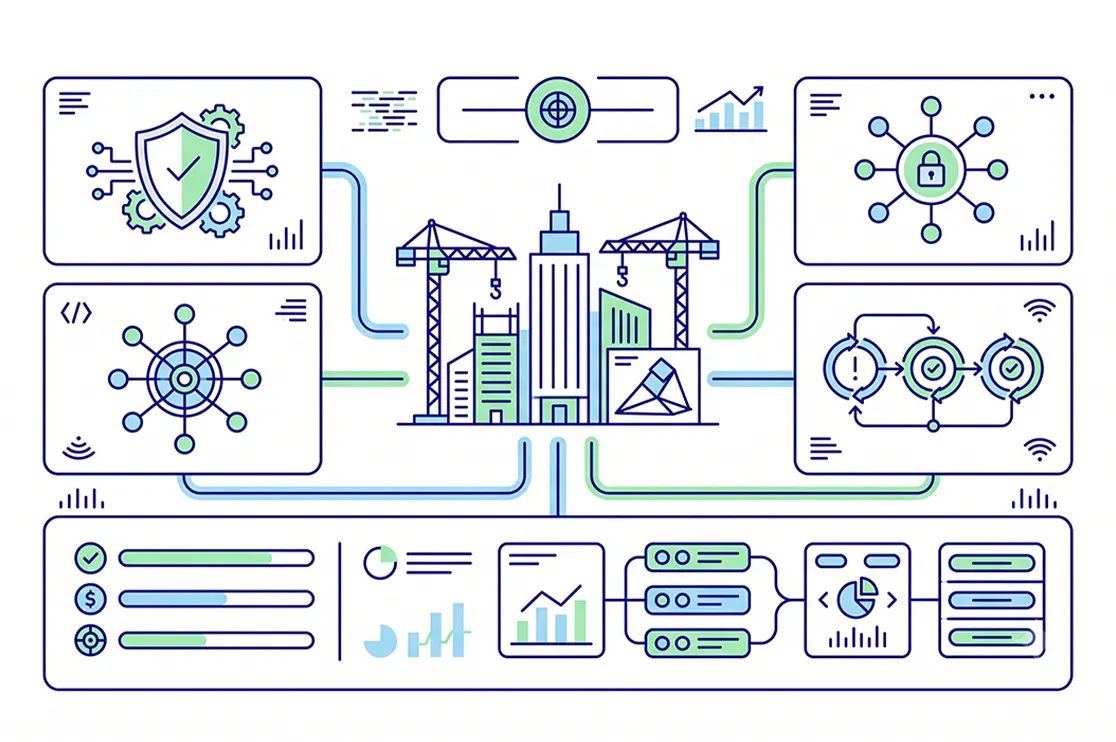 Governing AI Tools in AEC: Copilot, Digital Twins, and Generative Design
  Data Governance for AI and Advanced Analytics: Building the Foundation That Works
 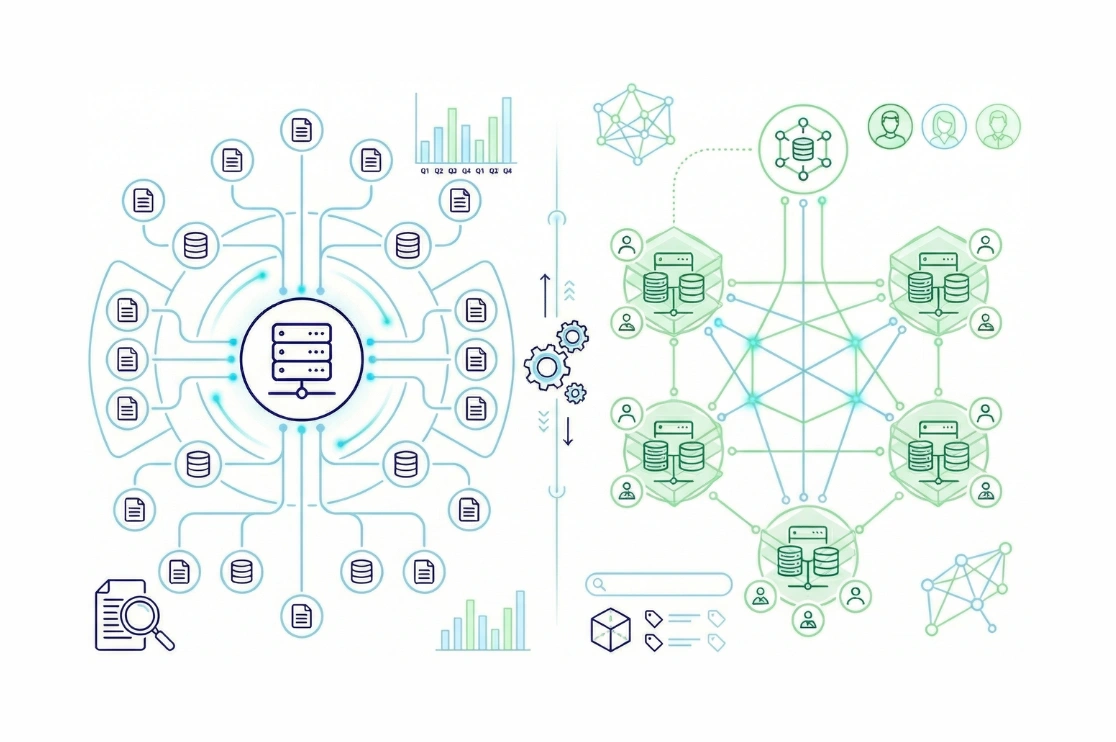 Centralized vs. Federated vs. Hybrid Data Governance: Which Model Fits Your Organization
 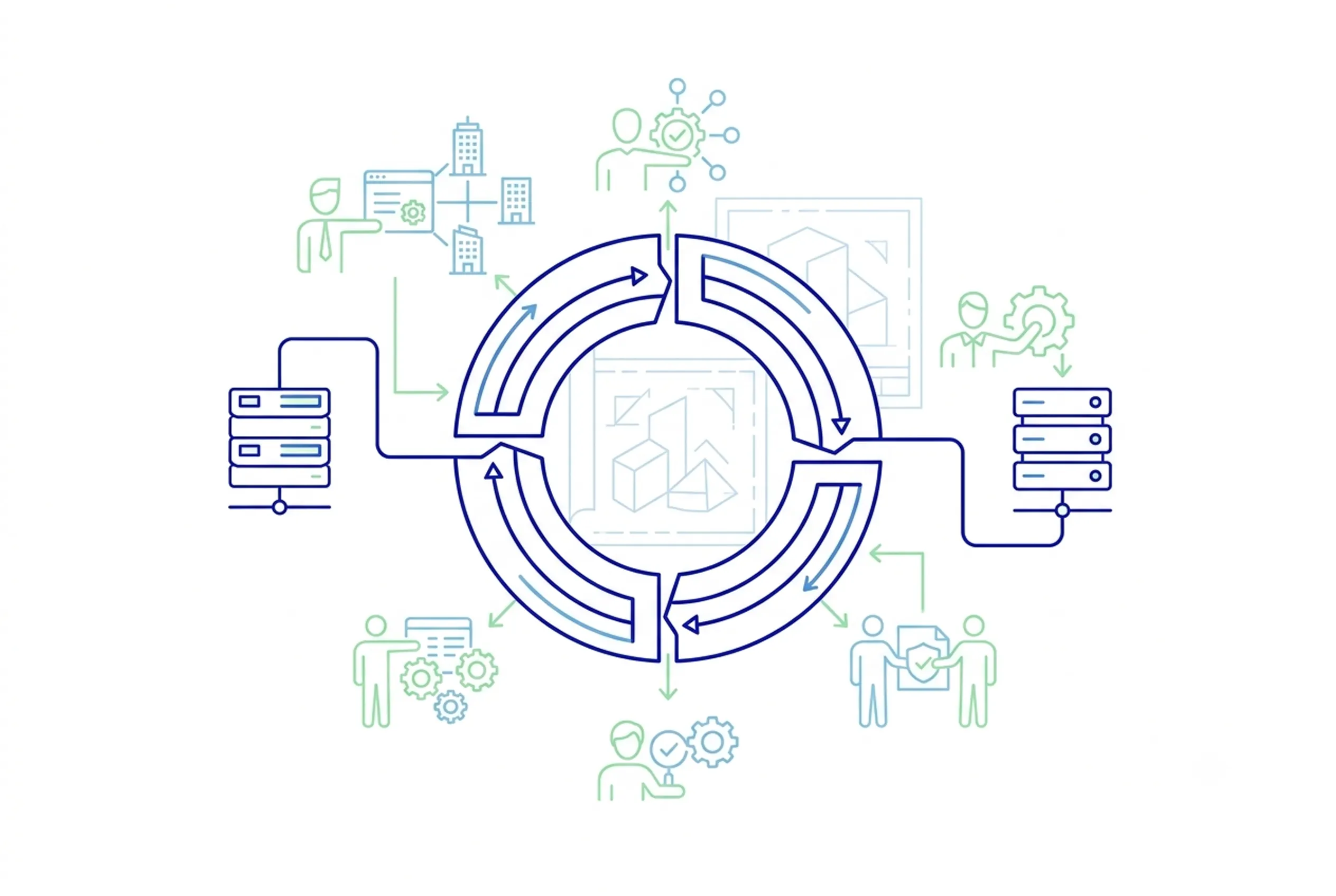 Data Governance Roles and Responsibilities in AEC Organizations


Really well-structured article. The point about treating data quality as a business standard rather than an IT task is one that most organizations still get wrong governance programs often live inside IT teams while business units continue making decisions on inconsistent data, and the disconnect never gets resolved. The section on defining clear governance roles is equally important in practice, the biggest governance failures I’ve seen aren’t technical, they’re accountability failures. Nobody owns the problem until there’s a breach. One thing I’d love to see explored further is how small and mid-sized enterprises can realistically implement a zero-trust approach without the budget and tooling that large enterprises take for granted the principles are sound but the implementation gap is significant.