











The Lakehouse Governance Opportunity
The Databricks Lakehouse platform, built on open formats including Delta Lake, provides a unified environment for data engineering, machine learning, and analytics programs. Unlike traditional data warehouse architectures that separate storage from compute and analytics from AI workloads, the Lakehouse architecture keeps all data in a single managed platform. This architectural consolidation creates a governance opportunity: when all data programs operate within one platform, the governance controls applied to that platform cover the entire data and AI portfolio simultaneously. Unity Catalog is Databricks’ native governance layer for the Lakehouse, providing centralized access control, data lineage, data discovery, and audit logging across all workspaces and data assets in the platform.
Free Lakehouse Governance Readiness Assessment
Find out exactly where your Snowflake or Databricks governance stands — and what to fix first. 15 targeted questions across five critical dimensions. Under six minutes.
Your Platform
Your Details
Your Lakehouse Governance Score
Overall Readiness Level
Book Your 60-Minute Scoping Call
A BluEnt Snowflake and Databricks governance specialist will review your results and walk you through a prioritised configuration plan — specific to your platform, your industry, and your regulatory environment.
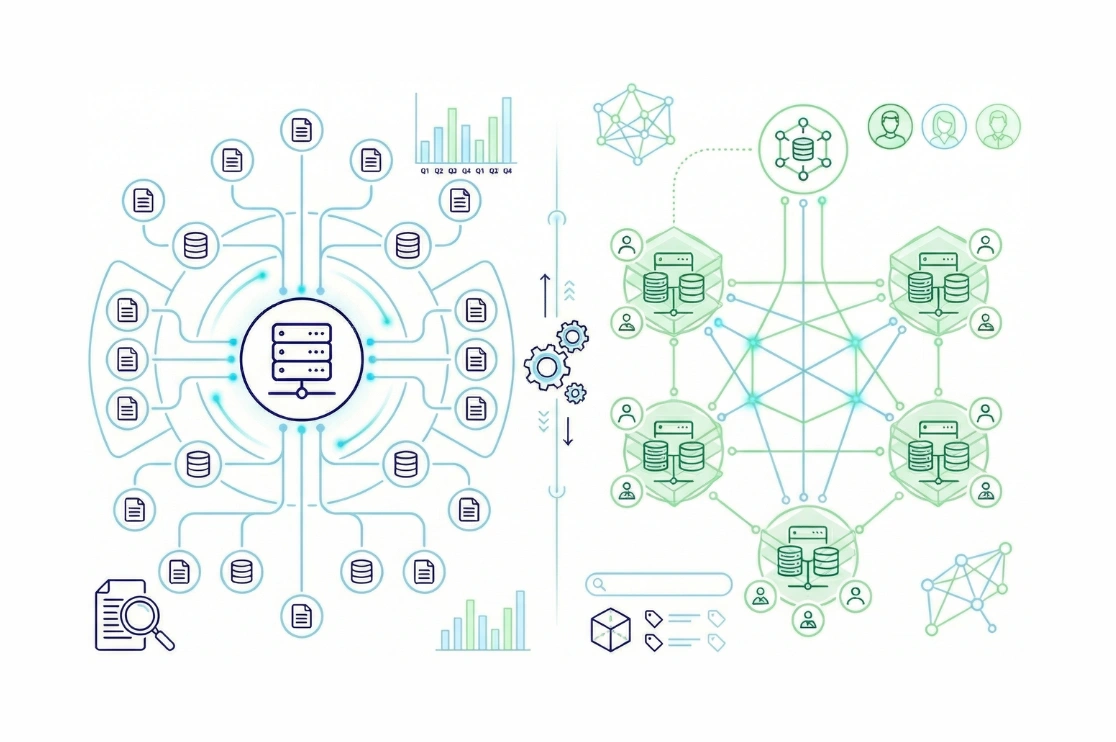
Traditional enterprise data architectures create a governance fragmentation problem. Data warehouses, data lakes, streaming platforms, and AI feature stores each have their own access control models, their own lineage tracking mechanisms (or none at all), and their own metadata layers.
Governing data across this fragmented landscape requires stitching together multiple governance tools, maintaining consistent policies across incompatible systems, and building manual lineage documentation to bridge the gaps between platforms.
The Databricks Lakehouse architecture addresses governance fragmentation at the platform level. Because all data, including batch, streaming, structured, semi-structured, and unstructured formats, can be managed within a single platform on open storage formats, governance controls applied at the platform level reach all data workloads.
An access control policy defined in Unity Catalog applies to SQL analytics queries, PySpark data engineering jobs, and MLflow model training runs. A lineage record captured automatically by Unity Catalog covers data movements from ingestion through transformation through model training. A data quality constraint defined on a Delta table applies to every write operation on that table from any workload type.
This does not mean that Databricks Lakehouse makes data governance automatic. Platform-level governance capability still requires governance design: data ownership assignments, quality standard definitions, access policy architecture, and organizational accountability structures. What the Lakehouse architecture does is make governance controls technically implementable at scale within a single platform, rather than requiring a separate governance tool chain for each data system.
For enterprises with existing Databricks deployments that have not yet implemented formal governance, the Lakehouse architecture means that the governance controls needed to meet regulatory requirements and AI program quality standards can be implemented on the existing platform. There is no requirement to migrate to a new architecture or tool before beginning governance implementation.
Table of Contents:
- Why Lakehouse Architecture Changes the Data Governance Problem
- Unity Catalog: The Native Governance Layer for Databricks Lakehouse
- Five Governance Capabilities Unity Catalog Delivers
- Delta Lake and Data Quality Governance
- Industry Applications: Databricks Governance Across Four Verticals
- Regulatory Compliance on Databricks Lakehouse
- Governance Design Principles for Databricks Implementations
- Frequently Asked Questions
Unity Catalog: The Native Governance Layer for Databricks Lakehouse
Unity Catalog is Databricks’ unified governance solution for data and AI assets across the Lakehouse platform. It provides a three-level namespace for data organization (catalog, schema, table/volume/function), centralized identity and access management, automated data lineage tracking, a searchable data discovery interface, and a comprehensive audit log of all data access and modification events.
The three-level namespace in Unity Catalog (catalog, schema, and table/volume) maps naturally to enterprise governance structures. Catalogs can be organized by business domain, data classification, regulatory boundary, or project scope. Schemas within catalogs provide secondary organizational granularity.
This namespace structure enables governance policies to be applied at the appropriate level: a HIPAA compliance policy applied at the catalog level covers all tables within that catalog; a more specific access restriction applied at the schema level covers a subset of tables within a catalog; and row-level and column-level security applied at the table level provides the most granular data protection controls.
Unity Catalog’s access control model uses standard ANSI SQL GRANT/REVOKE syntax, which makes it compatible with existing SQL-based access governance documentation and auditable using standard SQL tooling.
Permissions can be granted to individual users, groups (managed in the Databricks account console or synchronized from enterprise identity providers including Microsoft Entra ID, Okta, and AWS IAM Identity Center), and service principals for automated workloads. The combination of identity provider integration and SQL-based permissions creates an access governance model that can be audited, documented, and certified against regulatory requirements.
Five Governance Capabilities Unity Catalog Delivers
Capability 1: Centralized Access Control Across All Workspaces
In multi-workspace Databricks deployments, which are common in enterprises where development, staging, and production environments are separated or where different business units have their own workspaces, data governance policies defined in Unity Catalog apply consistently across all workspaces attached to the same Databricks account.
This eliminates the governance fragmentation that occurs when access policies are managed separately in each workspace. A data owner who revokes access to a sensitive dataset in Unity Catalog can be confident that the revocation applies to all workspaces, including development environments where test datasets may contain real sensitive data.
Capability 2: Automated Data Lineage
Unity Catalog captures data lineage automatically for SQL and Delta Lake operations without requiring manual lineage documentation or agent-based lineage tools. Column-level lineage shows precisely which source columns contribute to each target column through transformation pipelines. Table-level lineage shows the full graph of upstream dependencies and downstream consumers for any data asset in the catalog.
For regulatory compliance purposes, automated lineage provides the audit trail required to trace an AI model’s training data back to its original source, to demonstrate that personal data was not used in a context where it should have been excluded, and to identify all downstream programs affected by a data quality issue in a source table.
Capability 3: Data Discovery and Business Context
Unity Catalog includes a data discovery interface that makes governed data assets searchable and documentable. Data owners and stewards can attach business descriptions, owner metadata, and tags to catalogs, schemas, tables, and columns.
System-generated tags can automate the classification of data assets based on content patterns, identifying columns that likely contain personal data, financial data, or regulated data for follow-up governance review. The business context layer in Unity Catalog is the metadata management function that enables data consumers across the organization to find governed, trustworthy data assets without requiring manual inventory management.
Capability 4: Row-Level and Column-Level Security
Unity Catalog supports row-level security (restricting which rows a given user or group can read) and column-level security (restricting which columns are visible to a given user or group) through dynamic views and column masking functions. These controls are essential for organizations where different user populations have different data access entitlements for the same dataset: a compliance analyst may need to see transaction data excluding personally identifiable information; a customer service representative may need to see their assigned customer accounts but not accounts assigned to others; a data scientist may need access to anonymized training data but not the original identifiable records.
Implementing these controls at the Unity Catalog level means they apply consistently across all query tools, including notebooks, SQL analytics, and BI tools connected via SQL warehouse, without requiring separate implementation in each tool.
Capability 5: Comprehensive Audit Logging
Unity Catalog generates audit logs for all data access, permission changes, and metadata modifications. These logs are written to cloud storage in JSON format and can be queried using Databricks SQL or exported to SIEM and compliance monitoring tools.
For regulatory audit purposes, Unity Catalog audit logs provide the evidence needed to demonstrate who accessed sensitive data and when; whether access was consistent with the permissions granted; what permission changes were made and by whom; and whether any unauthorized access attempts were made. The audit log is a governance deliverable that supports HIPAA compliance, GDPR Article 30 processing activity records, BCBS 239 data access governance, and internal audit requirements.
| Governance Requirement | Unity Catalog Feature | Regulatory Applicability |
|---|---|---|
| Data access control | ANSI SQL GRANT/REVOKE, identity provider integration | HIPAA, GDPR, BCBS 239, APRA CPS 234 |
| Data lineage for audit | Automated column-level and table-level lineage | EU AI Act Art. 10, GDPR accountability, FDA SaMD |
| Sensitive data protection | Column masking, row-level security, dynamic views | HIPAA PHI, GDPR personal data, PCI-DSS |
| Data discovery and metadata | Searchable catalog, tags, business descriptions | DAMA DMBoK, ISO/IEC 38505-1:2017 |
| Access audit trail | Comprehensive JSON audit logs | GDPR Art. 30, HIPAA audit controls, FCA SM&CR |
| Data classification | System-generated and manual tags, content profiling | GDPR, Privacy Act (AU), Privacy Act 2020 (NZ) |
Design Your Databricks Governance Architecture
BluEnt’s Databricks implementation practice delivers Unity Catalog governance design, access control implementation, lineage configuration, and data quality framework setup. Available for enterprises in the US, UK, Canada, Australia, New Zealand, and the Netherlands.
Delta Lake and Data Quality Governance
Delta Lake, the open-source storage layer that underpins the Databricks Lakehouse, provides native data quality controls through its schema enforcement and data expectations features. These controls are complementary to Unity Catalog’s access and lineage governance: Unity Catalog governs who can access data and how it moves through the platform; Delta Lake governs whether data meets quality standards when it is written.
Schema Enforcement and Schema Evolution
Delta Lake enforces schema on write by default, rejecting records that do not conform to the table’s defined schema. This prevents the silent data quality degradation that occurs in data lakes when upstream sources introduce new or changed fields without coordination with downstream consumers.
Schema evolution is supported through explicit ALTER TABLE commands and, for additive changes, through the mergeSchema option, which provides a governed path for schema changes that documents the change and prevent silent schema drift.
For governance programs, schema enforcement is the technical implementation of data quality standards at the write layer. Defining and enforcing the schema for each governed data domain is a governance deliverable that prevents the most common source of downstream data quality issues: upstream sources writing data in formats that do not match the expectations of downstream consumers.
Delta Lake Constraints and Expectations
Delta Lake supports column constraints (NOT NULL, CHECK constraints) that enforce data quality rules at the write layer. Databricks has extended this capability through Lakehouse Monitoring, which provides automated data quality monitoring on Delta tables including completeness profiles, distribution statistics, and user-defined data quality metrics tracked over time.
For governance programs, Delta Lake constraints are the technical enforcement of data quality rules defined in the governance program. These controls convert policy-level quality standards into operational controls that reject or flag non-conforming data at the source.
Integrating Delta Lake quality controls with governance ownership creates an accountability chain: the data owner for a domain is responsible for defining the quality standards; the engineering team implements those standards as Delta Lake constraints and monitoring rules; automated monitoring produces quality metrics that the data owner reviews; and quality incidents are escalated to the data owner for remediation. This chain converts governance accountability into operational practice.
Data Governance Maturity Assessment
A structured diagnostic for CDOs, CIOs, and Chief Compliance Officers. 18 questions across six governance dimensions. Receive a scored maturity profile and prioritised recommendations.
Your Details
Your Assessment Results
Overall Governance Maturity Level
Receive Your Full Report
A BluEnt governance consultant will prepare a personalised report with specific recommendations for your highest-priority gaps. Book a 60-minute discovery call to discuss your findings.
Industry Applications: Databricks Governance Across Four Verticals
Healthcare: Governing PHI on the Lakehouse Platform
Healthcare organizations using Databricks Lakehouse for clinical analytics, population health, and AI program development face specific governance requirements for protected health information (PHI). HIPAA’s Security Rule requires that PHI be protected through access controls, audit controls, integrity controls, and transmission security.
Unity Catalog’s access control model, combined with column-level security and comprehensive audit logging, provides the technical infrastructure to meet HIPAA’s Security Rule requirements for PHI stored and processed on the Lakehouse platform.
The specific HIPAA Security Rule safeguards that Unity Catalog addresses include Technical Safeguard 164.312(a)(1) (access control) through GRANT/REVOKE permissions and identity provider integration; Technical Safeguard 164.312(b) (audit controls) through the Unity Catalog audit log; and Technical Safeguard 164.312(c)(1) (integrity controls) through Delta Lake schema enforcement and constraints.
Organizations building HIPAA compliance programs on Databricks should document how each Unity Catalog control maps to its HIPAA Security Rule counterpart to support HIPAA compliance audits and Business Associate Agreement compliance assessments.
For clinical AI programs, including machine learning models used in clinical decision support, diagnostic imaging analysis, or patient risk stratification, the automated lineage in Unity Catalog provides the training data provenance documentation required by the FDA’s framework for AI and machine learning-based Software as a Medical Device.
Organizations can demonstrate, through Unity Catalog lineage records, the complete path from training data source through transformation to model training, meeting the documentation requirements that the FDA expects for AI/ML SaMD submissions.
Financial Services: BCBS 239 Compliance and Model Governance on Databricks
Financial services organizations using Databricks for risk analytics, credit modeling, and fraud detection can use Unity Catalog’s governance capabilities to address BCBS 239’s data governance requirements directly.
BCBS 239 Principle 6 (accuracy and integrity) requires that risk data aggregation processes produce accurate, reliable data with appropriate controls; Principle 4 (completeness) requires that all material risk data is captured; Principle 8 (adaptability) requires that risk data infrastructure can support ad-hoc queries and data distribution. Unity Catalog’s access governance, audit logging, and lineage capabilities directly support the documentation and control requirements of BCBS 239.
For model risk governance, Unity Catalog’s lineage and versioning capabilities provide the model data provenance documentation that SR 11-7 (the US Federal Reserve’s model risk management guidance) and the UK PRA’s model risk management principles require.
Banks can demonstrate, through Unity Catalog lineage records, which data was used to train each model version, what data transformations were applied, and how the training dataset relates to the production data distribution, meeting the model documentation requirements of supervisory model risk expectations.
Australian financial institutions regulated by APRA are subject to CPS 234 (Information Security), which requires that information assets are classified and protected commensurate with their criticality and sensitivity. Unity Catalog’s tagging and classification capabilities provide the data classification layer that supports CPS 234 compliance, and its access controls provide the technical implementation of data protection controls proportionate to classification level.
Manufacturing: Governing OT Data and Production Analytics Lakehouses
Manufacturing organizations building Databricks Lakehouses for production analytics, predictive maintenance, and quality intelligence face governance challenges that originate in the OT environment. Sensor data, equipment logs, and manufacturing execution system data are produced by operational technology systems that do not have enterprise-grade data management natively.
When this data is ingested into the Lakehouse, the governance controls applied at the Databricks layer are the first point at which quality validation, lineage tracking, and access governance can be applied.
For predictive maintenance programs, Delta Lake schema enforcement ensures that sensor data arriving from OT systems conforms to the schema expected by predictive models. Schema violations, which often indicate sensor calibration changes, equipment replacements, or data pipeline modifications, are captured and reported rather than silently corrupting model training data.
Unity Catalog lineage tracks which sensor data assets contributed to each model version, providing the maintenance program with an auditable record of model training provenance.
Supply chain data governance on Databricks is relevant for manufacturing organizations subject to sustainability reporting requirements. The EU’s Corporate Sustainability Reporting Directive requires carbon accounting and supply chain due diligence reporting for organizations meeting its scope criteria.
Delta Lake’s ACID transaction support ensures that supply chain data updates are atomic and complete, preventing the partial-write data corruption that would compromise sustainability report integrity. Unity Catalog’s lineage tracks the transformation path from raw supplier data through carbon calculation models to reported figures.
AEC: Project Data Lakehouses and BIM Analytics Governance
AEC organizations building Databricks Lakehouses for enterprise analytics over project data face governance challenges that are specific to the project-based nature of AEC data. Project data accumulates in project-specific Common Data Environments with inconsistent naming conventions, varying data completeness, and project-scoped access controls that do not naturally translate to enterprise analytics to access governance.
Unity Catalog’s three-level namespace (catalog, schema, table) maps well to AEC enterprise data structures. A catalog per data classification (project delivery data, asset operational data, financial data, HR data) with schemas per project or asset, and tables per data domain within each project, creates a governance structure that is both scalable across the project portfolio and compliant with access governance requirements.
ISO 19650’s distinction between project-level CDE access and enterprise-level data access can be implemented through Unity Catalog catalog-level access controls.
For organizations building BIM analytics programs on Databricks that process IFC models, COBie data, and project schedule data to generate portfolio intelligence, Unity Catalog’s lineage capabilities provide the documentation of how BIM data was processed, what transformations were applied, and which project data assets contributed to which analytical outputs.
This lineage documentation supports the audit requirements that asset owners (government agencies, institutional investors, infrastructure operators) increasingly impose on project delivery teams for the data assets created during project delivery.
Regulatory Compliance on Databricks Lakehouse
Databricks Lakehouse with Unity Catalog provides a compliance-capable platform, but compliance is not automatic. The platform provides technical controls; organizations must configure those controls to meet the specific requirements of each regulatory framework that applies to their data processing activities.
GDPR and UK GDPR: Processing Activity Documentation and Data Subject Rights
GDPR Article 30 requires that organizations maintain records of processing activities, including the categories of data processed, the purposes of processing, and the recipients of data. Unity Catalog’s data catalogue, combined with its audit log, provides the basis for Article 30 records: the catalogue documents what data is held, in what form, and with what access controls; the audit log documents who accessed data and when.
Organizations implementing GDPR compliance on Databricks should map Unity Catalog catalogue entries and audit log records to Article 30 record requirements as part of their compliance program.
GDPR Articles 17 and 18 (right to erasure and restriction of processing) require that organizations can locate and delete all instances of an individual’s personal data on request. In a Databricks Lakehouse, this requires that personal data is tagged at the column level in Unity Catalog, and that erasure processes can identify and delete all records associated with a data subject across all tables in which their data appears.
Delta Lake’s ACID transaction support ensures that erasure operations are atomic and complete, without leaving partial records or corrupting data integrity for other records in the table.
ISO/IEC 38505-1:2017 | Governance of Data: Platform-Level Controls
ISO/IEC 38505-1 Section 6 defines the governing body’s responsibility to evaluate, direct, and monitor data management. For organizations using Databricks as their primary data platform, the governance controls implemented in Unity Catalog are the operational expression of the governing body’s directives. The governing body directs what access policies apply; Unity Catalog implements those policies. The governing body establishes what quality standards apply; Delta Lake constraints enforce those standards. The governing body requires audit trails; Unity Catalog generates them. Platform-level governance implementation converts governance directives into automated controls rather than manual compliance processes.
Australia and New Zealand: Privacy Act Compliance on Databricks
Australian and New Zealand organizations processing personal information on Databricks must ensure that their Unity Catalog governance configurations address the data protection requirements of the Privacy Act 1988 (Australia) and Privacy Act 2020 (New Zealand). Key requirements include purpose limitation (personal data should only be used for the purpose for which it was collected.
Unity Catalog’s tagging and access controls can enforce purpose-based access restrictions); security (personal data must be protected against misuse, interference, loss, and unauthorized access. Unity Catalog’s access controls and audit logging address these requirements); and access and correction (organizations must be able to respond to individual access requests. Unity Catalog’s catalogue and lineage support identifying where an individual’s data is held and what processing has been applied).
Recommended Reading:
Governance Design Principles for Databricks Implementations
Organizations implementing governance on Databricks Lakehouse should follow design principles that ensure the governance controls established are maintainable, compliant, and aligned with the organization’s broader governance framework.
Principle 1: Align Unity Catalog Structure with Governance Domains
The Unity Catalog namespace (catalog, schema, table) should be designed to reflect the organization’s governance domain structure, not the technical architecture of source systems. A catalog per major governance domain, each with a defined data owner and quality standard, enables governance policies to be applied at the catalog level and managed by the accountable domain owner.
Organizing catalogs by source system (one catalog per database or source application) creates a structure that mirrors the technical landscape rather than the governance accountability structure, making policy management complex and ownership ambiguous.
Principle 2: Implement Access Governance Before Analytics Scale
Access governance, which defines what users and roles can access which data assets, is significantly more difficult to implement after analytics programs are running at scale than before.
Once hundreds of notebooks, SQL queries, and automated pipelines have been written against specific data assets with permissive access, retrofitting least-privilege access governance disrupts operational programs. The correct sequence is establishing access governance architecture in Unity Catalog first; then build analytics programs that operate within the governed access structure from the start.
Principle 3: Use Tags as the Bridge Between Platform and Enterprise Governance
Unity Catalog tags are the bridge between the platform-level data assets and the enterprise governance program. Tags applied to catalogs, schemas, and tables in Unity Catalog should reflect the enterprise governance taxonomy: data classification levels (public, internal, confidential, restricted), regulatory categories (PHI, PII, financial, regulated), domain designations (HR, finance, clinical, operational), and data quality tiers.
When Unity Catalog tags are aligned with the enterprise governance taxonomy, automated governance reporting: what regulated data is held where, who can access it, and how it is used, can be generated from the platform’s own metadata rather than from manual governance inventories.
Principle 4: Integrate Databricks Governance with Enterprise Governance Program
Unity Catalog governance controls are the technical implementation of enterprise governance policy, not a replacement for it. The enterprise governance program defines what governance standards apply to the organization’s data; Unity Catalog implements those standards within the Databricks platform.
Organizations that treat Databricks governance as a separate workstream from their enterprise governance program end up with inconsistent standards between the Databricks platform and other data systems, and governance documentation that covers the Databricks environment but not the enterprise as a whole. Integrating Databricks governance configuration into the enterprise governance program ensures consistent standards, integrated ownership, and unified compliance documentation.
Implement Databricks Governance That Meets Your Compliance and Analytics Requirements
BluEnt’s Databricks practice covers Unity Catalog governance design, access control implementation, lineage configuration, and data quality framework setup, built for Healthcare, Financial Services, Manufacturing, and AEC enterprises across the US, UK, Canada, Australia, New Zealand, and Netherlands.
Frequently Asked Questions
What is Unity Catalog and how does it support data governance in Databricks?Unity Catalog is Databricks’ native governance solution for the Lakehouse platform. It provides centralized access control through ANSI SQL GRANT/REVOKE commands, automated data lineage at table and column level, data discovery through a searchable catalogue with business metadata, sensitive data protection through column masking and row-level security, and comprehensive audit logging for regulatory compliance. Unity Catalog covers all Databricks workspaces attached to a single account, ensuring that governance controls apply consistently across development, staging, and production environments.
Can Databricks Lakehouse be made HIPAA-compliant for healthcare data?Yes. Databricks Lakehouse with Unity Catalog can be configured to meet HIPAA Security Rule requirements for PHI stored and processed on the platform. The relevant HIPAA Security Rule technical safeguards are access controls (164.312(a)(1)), audit controls (164.312(b)), and integrity controls (164.312(c)(1)). These are addressable through Unity Catalog’s access management, audit logging, and Delta Lake schema enforcement, respectively. HIPAA compliance on Databricks also requires appropriate Business Associate Agreements with Databricks (which Databricks offers for healthcare customers), infrastructure configuration meeting HIPAA physical and administrative safeguard requirements, and an organizational governance program that manages PHI access and use policies. The technology controls alone are not sufficient without the organizational governance layer.
How does Unity Catalog lineage help with regulatory audit requirements?Unity Catalog’s automated lineage tracks the complete path of data from source tables through transformation pipelines to downstream consumers, including at the column level for SQL and Delta Lake operations. For regulatory audit purposes, lineage provides evidence that personal data was not used in processing contexts where it should have been excluded (GDPR, Australian Privacy Act); training data provenance for AI models subject to the EU AI Act’s Article 10 requirements; model data documentation for FDA SaMD regulatory submissions; and risk data aggregation audit trails for BCBS 239 compliance reviews. Lineage records in Unity Catalog are automatically generated and persisted. They do not require manual documentation or third-party lineage tools for Databricks-native workloads.
What is Delta Lake and what governance capabilities does it provide?Delta Lake is the open-source storage layer that underpins the Databricks Lakehouse. It provides ACID transaction support (ensuring data writes are atomic and complete), schema enforcement (rejecting records that do not conform to the table schema), schema evolution controls (requiring explicit change management for schema modifications), and data constraints (NOT NULL, CHECK constraints that enforce data quality rules at the write layer). For data governance programs, Delta Lake schema enforcement converts governance data quality standards into operational controls that prevent non-conforming data from entering governed data assets. Delta Lake is available as open-source software and is implemented natively in Databricks as the default table format.
How does data governance on Databricks differ from data governance in a traditional data warehouse?Data governance in a traditional data warehouse is typically limited to the warehouse environment. The governance controls do not extend to the data lake, the streaming platform, or the AI and ML infrastructure that the warehouse feeds or is fed by. Data governance on Databricks Lakehouse extends across the entire data and AI portfolio managed within the platform, because Unity Catalog governance controls apply to SQL analytics queries, PySpark batch jobs, Structured Streaming workloads, and MLflow model training runs within the same governance framework. For enterprises with complex data architectures, the Lakehouse governance model significantly reduces the governance coordination effort needed to produce consistent standards across data engineering, analytics, and AI programs.

 Governing AI Tools in AEC: Copilot, Digital Twins, and Generative Design
  Data Governance for AI and Advanced Analytics: Building the Foundation That Works
  Centralized vs. Federated vs. Hybrid Data Governance: Which Model Fits Your Organization
  Data Governance Roles and Responsibilities in AEC Organizations