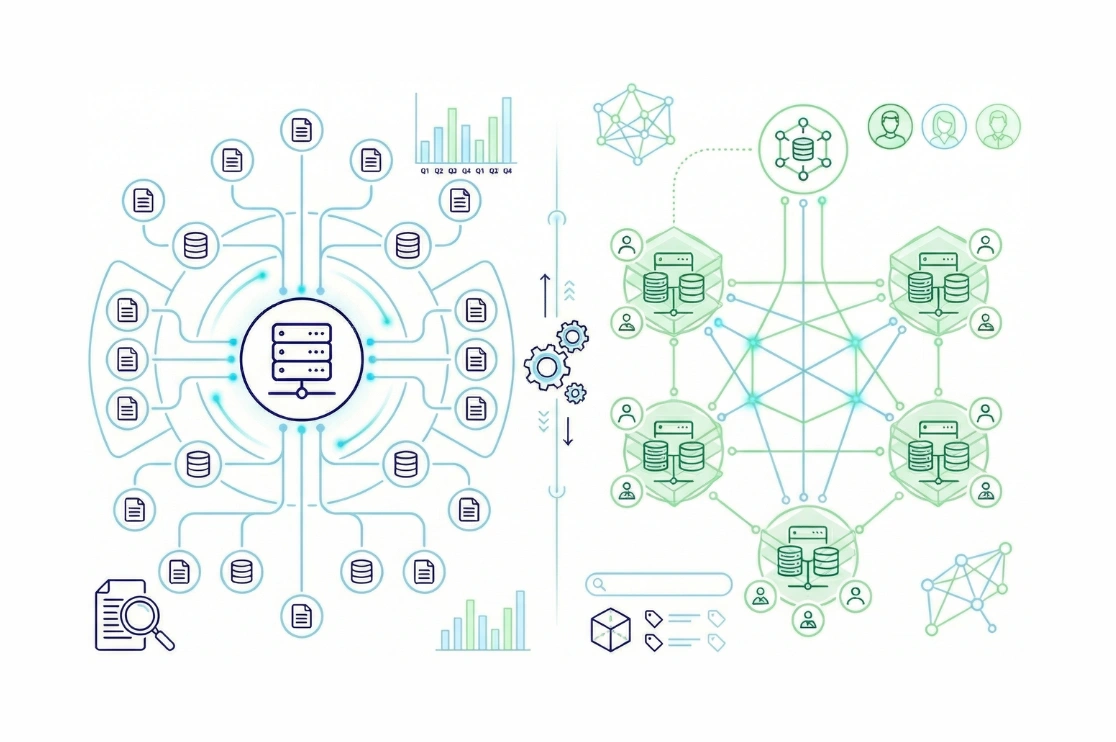









and enforce governance accountability across your data ecosystem.
Transform data governance from policy documents into an operational enterprise capability.
Data Governance fails not because policies are missing. They fail because their operating accountability is not clear.
Enterprises invest heavily in governance frameworks, compliance tooling, and quality monitoring systems. Yet the operational question remains unresolved:
-
Who owns the data?
-
Who would be accountable for its quality?
-
Who has the authority to enforce governance across the data ecosystem?
Without any clearly defined ownership and stewardship structures, governance programs remain disconnected from the business workflow and operations.
At BluEnt, we not only propose but also design enterprise governance operational models that embed accountability not organizational structures, business workflows, and technology. Our approach transforms governance from a mere static documentation to an operationally potent strategy.
What does this mean for executive leadership teams?
| Improved regulatory readiness | Trust in operating | Reduced operational risks | Scalable data accountability |
Trusted By
Organizations That Trust BluEnt With Their Data
- Gift Card Management, Reporting, Data Integration, Analytics Solutions, Book Keeping NetSuite Reporting, NetSuite Records Maintenance, Income Statement, Audit Support

- Gift Card Management, Reporting, Data Integration, Analytics Solutions

- Invoicing, AP Reports, Sales Data Analytics

- MuleSoft Integration, Analytics & Dashboards - [Tableau, MS SQL Server, SSIS]

- ERP Onboarding and Implementation, Data Migration, Custom Report Building, Audit Support and Finalization, Draft Financials Statements, Bidding Website Development

- Data Analytics and Dashboards

- V-Bucks Gift Card Sales Analytics, Reconciliation, Financial Tracking and Reporting
- Web Asset Creation

- HubSpot Campaign Management, Workflow Automation, UX/UI Development, Mobile App Development, Application Development

- Data Analytics and Dashboards, Website Development, Website Maintenance, Application Development, HubSpot Automation and Integration, Asana Management
- SEO, Website UX/UI Development, Data Management, Third-Party Integration, Website Maintenance

- Shopify Website Development, Klaviyo Email Marketing, Email Campaign Setup, Third-Party Shopify App Integration
- Website and SEO Audit, Shopify Website Maintenance, SEO and Analytics
- Website Design and Development, Website Maintenance
- Website Design and Development, Website Maintenance
- Website Design and Development, Website Maintenance, SEO and Analytics
Why Does Governance Operating Models Matter?
Many enterprises initiate governance programs with policy frameworks and technology platforms such as Informatica, Microsoft Purview, or Collibra.
Decision makers need to remember: Technology alone cannot establish governance accountability.
What happens without a structured operational model for data governance?
Enterprises are likely to experience:
-
Undefined/overlapping data ownership
-
Governance councils without operational authority
-
Theory-existing stewardship responsibilities
-
Escalation processes failing in regulatory audits
-
Inconsistencies during data governance policy enforcement
All these leads to system risks.
BluEnt works with executive leadership to define enterprise level data ownership structures that are in perfect sync with business goals and capabilities.
Find out if your governance model is working. Ask for a governance model check.
The Executive Imperative For Data Ownership
For C-suite leaders, governance operating models are not just administrative exercises.
They are the strategic control mechanisms.
Chief Data Officers, CIOs, and Chief Risk Officers are required to exhibit:
-
Real-time visibility of data quality risks
-
Defined ownership for critical data domains
-
Structured accountability for policy enforcement
-
Traceable data lineage for regulatory audits
-
Governance oversight across business units
Without a formal governance operating model, it becomes difficult to achieve these targets/goals
BluEnt addresses these by developing effective governance operating models the focuses on accountability at every level of enterprise.
Data Governance Maturity Assessment
A structured diagnostic for CDOs, CIOs, and Chief Compliance Officers. 18 questions across six governance dimensions. Receive a scored maturity profile and prioritised recommendations.
Your Details
Your Assessment Results
Overall Governance Maturity Level
Receive Your Full Report
A BluEnt governance consultant will prepare a personalised report with specific recommendations for your highest-priority gaps. Book a 60-minute discovery call to discuss your findings.
Our Approach to Governance Operating Model Design
BluEnt approaches governance operating models as organizational transformation initiatives.
Our methodology integrates governance into organizational structures, decision-making processes, and operational workflows.
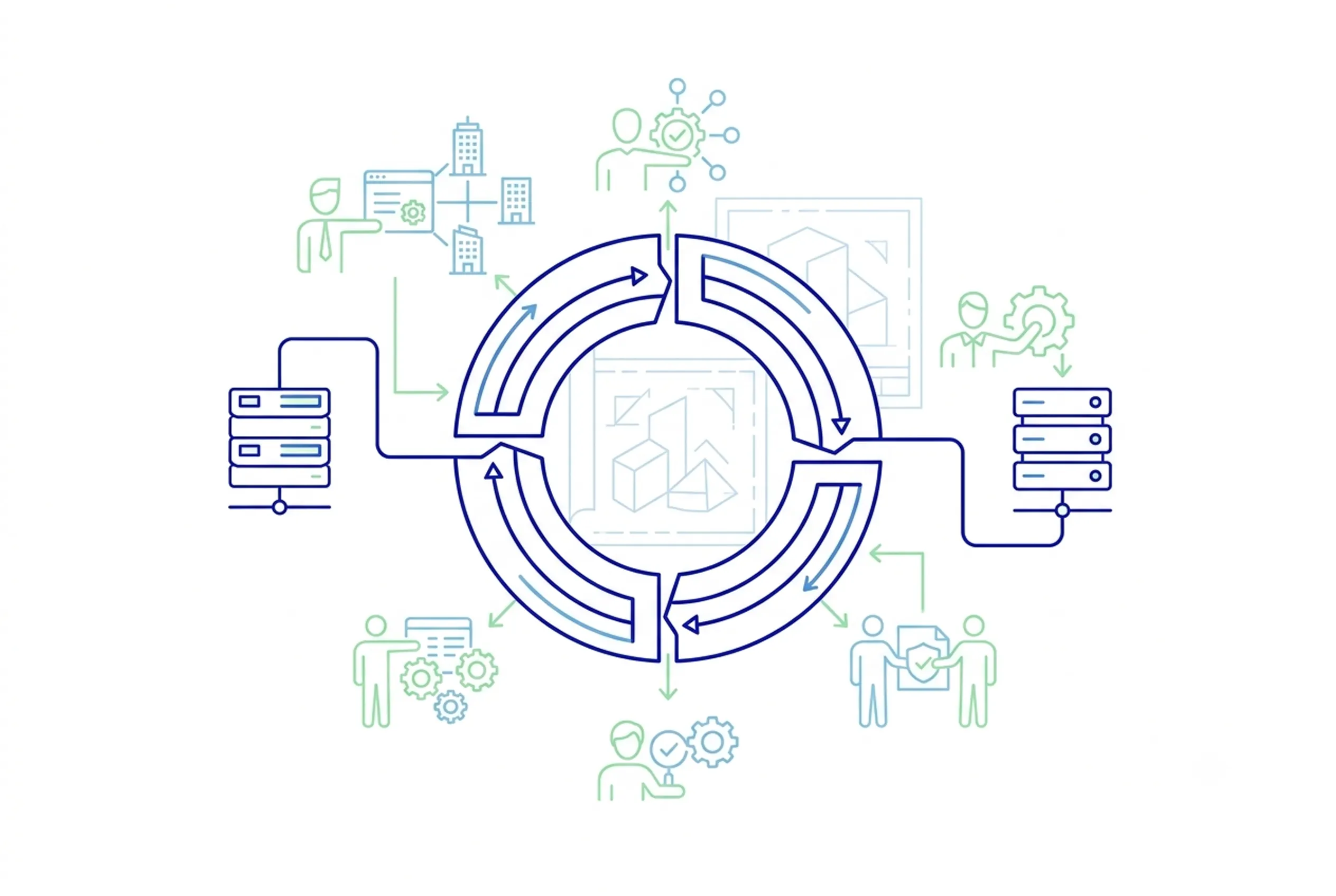
The operating model framework comprises of 4 integrated layers.

Enterprise Data Ownership Framework
Ownership is the cornerstone of governance.
Every critical data domain clearly enlists that there must be an accountable owner with the authority to define standards, approve policies, and resolve cross-functional conflicts.
This includes recognizing critical enterprise data domains, delegating domain-level ownership across different business units, rectifying ownership responsibilities & decision authority, and synchronizing with the enterprise-grade risk management framework.
Each data domain becomes managed by a designated owner, who’s responsible for maintaining its quality, regulatory compliance, accessibility, and lifecycle management.

Stewardship Structures and Operational Accountability
Data Stewardship ensures that governance is executed consistently throughout the enterprise’s operational environments.
BluEnt sets structured stewardship roles embedded within the business operations to ensure governance is applied when data is created, utilized, and transformed.
The data stewardship frameworks include business data stewards responsible for domain oversight, operational stewardship teams accountable for tracking data quality, and cross-domain stewardship coordination models.

Governance Decision Structures and Councils
Governance operating models require structured decision making mechanisms.
BluEnt establishes 3 major governance councils that operate at multiple organizational levels.
-
Executive Data Governance Council: This body offers strategic oversight of governance initiatives, ensuring alignment with enterprise risk management priorities. Responsibilities include governance policy approval, strategic data prioritization, executive accountability alignment, and regulatory oversights.
-
Domain Governance Committees: Domain-level governance committees handle operational challenges across business functions and technical teams. Issues such as cross-system data standardization, policy enforcement conflicts, and data quality remediation priorities.
-
Operational Governance Forums: Operational governance means handling the day-to-day governance execution, including issue escalation and stewardship coordination.
By setting up clear decision structures, governance transforms into structured, enforceable, and transparent for the whole organization.

Governance Process Integration
Operating models succeed when the governance processes get integrated seamlessly with the existing business workflows.
BluEnt designs the governance processes that connect ownership and stewardship frameworks with the operational activities.
-
Seamless workflow integration: Governance processes are embedded into existing business and operational workflows. Consistent processes for policy enforcement, issue escalation, and stewardship coordination.
-
Cross-functional alignment: Governance processes connect business, data, and technology teams for unified execution while ensuring that the processes are adhering to the various regulatory reporting requirements and compliance standards.
-
Metadata & documentation integration: Processes ensure consistent capture and maintenance of metadata across systems. Also, continuous data quality monitoring ensures that the governance workflows are regularly tracked and observed to identify and resolve data quality issues.
The major governance policies/processes include regulatory reporting coordination, policy enforcement lifecycle, metadata documentation processes, and data quality monitoring.
Measurable Outcomes of a Mature Governance Operating Model
Enterprises implementing structured governance operating models typically experience measurable improvement across different business areas.
Operational outcomes usually include decreased duplication of data across systems, improved trust in executive reporting, quicker resolution of data quality issues, and streamlined data onboarding processes.
From a compliance perspective, the governance operating models deliver better data lineage traceability, improved readiness of regulatory audits, and constant enforcement of data policies.
These outcomes translate directly into improved decision making capabilities and decreased operational risks.
How BluEnt Enables Governance Transformation?
BluEnt supports enterprises throughout the governance operating model lifecycle.
Our services include:

Governance Maturity Assessment We evaluate existing governance structures, ownership definitions, stewardship frameworks, and policy enforcement mechanisms.
Operating Model Design BluEnt architects governance structures customized to the organizational governance requirements, regulatory complexity, and strategic priorities.
Governance Performance Monitoring We establish governance KPIs and executive dashboards that facilitate leadership teams to measure governance effectiveness over time.
Technology Alignment Governance operating models are aligned with enterprise data platforms and governance tools to ensure automation and visibility.
Why Do Enterprises Choose BluEnt?
Organizations partner with BluEnt because governance operating models require both strategic advisory expertise and practical implementation experiences.
BluEnt combines governance strategy, data architecture expertise, and enterprise transformation methodologies to deliver governance programs that operate effectively at scale.
Our governance engagements focus on:
-
Sustainability of the governance processes
-
Executive alignment and accountability
-
Integration with enterprise data platforms
-
Long-term governance maturity development
The result: Governance that’s not only designed effectively but also adopted across the organization.
Schedule a Governance Operating Model Assessment
If your organization is investing in data governance initiatives but struggling with ownership/stewardship accountability. BluEnt can help.
Partner with BluEnt to transform governance frameworks into operational enterprise capabilities.
Frequently Asked Questions
Why is a governance operating model critical for enterprise success?
A governance operating model translates strategy into clear accountability, ownership, and execution. Without it, governance remains theoretical, leading to confusion, low adoption, and inconsistent enforcement. For leadership, it ensures that governance is embedded into daily operations, driving measurable outcomes.
What is the role of data ownership in governance?
Data ownership establishes clear accountability for data assets, ensuring that business leaders are responsible for the quality, security, and usage of their data domains. This clarity eliminates ambiguity and enables faster, more confident decision-making across the enterprise.
How does data stewardship support governance execution?
Data stewards act as operational enablers of governance, ensuring policies are implemented, data quality is maintained, and standards are followed. They bridge the gap between business and IT, making governance actionable and sustainable.
What challenges do organizations face without defined ownership and stewardship?
Without clear ownership, organizations struggle with data silos, inconsistent definitions, poor data quality, and lack of accountability. This results in delayed decisions, compliance risks, and reduced trust in data, ultimately impacting business performance.
How can leadership measure the effectiveness of a governance operating model?
Effectiveness is measured through data quality improvements, adoption of governance processes, reduced compliance incidents, and faster decision-making cycles. These metrics help leadership track both operational efficiency and business impact.
View Our Projects
Dive into our portfolio and witness how BluEnt transforms bold ideas into powerful digital solutions.
From enterprise-grade applications to data-driven platforms, each project tells a story of innovation,
ROI, and long-lasting impact.

HubSpot | Case Study
Asana-HubSpot Integration
Discover how BluEnt help HFS in achieving task automation with real-time data synchronization and efficient ecosystem.

Wordpress | Case Study
HFS Website Overhaul
Learn how BluEnt modernized the website to support heavy research content & deliver consistent UI/UX with better performance.
Wordpress | Case Study
Author Dashboard Transformation
Explore how BluEnt developed a unified & comprehensive dashboard for better performance tracking and report collaboration.

Wordpress | Case Study
Custom Elementor Widget
Learn how the custom elementor widget, developed by BluEnt, let HFS Research get off from its dependency over expensive…
Wordpress | Case Study
Custom WordPress Videocast Plugin
Discover how BluEnt created a custom WordPress videocast plugin to improve loading time & performance of HFS Research podcast…

Wordpress | Case Study
Report Analytic Dashboard
Discover how BluEnt designed & developed a comprehensive report analytic dashboard for HFS to generate accurate data.
Industry Trends & Innovation
Ideas That Drive Industries
Explore a 360° content hub featuring expert-written blogs, practical use cases, and FAQs,
all designed to spark innovation, solve challenges, and sharpen your competitive edge.
Whether you're shaping strategy or validating decisions, our insight-driven content
equips you with clarity, confidence, and the direction you need to stay ahead.