








SOC 2 is an attestation report under AICPA SSAE 18 that demonstrates a service organization has designed and operated controls aligned to the Trust Services Criteria: Security (mandatory), Availability, Confidentiality, Processing Integrity, and Privacy.
Type I evaluates control design at a point in time. Type II evaluates operating effectiveness across a 6 to 12 month observation window. Both are produced by an independent CPA auditor; BluEnt prepares your organization for that audit, but is never the auditor itself.
BluEnt is a SOC 2 readiness and engineering partner. We design the control set, author the policy library, engineer the evidence collection automation, and run the mock audit that lets your CPA auditor issue a clean opinion.
Engagements are scoped to the Trust Services Criteria you commit to. Most SaaS and B2B service organizations start with Security plus Confidentiality, then add Availability and Processing Integrity in later cycles.
Every engagement delivers four artifacts: a SOC 2 readiness report mapped clause-by-clause to the AICPA Common Criteria (CC1 to CC9); a versioned policy library and supporting procedures; engineered controls with evidence collection automated into a GRC tool; and a mock audit report identifying every observation an auditor is likely to raise.
BluEnt is your readiness partner, not your auditor. AICPA independence rules require those roles to be separate. We coordinate handover to your chosen CPA firm.
Trusted By
Organizations That Trust BluEnt With Their Data
- Gift Card Management, Reporting, Data Integration, Analytics Solutions, Book Keeping NetSuite Reporting, NetSuite Records Maintenance, Income Statement, Audit Support

- Gift Card Management, Reporting, Data Integration, Analytics Solutions
- Invoicing, AP Reports, Sales Data Analytics
- MuleSoft Integration, Analytics & Dashboards - [Tableau, MS SQL Server, SSIS]

- ERP Onboarding and Implementation, Data Migration, Custom Report Building, Audit Support and Finalization, Draft Financials Statements, Bidding Website Development
- Data Analytics and Dashboards

- V-Bucks Gift Card Sales Analytics, Reconciliation, Financial Tracking and Reporting
- Web Asset Creation
- HubSpot Campaign Management, Workflow Automation, UX/UI Development, Mobile App Development, Application Development

- Data Analytics and Dashboards, Website Development, Website Maintenance, Application Development, HubSpot Automation and Integration, Asana Management
- SEO, Website UX/UI Development, Data Management, Third-Party Integration, Website Maintenance

- Shopify Website Development, Klaviyo Email Marketing, Email Campaign Setup, Third-Party Shopify App Integration
- Website and SEO Audit, Shopify Website Maintenance, SEO and Analytics
- Website Design and Development, Website Maintenance
- Website Design and Development, Website Maintenance

- Website Design and Development, Website Maintenance, SEO and Analytics
Is This Your Situation?
BluEnt is the right SOC 2 readiness partner if any of the following describe your current state.
-
An enterprise customer or prospect has made a SOC 2 Type II report a precondition for renewal or expansion of the contract.
-
You hold a SOC 2 Type I and need to demonstrate operating effectiveness across a Type II observation window.
-
Your policy library was written years ago, your controls have evolved, and evidence is collected manually in folders rather than continuously in a GRC tool.
-
A previous SOC 2 audit produced exceptions on change management, access reviews, or vendor management that you do not want to see in the next report.
-
Your engineering team is treating SOC 2 as a documentation exercise rather than an engineering one and is losing sprint capacity to evidence collection.
For the broader compliance program, see the Cybersecurity Compliance Services Hub. For the identity layer feeding SOC 2 access controls, see Identity and Access Management.
What Makes BluEnt Different
Most SOC 2 vendors fall into two buckets: documentation consultancies that hand you a policy pack and exit, or GRC tool resellers that automate evidence without engineering the underlying controls. BluEnt sits between them.
| Without an Engineering-Led Readiness Partner | With BluEnt |
|---|---|
|
Policy library copied from a template, not mapped to your stack. |
Policy library mapped to your actual controls and platforms, refreshed quarterly. |
|
Evidence collected manually each quarter, eating engineering time. |
Evidence collection automated into Drata, Vanta, or Anecdotes with control owners assigned. |
|
Access reviews run as a spreadsheet exercise once a year. |
Quarterly access reviews driven by identity tooling with auditor-ready exports. |
|
Change management exceptions in the audit report. |
Engineering pipeline gates enforce ticket-to-deploy traceability before merge. |
|
Mock audit performed by the same firm that wrote the policies. |
Mock audit run independently of the policy authoring team, mirroring auditor procedures. |
For the audit-evidence engineering behind SOC 2, see Cloud Security Services.
SOC 2 Common Criteria We Operationalize
Every SOC 2 audit evaluates the Common Criteria (CC1 to CC9) plus the additional criteria for any optional Trust Services Categories in scope.
BluEnt operationalizes each Common Criteria into engineered controls, named owners, and automated evidence collection. The catalog below maps CC1 through CC9 to the practical work we deliver.
| Control Family | Control IDs | What BluEnt Engineers | Tooling Examples |
|---|---|---|---|
| CC1: Control Environment | Governance, ethics, accountability | Board and management oversight charter, code of conduct, hiring and onboarding procedures, segregation of duties, security organization chart with named accountable owners. | Confluence or SharePoint policy library, HRIS integration. |
| CC2: Communication and Information | Internal and external communications | Information security and acceptable use policies communicated annually; training completion tracked; customer-facing security and privacy notices reviewed. | LMS for training, public trust page, customer security questionnaire library. |
| CC3: Risk Assessment | Identification, analysis, response | Annual enterprise risk assessment, threat modeling for new products, third-party risk reviews, risk register maintained in GRC. | ServiceNow GRC, Vanta, Drata, OneTrust. |
| CC4: Monitoring Activities | Ongoing and separate evaluations | Continuous control monitoring with exception tracking, internal audit calendar, management review meetings, remediation tracking. | GRC dashboards, Jira for remediation tickets. |
| CC5: Control Activities | Selection and deployment of controls | Policy library aligned to controls, control owners named, control test results documented, change management tied to engineering tickets. | Policy as code where applicable, GitOps audit trails. |
| CC6: Logical and Physical Access | Identity, authorization, encryption | MFA on all production and corporate access, least-privilege role design, quarterly access reviews, encryption at rest and in transit, customer-managed keys for sensitive data. | Okta, Entra ID, AWS IAM Identity Center, AWS KMS, HashiCorp Vault. |
| CC7: System Operations | Detection, monitoring, incident response | Centralized logging, SIEM detection content, vulnerability scanning, patch SLAs, incident response runbooks coordinated with external IR partners. | Splunk, Sentinel, Chronicle, Tenable, Snyk. |
| CC8: Change Management | Change planning, testing, deployment | Engineering pipeline gates that block deploys missing tickets, peer review, or test coverage. Production changes documented with rollback procedures. | GitHub Advanced Security, GitLab Ultimate, Jenkins, ArgoCD. |
| CC9: Risk Mitigation | Vendor risk and business continuity | Vendor inventory with risk tiers, annual reviews of critical vendors, Business Impact Analysis, continuity plan exercised with tabletops. | OneTrust TPRM, Whistic, Castellan, Fusion BCM. |
For the identity controls behind CC6, see Identity and Access Management. For the continuity controls behind CC9, see Business Continuity and Disaster Recovery.
How to Choose a Cybersecurity Partner
Buyers evaluating SOC 2 readiness partners ask the same questions. The criteria below are the ones BluEnt is built to meet.

Independence from the auditor
AICPA independence rules prevent the same firm from preparing and auditing the same SOC 2. Confirm the readiness partner does not also offer SOC 2 audits. BluEnt does not; we hand off to your chosen CPA firm.

Engineering-led, not policy-only
A policy pack is the easy part. The hard part is engineering the controls and the evidence collection that prove operating effectiveness across the Type II window. Confirm the partner can write code, not just policy.

Tool-agnostic on GRC
Drata, Vanta, Secureframe, Anecdotes, OneTrust, and ServiceNow GRC all work. The right partner configures the tool you already own or recommend the right one for your size; resellers tend to push the platform they sell.

Trust Services Criteria scoping clarity
Most companies start with Security plus Confidentiality. Adding Availability and Processing Integrity expands scope and timeline. The right partner is explicit about which TSCs are in scope before kickoff.

Mock audit before the real one
An internal mock audit that mirrors AICPA procedures predicts the auditor’s findings. The right partner runs the mock at least 30 days before the auditor arrives so exceptions can be remediated before the report opinion.
Where does your compliance posture stand today?
Take the BluEnt Cybersecurity Maturity Assessment for a free, audit-defensible benchmark across governance, controls, evidence readiness, and continuous monitoring.
How We Deliver: A Five-Stage Methodology
Every BluEnt SOC 2 engagement follows the same five-stage methodology, scaled to the size of the in-scope environment and the Trust Services Criteria committed to.
Stage 1: Scoping and Gap Assessment
We confirm the Trust Services Criteria in scope, identify the systems and processes that handle customer data, and benchmark current controls against CC1 through CC9. Output is a gap report with prioritized remediation items.
Stage 2: Policy and Procedure Authoring
We author or refresh the policy library (information security, access control, change management, vendor management, incident response, business continuity, acceptable use). Procedures are written to match the controls the engineering team actually operates.
Stage 3: Control Engineering and Evidence Automation
We engineer the technical controls: MFA enforcement, access review workflow, change-management gates in CI/CD, logging and monitoring, encryption verification. Evidence collection is automated into your GRC tool of choice.
Stage 4: Mock Audit
We run a mock audit that mirrors AICPA procedures: walkthroughs, sample selections, evidence inspection. Findings are tracked to closure before the real auditor begins fieldwork.
Stage 5: Auditor Handover and Continuous Operations
We coordinate auditor handover, support fieldwork, and remain available for follow-up questions. The control program is now running continuously, ready for the Type II observation window or the next renewal.
For the engineering platforms behind these controls, see Cloud Security Services.
Capabilities at a Glance
Six capability areas frame the SOC 2 readiness practice.

Trust Services Criteria Scoping
TSC selection workshops, customer-commitment review, system boundary documentation, in-scope vs out-of-scope inventory.

Policy and Procedure Authoring
Policy library covering all CC1 to CC9 criteria, version-controlled, refreshed quarterly, mapped to your actual control implementation.

Control Engineering
MFA, access reviews, change management gates, logging and monitoring, encryption, vendor reviews. Engineered into the platforms you run.

Evidence Automation
GRC tool configured for continuous evidence collection. Drata, Vanta, Secureframe, Anecdotes, OneTrust, or ServiceNow GRC.

Mock Audit
Independent mock audit run 30 to 60 days before the auditor. Walkthroughs, sample selection, evidence inspection, prioritized remediation list.

Auditor Handover
Coordination with your chosen CPA firm, fieldwork support, evidence package delivery, follow-up question response.
For audit-defensible identity, see Identity and Access Management. For the broader compliance program, see Cybersecurity Compliance Services Hub.
Industries We Serve
BluEnt delivers SOC 2 readiness across four regulated verticals.

Architecture, Engineering, and Construction
AEC platforms holding BIM data, project files, and client design IP increasingly face SOC 2 questions from enterprise clients. BluEnt scopes Security and Confidentiality first, with Availability added for SaaS BIM platforms.

Healthcare and Life Sciences
Healthcare SaaS platforms typically combine SOC 2 with HIPAA. BluEnt scopes both in parallel so policy, controls, and evidence are reused across the two frameworks rather than duplicated.

E-Commerce and Retail
Retail SaaS (loyalty platforms, marketplace tooling, analytics) increasingly faces SOC 2 from enterprise retailer customers. Confidentiality and Processing Integrity are typical additions to Security.

Manufacturing and Industrial
Manufacturing SaaS (MES, supply chain, IIoT analytics) is asked for SOC 2 by OEM customers. Availability is usually added to Security given the production-line dependency.
Vertical-specific compliance programs are detailed on the Cybersecurity Compliance Services Hub.
Cybersecurity Services Across Six Markets
BluEnt delivers SOC 2 readiness across six markets. The standard is North American in origin but recognized globally.

United States AICPA SSAE 18 attestation standard, primary market for SOC 2 reports, expected by enterprise procurement and cyber insurers.
United Kingdom SOC 2 recognized in enterprise procurement; often paired with ISO 27001 certification depending on customer mix.
Australia SOC 2 recognized in enterprise procurement; APRA-regulated firms may add CPS 234 evidence overlap.
Canada SOC 2 standard for SaaS serving US and Canadian enterprises; commonly paired with PIPEDA controls.
Netherlands and EU SOC 2 recognized in B2B SaaS; ISO 27001 is often the lead certification with SOC 2 added for US customer base.
Broader Europe SOC 2 used by SaaS serving US enterprises; ISO 27001 and 27701 are the typical EU-native equivalents.
For region-specific compliance evidence, see Cybersecurity Compliance Services Hub.
Make SOC 2 an Engineering Discipline, Not a Documentation Exercise
SOC 2 has matured from a paper exercise to an engineering one. The organizations that handle it well engineer the controls into the platforms they run, automate the evidence collection into a GRC tool, and treat each Type II window as a continuous program rather than a project.
BluEnt designs the control set, authors the policy library, engineers the evidence automation, and runs the mock audit. Your chosen CPA firm issues the report.
Whether you are working toward your first Type I, preparing for a Type II observation window, or modernizing a legacy SOC 2 program, our team works alongside yours from day one.
Explore the IT Security and Cybersecurity Practice
Frequently Asked Questions
What is the difference between SOC 2 Type I and Type II?
Type I evaluates control design at a single point in time. Type II evaluates operating effectiveness across a 6 to 12 month observation window. Customers and procurement teams almost always require Type II; Type I is typically used as a stepping stone in the first year.
Which Trust Services Criteria should we include?
Security is mandatory. Most B2B SaaS organizations add Confidentiality. Availability is added when uptime commitments are part of the customer contract. Processing Integrity applies when computation outputs must be reliable (financial calculations, analytics). Privacy applies when personal data processing is core to the service. BluEnt helps scope this in Week 1.
How long does SOC 2 readiness take?
A typical SaaS organization with reasonable security hygiene reaches Type I readiness in 3 to 4 months. The Type II observation window then runs 6 to 12 months. The final Type II report is delivered approximately 6 weeks after the observation window closes. End-to-end first Type II is therefore 9 to 16 months from kickoff.
Can BluEnt be both readiness partner and auditor?
No. AICPA independence rules require the readiness partner and the auditor to be separate firms. BluEnt is a readiness partner only. We coordinate handover to your chosen CPA firm and stay engaged through fieldwork.
Which GRC tool do you recommend?
Drata, Vanta, Secureframe, Anecdotes, OneTrust, and ServiceNow GRC all support SOC 2. For early-stage SaaS, Drata and Vanta are the most common choices for speed of setup. For enterprise organizations with existing GRC investments, BluEnt configures the platform you already use.
What does a SOC 2 audit cost?
Audit fees vary by firm and scope but typically range from US$15,000 to US$60,000 for a Type II report at a SaaS organization. BluEnt’s readiness engagement is separate; scoping is done in the first scoping call.
What happens if the auditor finds exceptions?
Exceptions are documented in the report. They do not necessarily prevent issuance; the auditor evaluates whether they indicate a material weakness. BluEnt’s mock audit is run 30 to 60 days before the auditor specifically to surface and remediate exceptions before the real audit.
View Our Projects
Dive into our portfolio and witness how BluEnt transforms bold ideas into powerful digital solutions.
From enterprise-grade applications to data-driven platforms, each project tells a story of innovation,
ROI, and long-lasting impact.

CRM, ERP & Business Apps | Case Study
Asana-HubSpot Integration
Discover how BluEnt help HFS in achieving task automation with real-time data synchronization and efficient ecosystem.

CMS & E-Commerce Platforms | Case Study
HFS Website Overhaul
Learn how BluEnt modernized the website to support heavy research content & deliver consistent UI/UX with better performance.
CMS & E-Commerce Platforms | Case Study
Author Dashboard Transformation
Explore how BluEnt developed a unified & comprehensive dashboard for better performance tracking and report collaboration.

CMS & E-Commerce Platforms | Case Study
Custom Elementor Widget
Learn how the custom elementor widget, developed by BluEnt, let HFS Research get off from its dependency over expensive…
CMS & E-Commerce Platforms | Case Study
Custom WordPress Videocast Plugin
Discover how BluEnt created a custom WordPress videocast plugin to improve loading time & performance of HFS Research podcast…

CMS & E-Commerce Platforms | Case Study
Report Analytic Dashboard
Discover how BluEnt designed & developed a comprehensive report analytic dashboard for HFS to generate accurate data.
Industry Trends & Innovation
Ideas That Drive Industries
Explore a 360° content hub featuring expert-written blogs, practical use cases, and FAQs,
all designed to spark innovation, solve challenges, and sharpen your competitive edge.
Whether you're shaping strategy or validating decisions, our insight-driven content
equips you with clarity, confidence, and the direction you need to stay ahead.
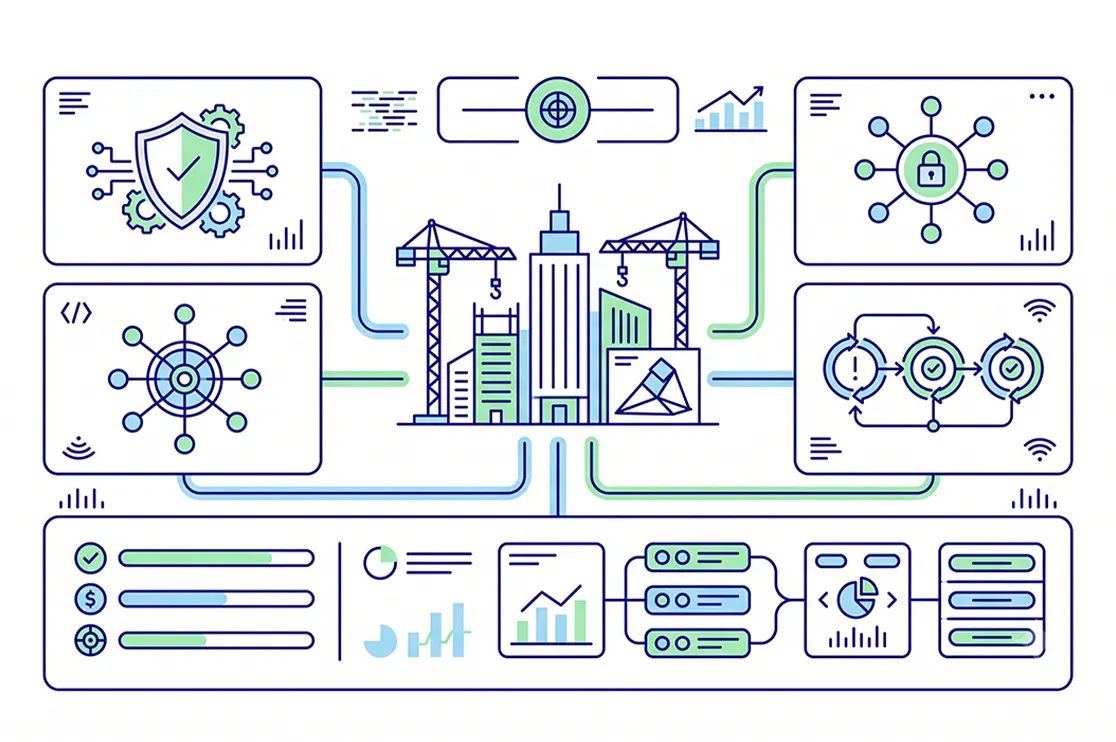 Governing AI Tools in AEC: Copilot, Digital Twins, and Generative Design
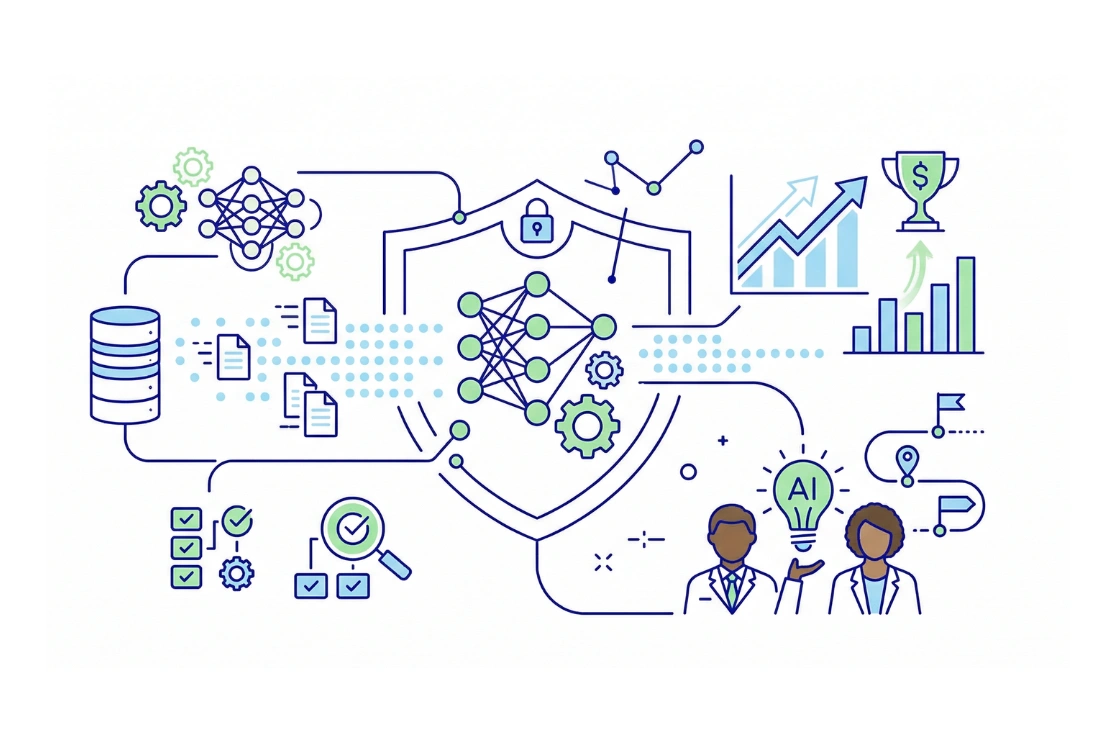 Data Governance for AI and Advanced Analytics: Building the Foundation That Works
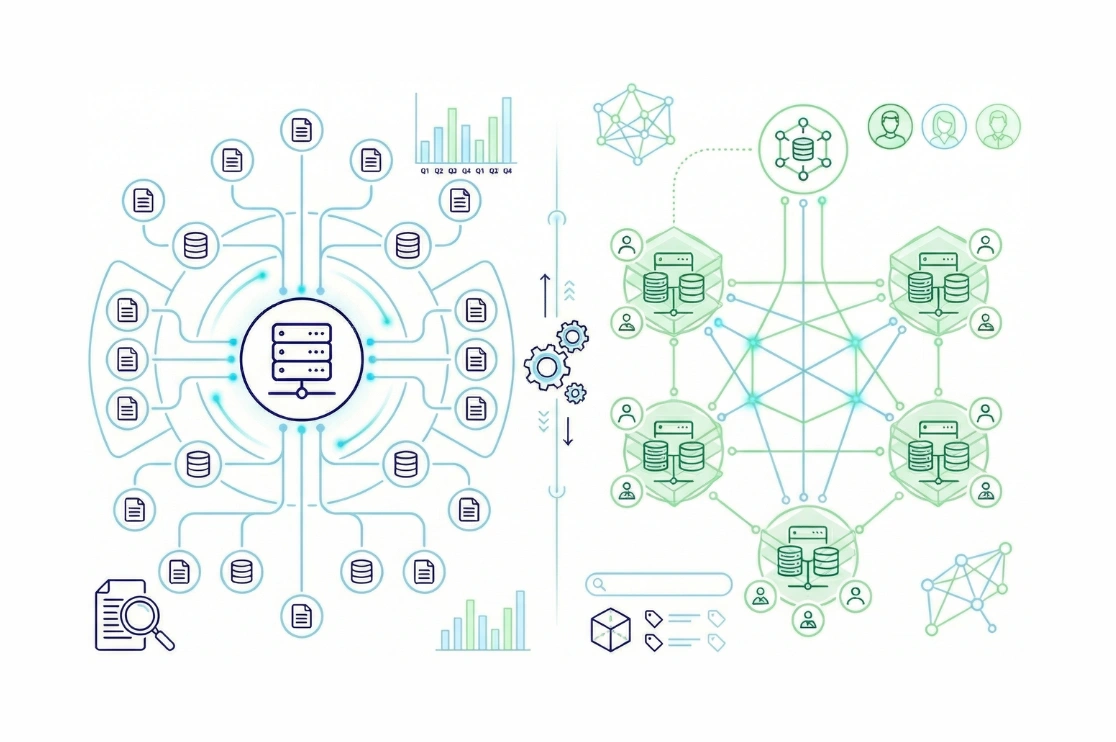 Centralized vs. Federated vs. Hybrid Data Governance: Which Model Fits Your Organization
 Data Governance Roles and Responsibilities in AEC Organizations