








Most data governance programs stall not because the technology failed, but because the strategy was absent. Organizations deploy data catalogs without a classification framework to populate them. They configure access controls without a policy library to enforce. They appoint data stewards without a mandate, a charter, or a governance council to support them. The platform runs. The governance does not.
BluEnt designs data governance strategies and frameworks for enterprise organizations before implementation begins. Our strategy work defines the governance operating model, policy library, ownership structure, and regulatory compliance architecture that makes every downstream technology investment purposeful, measurable, and defensible to regulators and boards.
Data Governance Maturity Assessment
A structured diagnostic for CDOs, CIOs, and Chief Compliance Officers. 18 questions across six governance dimensions. Receive a scored maturity profile and prioritised recommendations.
Your Details
Your Assessment Results
Overall Governance Maturity Level
Receive Your Full Report
A BluEnt governance consultant will prepare a personalised report with specific recommendations for your highest-priority gaps. Book a 60-minute discovery call to discuss your findings.
Trusted By
Organizations That Trust BluEnt With Their Data

- Gift Card Management, Reporting, Data Integration, Analytics Solutions, Book Keeping NetSuite Reporting, NetSuite Records Maintenance, Income Statement, Audit Support

- Gift Card Management, Reporting, Data Integration, Analytics Solutions
- Invoicing, AP Reports, Sales Data Analytics
- MuleSoft Integration, Analytics & Dashboards - [Tableau, MS SQL Server, SSIS]

- ERP Onboarding and Implementation, Data Migration, Custom Report Building, Audit Support and Finalization, Draft Financials Statements, Bidding Website Development
- Data Analytics and Dashboards

- V-Bucks Gift Card Sales Analytics, Reconciliation, Financial Tracking and Reporting
- Web Asset Creation

- HubSpot Campaign Management, Workflow Automation, UX/UI Development, Mobile App Development, Application Development

- Data Analytics and Dashboards, Website Development, Website Maintenance, Application Development, HubSpot Automation and Integration, Asana Management
- SEO, Website UX/UI Development, Data Management, Third-Party Integration, Website Maintenance

- Shopify Website Development, Klaviyo Email Marketing, Email Campaign Setup, Third-Party Shopify App Integration
- Website and SEO Audit, Shopify Website Maintenance, SEO and Analytics
- Website Design and Development, Website Maintenance
- Website Design and Development, Website Maintenance

- Website Design and Development, Website Maintenance, SEO and Analytics
Built for the Leader Who Needs a Framework Before a Platform
This page is written for the senior executive, data leader, or program director who is accountable for data governance outcomes and knows that the right approach requires strategy before software. If any of the following apply, BluEnt’s governance strategy and framework work is the right starting point.
-
You are preparing to invest in a data governance program and need a strategy document that defines scope, ownership, and priorities before the first platform is selected or configured.
-
Your current governance effort produced a catalog, some policies, and nominal data owner appointments but no operating model, no escalation process, and no accountability structure that survived the first organizational change.
-
A regulatory body, internal auditor, or board has asked for evidence of your governance strategy and you need a documented, defensible framework rather than an informal collection of practices.
-
You are mid-implementation and the program has stalled because there is no consensus on who owns which decisions, which data domains are in scope, and what good governance looks like in your organization.
-
You have selected or are evaluating governance platforms and need the strategy and framework that those platforms will enforce before configuration begins.
-
You are post-merger or post-acquisition and need to design a combined governance framework before data integration exposes the incompatibilities between two different governance approaches.
What a Strategy Produces Before Your Platform Is Configured
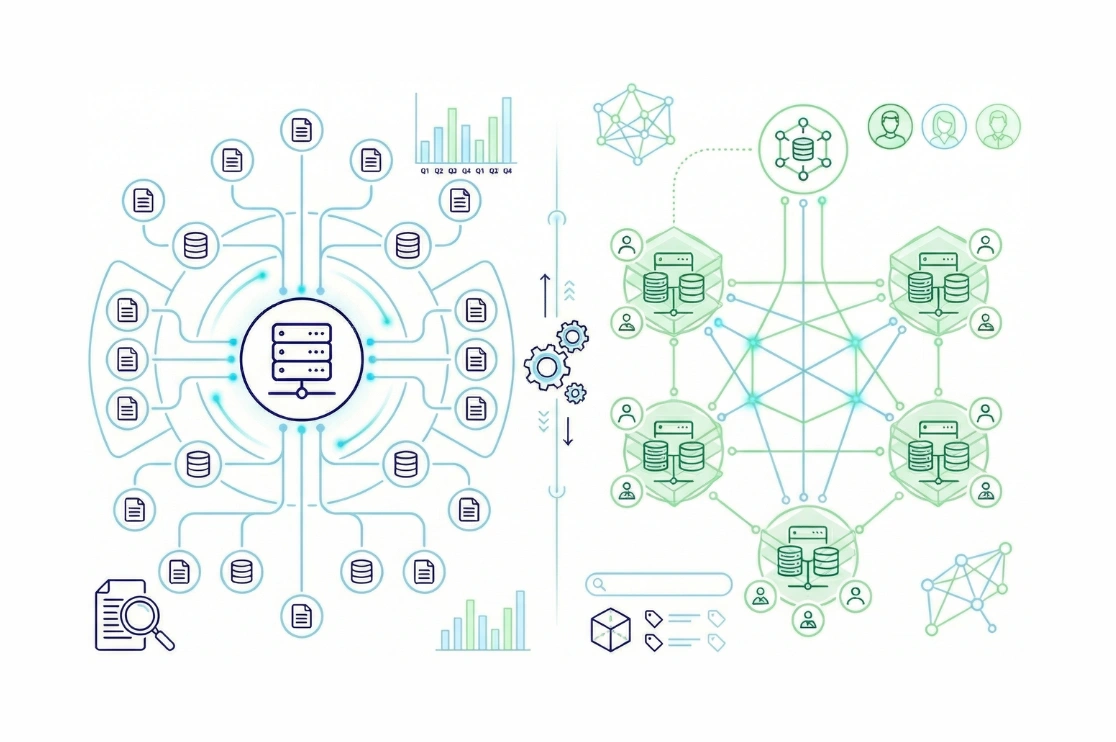
The sequence of a governance program determines its outcome. Organizations that select and configure a platform first and design the governance framework afterward consistently produce the same result: a catalog that is partially populated, tags that are inconsistently applied, stewards who lack a mandate, and an access control model that does not reflect the organization’s actual classification requirements.
A governance strategy changes what the platform is configured against. When classification, ownership, policy, and regulatory mapping are defined first, every platform configuration decision has a framework behind it.
| Without a Governance Strategy | With a BluEnt Governance Strategy |
|---|---|
|
|
BluEnt strategy engagements are sequenced to produce a usable governance framework within 90 days of kick-off. The framework is not a theoretical document. It is an operational blueprint that your platform team configures against, your stewards work within, and your compliance team references for audit evidence.
What a BluEnt Governance Strategy and Framework Includes
A data governance framework is not a single document. It is a set of coordinated components that define how governance operates in practice. BluEnt designs each component to work together as an integrated operating system, not as isolated deliverables that require reconciliation after the fact.

Governance Operating Model
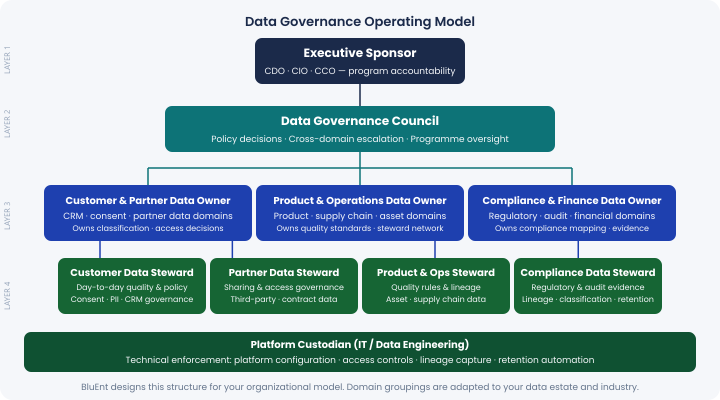
The organizational architecture that delivers governance: governance council structure, data owner roles, stewardship network design, custodian and audit liaison roles, decision rights, escalation paths, and accountability frameworks. Designed to function within your existing organizational structure rather than requiring a parallel governance organization.

Data Classification and Taxonomy Framework
A sensitivity classification framework that defines data categories, sensitivity levels, handling and protection requirements, and the tag taxonomy that drives platform enforcement. Aligned to your regulatory obligations by jurisdiction and your industry’s specific data types.

Policy and Standards Library
A complete, version-controlled policy library: data classification policy, data retention and disposal standards, access control policy, data quality standards, business glossary governance policy, and data sharing standards. Each policy is mapped to named regulatory obligations in your operating jurisdictions.

Regulatory Compliance Architecture
Your regulatory obligations formally mapped to specific governance controls by jurisdiction and data domain. Structured to generate audit evidence continuously rather than assembling it manually at audit time. Jurisdiction-specific and industry-specific.

Stewardship Activation Plan
The operational plan for activating the stewardship network: steward selection criteria, training design, mandate documentation, governance council charter, meeting cadence, escalation process, and performance measurement framework. Designed to produce an operational steward network within 60 days of framework publication.

Governance Measurement Framework
The metrics, KPIs, and reporting structure that allows the organization to track governance progress, demonstrate maturity improvement to boards and regulators, and sustain executive accountability beyond the initial implementation phase.
How to Choose the Right Data Governance Strategy Partner
The data governance strategy market includes platform vendors offering attached advisory services, large system integrators applying standardized frameworks across all client types, and specialist governance consultancies. Evaluating them on the right criteria is the decision that determines whether the strategy you commission actually works in practice.

Strategy First vs. Platform First
A consulting firm with a preferred platform relationship will design a governance strategy that leads to that platform. This is a structural conflict of interest, not a neutral advisory position. The right strategy partner designs the governance operating model and framework before any platform is involved, and selects or recommends tooling only when the framework’s requirements make the evaluation criteria clear. BluEnt does not resell governance platforms. Our strategy work is driven by your regulatory obligations, your data environment, and your organizational structure, not by vendor relationships.

Regulatory Knowledge Specific to Your Industry and Jurisdiction
A governance framework designed for a financial services organization under DORA and BCBS 239 looks structurally different from one designed for a healthcare organization under HIPAA and the NHS Data Security and Protection Toolkit, even if the underlying governance components are similar. Jurisdiction matters as much as industry. A US-centric governance framework applied to an organization operating under UK GDPR, APRA CPS 234, or PIPEDA produces compliance gaps that regulators find before the organization does. Evaluate whether the strategy firm has active, documented experience in your specific industry and operating jurisdictions, not general regulatory awareness.

Operating Model Experience, Not Just Framework Theory
Governance frameworks that look comprehensive on paper fail in practice when the operating model has not been designed for the organization’s actual structure. An organization with a federated business unit model requires a different stewardship and ownership design than one with a centralized data function. A post-merger integration requires a different framework architecture than a greenfield governance program. The right strategy partner has delivered governance operating models in organizations with your structural characteristics and can show what those engagements produced in practice.

Framework That Transfers, Not Dependency That Continues
A well-designed governance strategy produces a framework your internal team can operate, maintain, and evolve without permanent external support. Engagements designed to maximize ongoing advisory revenue consistently produce frameworks that are too complex for internal teams to own. The right partner builds a framework calibrated to your organization’s internal governance capacity, delivers training and capability transfer alongside the framework, and defines a clear point at which internal ownership is complete. Ask specifically: what does the handover look like, and what does your team need to do to own this without us?

Delivery Track Record in Your Sector
Sector depth is not the same as sector awareness. A strategy firm that has read DORA is not the same as one that has designed a governance framework for a financial institution managing DORA obligations across EU and Netherlands operations. Ask for specific examples of governance strategy engagements in your sector, the regulatory frameworks that were in scope, the organizational structures the framework was designed for, and what the organization’s governance posture was 12 months after the strategy was delivered.

A Fixed-Scope Engagement, Not an Open-Ended Advisory Retainer
Governance strategy work should produce defined deliverables within a defined timeframe. Engagements structured as open-ended advisory retainers without clear deliverables or timeline milestones typically produce continuous work without a usable framework at the end. BluEnt structures every strategy engagement with fixed deliverables, a defined timeline, and a clear completion point. You know what you are receiving, when you will receive it, and what it will cost before the engagement begins.
Not ready to commission a full strategy engagement? Start with our free Data Governance Maturity Assessment. A structured diagnostic that produces a scored baseline and prioritized roadmap in under seven minutes.
Data Governance Maturity Assessment
A structured diagnostic for CDOs, CIOs, and Chief Compliance Officers. 18 questions across six governance dimensions. Receive a scored maturity profile and prioritised recommendations.
Your Details
Your Assessment Results
Overall Governance Maturity Level
Receive Your Full Report
A BluEnt governance consultant will prepare a personalised report with specific recommendations for your highest-priority gaps. Book a 60-minute discovery call to discuss your findings.
How BluEnt Designs a Data Governance Strategy and Framework
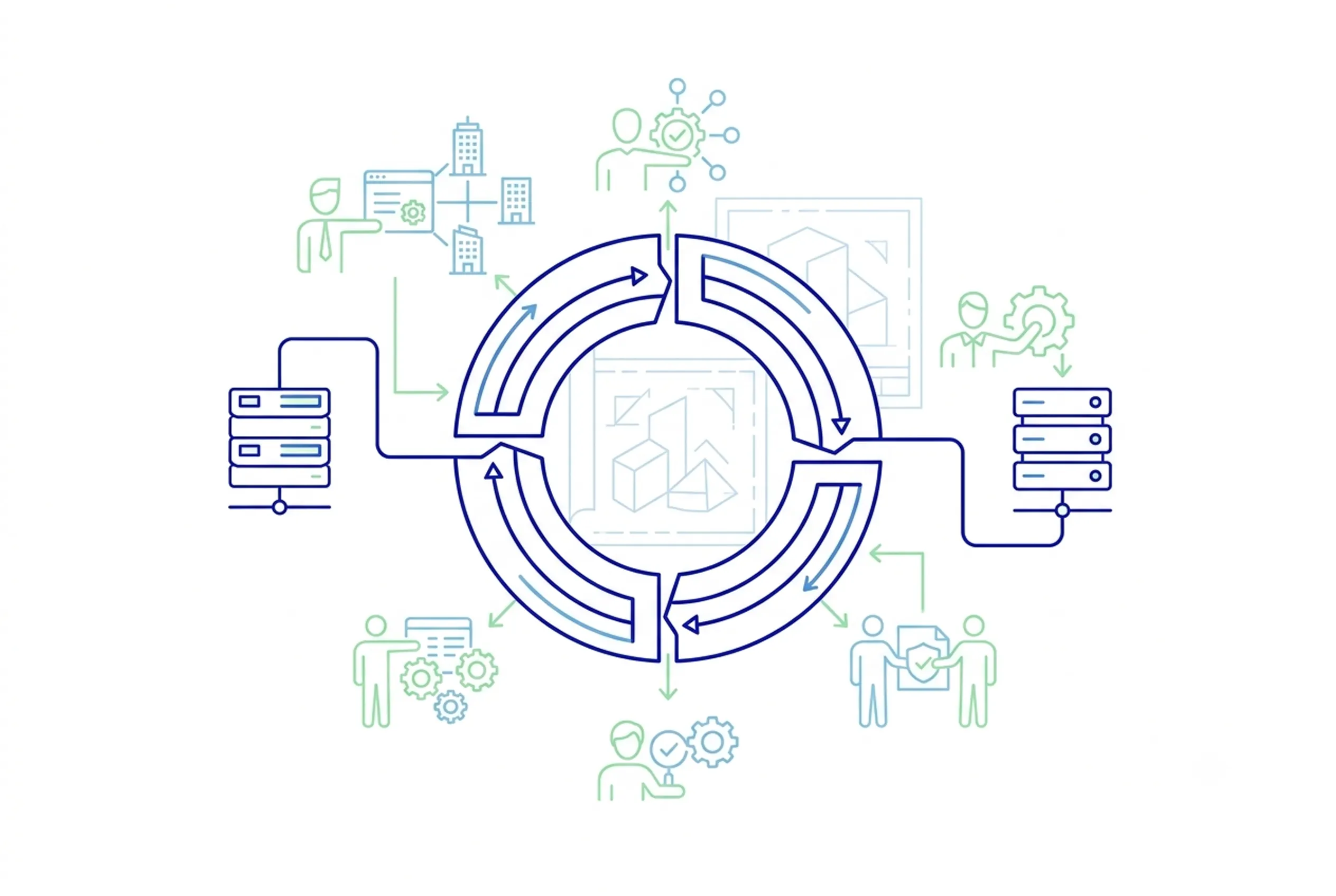
Every BluEnt governance strategy engagement follows a five-stage methodology designed to produce a usable framework within 90 days and a fully operational governance operating model within 22 weeks.
The engagement is structured to minimize disruption to the organization’s operations while ensuring that the framework reflects the actual regulatory environment, data landscape, and organizational structure, not a generic template applied from outside.
One senior governance consultant leads the engagement from scoping through to capability transfer. You will not be handed between team members or required to re-explain your environment at each stage.

Stage 1: Current State Assessment and Regulatory Mapping (Weeks 1 to 4)
We begin by establishing an accurate baseline: what governance capability currently exists, what the regulatory obligations are across all operating jurisdictions, and what the highest-priority gaps are relative to regulatory risk and business impact. This stage covers documentation review, stakeholder interviews across data owners, compliance, IT, and business leadership, and a platform configuration review where applicable.
Deliverable: Current State Assessment Report, Regulatory Obligation Map by Jurisdiction, Priority Gap List.

Stage 2: Governance Operating Model Design (Weeks 3 to 8)
Using the assessment findings as the foundation, we design the governance operating model: the governance council structure, data owner role definitions, stewardship network design, decision rights framework, and escalation architecture. The operating model is designed to function within the organization’s existing structure rather than requiring a parallel governance organization. Draft operating model documents are reviewed with key stakeholders and iterated before finalization.
Deliverable: Governance Operating Model Document, Role Definition Catalog, Governance Council Charter Draft, Decision Rights Framework.

Stage 3: Policy Library and Classification Framework Development (Weeks 6 to 14)
We develop the complete policy library and data classification framework. Each policy is mapped to named regulatory obligations in the organization’s operating jurisdictions. The classification framework defines data categories, sensitivity levels, handling requirements, and the tag taxonomy that will drive platform enforcement. Policies are reviewed for regulatory accuracy by jurisdiction and validated with compliance stakeholders before finalization.
Deliverable: Data Classification and Taxonomy Framework, Full Policy Library, Regulatory Compliance Map, Business Glossary Governance Policy.

Stage 4: Framework Documentation and Validation (Weeks 12 to 18)
The complete governance framework is assembled, documented, and validated with stakeholders across the organization. This stage covers the integration of all framework components into a coherent operating architecture, validation that the framework is implementable within the organization’s existing capacity, and preparation of the implementation readiness assessment that defines what needs to be in place before the framework is activated.
Deliverable: Complete Governance Framework Document, Implementation Readiness Assessment, Platform Configuration Blueprint, Stewardship Activation Plan.

Stage 5: Activation Planning and Capability Transfer (Weeks 16 to 22)
The final stage prepares the organization’s internal team to own and operate the governance framework without ongoing external dependency. This includes governance council activation, data owner onboarding, steward training delivery, governance measurement framework setup, and a formal capability transfer session with the internal governance lead. Organizations that choose to proceed to a BluEnt implementation engagement transition directly from this stage into platform configuration.
Deliverable: Governance Council Activation Package, Steward Training Program, Governance Measurement Dashboard, Capability Transfer Completion Sign-Off.
We bring the assessment framework, the regulatory knowledge, and the operating model expertise. You bring your situation.
Book Your 60-Minute Strategy Consultation. No Preparation Required.
What Our Governance Strategy and Framework Work Covers

Governance Strategy Document
A documented governance strategy defining organizational commitment, program scope, strategic objectives, and success metrics. Structured for board-level communication and regulator response.

Operating Model and Role Design
Design of the governance council, data owner, steward, custodian, and audit liaison roles with defined mandates, decision rights, and accountability frameworks tailored to your organizational structure.
Data Classification and Taxonomy Framework
A sensitivity classification framework that defines data categories, sensitivity levels, and handling requirements, with the tag taxonomy that drives platform enforcement across your technology environment.
Policy and Standards Library
A complete, version-controlled policy library covering classification, retention, access control, data quality, business glossary governance, and data sharing standards, each mapped to named regulatory obligations.
Regulatory Compliance Architecture
Your regulatory obligations formally mapped to specific governance controls by jurisdiction and data domain, structured to generate audit evidence continuously rather than manually assembling it at audit time.
Stewardship Activation Plan
An operational plan for activating the stewardship network: steward selection, training, mandate documentation, governance council charter, meeting cadence, escalation process, and performance measurement.
Governance Measurement Framework
The metrics, KPIs, and reporting structure that allows the organization to track governance progress, demonstrate maturity improvement, and sustain executive accountability beyond the initial implementation phase.

Executive Governance Playbook
A board-ready summary of the governance framework: the operating model, the policy commitments, the regulatory compliance architecture, and the roadmap for implementation. Formatted for executive presentation without requiring prior familiarity with governance frameworks.
Data Governance Strategy Across Your Industry
Governance requirements, data types, stewardship structures, and regulatory obligations differ significantly by sector. BluEnt calibrates every governance strategy to the industry it is designed for. A generic governance framework applied across industries consistently underdelivers because the ownership structures, classification requirements, and compliance obligations are not the same.
Architecture, Engineering, and Construction (AEC)
AEC enterprises manage governance across project-based organizational structures where data ownership does not map cleanly to business unit hierarchies. Project data, BIM models, asset registers, contract documentation, and supply chain records are generated and consumed across dozens of entities, project boundaries, and jurisdictions.
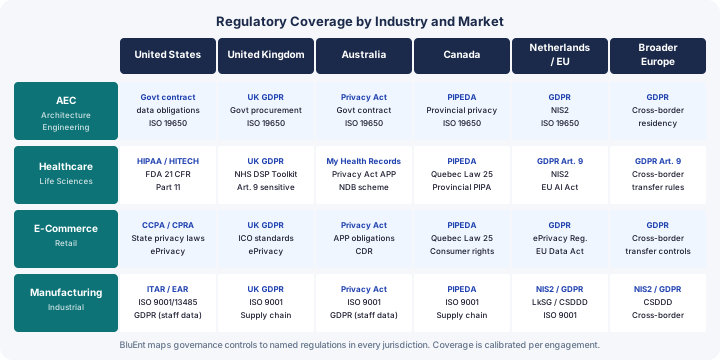
BluEnt designs governance frameworks for AEC organizations that reflect project lifecycle ownership structures: how governance accountability transfers at project handoff, how classification standards apply to project versus operational data, and how stewardship functions in an organization where headcount and organizational structure change with every new project win. Regulatory context: government contract data obligations (US, UK, Australia), ISO 19650 BIM data management standards, procurement compliance frameworks.
Healthcare and Life Sciences
Designing a governance framework for a healthcare organization requires separating three structurally different data streams into a single operating model without creating conflicting access controls or accountability gaps: clinical data, operational health data, and research datasets each carry distinct regulatory obligations and stewardship requirements.
BluEnt designs healthcare governance frameworks that define separate ownership structures for each stream, map classification requirements to HIPAA technical safeguards and GDPR Article 9 obligations independently, and build the evidence architecture for each regulatory domain before platform configuration begins. Regulatory context: HIPAA and HITECH (US), NHS Data Security and Protection Toolkit (UK), My Health Records Act (Australia), GDPR Article 9 sensitive data obligations (EU), FDA 21 CFR Part 11 (clinical trials).
E-Commerce and Retail
Retail governance frameworks must address the growing volume of first-party customer data, the cross-border transfer obligations that accompany international retail operations, and the purpose-binding requirements under GDPR, CCPA, and equivalent frameworks.
BluEnt designs governance strategies for retail organizations that build classification, purpose-binding, and cross-border transfer governance into the framework from the start, rather than adding privacy controls as an afterthought to a data infrastructure designed primarily for analytics. Regulatory context: GDPR (EU), UK GDPR, CCPA and CPRA (US), PIPEDA and provincial privacy legislation (Canada), Australian Privacy Act, ePrivacy Regulation.
Manufacturing and Industrial Enterprises
The governance framework design challenge in manufacturing is scope: most organizations enter the engagement with an IT governance model that does not extend to operational technology data.
BluEnt designs manufacturing frameworks that explicitly define the OT data governance boundary: which datasets from sensors, SCADA systems, and production platforms fall within the governance framework, who owns them, how they are classified, and how lineage connects OT-derived data to downstream analytics and AI programs.
The result is a single governance operating model that covers both IT and OT data domains without requiring a parallel governance structure for each. Regulatory context: NIS2 Directive for critical infrastructure operators (EU), German Supply Chain Due Diligence Act (LkSG), EU CSDDD, ITAR and EAR export controls (US), ISO 9001 and ISO 13485 quality data obligations, GDPR and UK GDPR.
For full regulatory framework coverage by jurisdiction and implementation blueprints by industry, see our dedicated service pages.
Data Governance Strategy Across Six Markets
A governance framework designed without in-market regulatory knowledge produces compliance gaps that regulators find before the organization does.
BluEnt maintains active regulatory knowledge across all six markets we operate in, ensuring that every policy, classification framework, and regulatory compliance map reflects the named obligations active in your operating jurisdictions.

United States: HIPAA, HITECH, GLBA, SOX, CCPA and CPRA, plus state privacy laws including the Virginia Consumer Data Protection Act, Colorado Privacy Act, Connecticut Data Privacy Act, and Texas Data Privacy and Security Act.
United Kingdom: UK GDPR, Data Protection Act 2018, ICO enforcement standards, FCA operational resilience expectations, NHS Data Security and Protection Toolkit for healthcare clients.
Australia: Privacy Act 1988, Australian Privacy Principles (APP), Notifiable Data Breaches scheme, APRA CPS 234 for information security in financial services, APRA CPS 230 for operational risk, Consumer Data Right (CDR).
Canada: PIPEDA governs personal information at the federal level. Provincial legislation applies in Quebec (Law 25), British Columbia (PIPA), and Alberta (PIPA). Federally regulated organizations in finance and telecoms are additionally subject to OSFI guideline B-13 on technology and cyber risk management.
Netherlands and EU: GDPR, DORA for EU financial entities including Dutch operations where applicable, NIS2 Directive for critical infrastructure operators, EU Data Act, and Autoriteit Persoonsgegevens (AP) enforcement standards for Dutch-based organizations.
Broader Europe: DORA implementation across EU member states, cross-border data residency controls, and sector-specific regulatory frameworks for financial services, healthcare, and critical infrastructure operators.
A Governance Framework Built for Your Organization Is the Foundation Every Investment Builds On
Platform investments, stewardship programs, and compliance initiatives built without a governance strategy in place consistently produce the same outcome: capability that exists in isolation, not governance that operates as a system. The catalog that nobody trusts. The access controls that nobody can explain. The stewards who have a title but no mandate.
BluEnt designs governance strategies and frameworks that change the foundation those investments build on. Start with a 60-minute consultation. No preparation required. We bring the framework architecture, the regulatory knowledge, and the implementation experience. You bring your situation.
Data Governance Maturity Assessment
A structured diagnostic for CDOs, CIOs, and Chief Compliance Officers. 18 questions across six governance dimensions. Receive a scored maturity profile and prioritised recommendations.
Your Details
Your Assessment Results
Overall Governance Maturity Level
Receive Your Full Report
A BluEnt governance consultant will prepare a personalised report with specific recommendations for your highest-priority gaps. Book a 60-minute discovery call to discuss your findings.
Not ready for either yet? Explore our governance service portfolio:
- Data Governance Consulting Services: specialist advisory, operating model design, and stewardship activation
- Enterprise Data Governance Solutions: full industry breakdowns, capability coverage, and regulatory frameworks by jurisdiction
- Data Governance Maturity Assessment: start with a free maturity baseline, then commission a consultant-led diagnostic if needed
- Data Governance for Snowflake and Databricks: platform-native governance implementation for lakehouse environments
- Data Governance Compliance Solutions: regulatory obligation mapping and compliance architecture by jurisdiction
Frequently Asked Questions
What is a data governance strategy?
A data governance strategy is a documented organizational commitment that defines what data governance means for the enterprise, who is accountable for governance outcomes, how governance decisions are made, and what the program is designed to achieve. It establishes the scope of the governance program, the business and regulatory objectives it is designed to address, and the organizational accountability structure that will sustain it. A strategy without a supporting framework remains aspirational. A framework without a strategy lacks the organizational commitment and decision-making architecture to operate.
What is a data governance framework?
A data governance framework is the operational architecture that delivers the governance strategy. It includes the governance operating model (roles, ownership structures, council design, decision rights, and escalation paths), the policy and standards library (classification policy, retention standards, access control policy, quality standards), the data classification and taxonomy framework, the regulatory compliance architecture, and the stewardship activation plan. A governance framework is not a single document. It is a coordinated set of components that define how governance operates in daily practice across the organization.
What is the difference between a data governance strategy and a data governance framework?
The strategy defines the organizational commitment, the objectives, the scope, and the accountability structure. The framework defines the operational architecture that delivers the strategy. In practice, the two are inseparable: a strategy without a supporting framework has no mechanism for implementation, and a framework without a strategy has no organizational mandate to operate within. BluEnt designs both as an integrated engagement, ensuring that the framework is built to deliver the strategy’s objectives rather than existing as a parallel documentation exercise.
How long does a governance strategy and framework engagement take?
A BluEnt governance strategy and framework engagement runs from 16 to 22 weeks from scoping to capability transfer completion. The current state assessment and regulatory mapping takes four weeks. Operating model design takes five weeks from assessment completion. Policy library and classification framework development takes eight weeks, running partially in parallel with operating model design. Framework documentation, validation, and activation planning complete the engagement. Organizations with complex multi-jurisdiction environments or post-merger integration requirements may require an additional four to six weeks.
What does a governance framework cost?
Cost depends on the scope of the engagement: the number of jurisdictions and regulatory frameworks covered, the number of data domains and business units in scope, the complexity of the organizational structure, and the number of stakeholders involved in the design and validation process. BluEnt provides a fixed-fee proposal for every engagement following a complimentary 60-minute consultation. Organizations that proceed from strategy to implementation with BluEnt receive a credit against their strategy fee on the first implementation phase.
Do we need an existing governance program to commission a governance strategy?
No. BluEnt designs governance strategies for organizations at every stage of maturity, from greenfield programs with no prior governance investment to organizations with established but incomplete frameworks that need restructuring. The current state assessment at the beginning of the engagement establishes the accurate baseline regardless of starting point. Organizations with no prior governance investment benefit from a framework designed without the constraints of prior decisions. Organizations with partial frameworks benefit from an independent assessment of what is working, what needs to be rebuilt, and what can be retained.
How does the governance framework connect to platform selection and implementation?
The governance framework defines the requirements that platform selection must satisfy. When classification, ownership, policy, and regulatory mapping are defined before a platform is selected, every platform is evaluated against a clear set of governance requirements rather than against vendor marketing claims. The classification taxonomy defines the tag structure the platform must enforce. The policy library defines what access controls, masking rules, and retention settings the platform must implement. The regulatory compliance map defines the audit evidence the platform must generate. BluEnt’s strategy engagements conclude with a platform configuration blueprint that translates the governance framework into implementation requirements for the technology team.
What happens after the governance framework is delivered?
The framework delivery includes a capability transfer stage designed to ensure that the organization’s internal team can operate, maintain, and evolve the governance framework without ongoing external dependency. This covers governance council activation, data owner onboarding, steward training, and governance measurement setup. Organizations that choose to proceed to a BluEnt implementation engagement transition from the framework directly into platform configuration and stewardship operationalization. Organizations that implement independently use the framework as the operational blueprint for their internal or external implementation team.
Can the governance framework serve as evidence in a regulatory audit?
Yes. The regulatory compliance architecture component of every BluEnt governance framework is designed specifically to produce defensible evidence for regulators and auditors. The framework maps named regulatory obligations to specific governance controls, defines how those controls generate audit evidence continuously, and structures the organization’s governance documentation in a format that regulators can interrogate directly. BluEnt clients have submitted governance framework documentation to regulatory inquiries, internal audit reviews, and board governance committees as evidence of structured, compliant governance posture.
Does BluEnt deliver governance strategy work in my region?
BluEnt delivers governance strategy and framework engagements across six markets: the United States, the United Kingdom, Australia, Canada, the Netherlands, and the wider European Union. Each framework is calibrated to the named regulations active in the organization’s operating jurisdictions. We do not apply a single governance template across all markets. The policy library, classification framework, and regulatory compliance architecture reflect the specific compliance obligations of each jurisdiction in scope.
View Our Projects
Dive into our portfolio and witness how BluEnt transforms bold ideas into powerful digital solutions.
From enterprise-grade applications to data-driven platforms, each project tells a story of innovation,
ROI, and long-lasting impact.

HubSpot | Case Study
Asana-HubSpot Integration
Discover how BluEnt help HFS in achieving task automation with real-time data synchronization and efficient ecosystem.

Wordpress | Case Study
HFS Website Overhaul
Learn how BluEnt modernized the website to support heavy research content & deliver consistent UI/UX with better performance.
Wordpress | Case Study
Author Dashboard Transformation
Explore how BluEnt developed a unified & comprehensive dashboard for better performance tracking and report collaboration.

Wordpress | Case Study
Custom Elementor Widget
Learn how the custom elementor widget, developed by BluEnt, let HFS Research get off from its dependency over expensive…
Wordpress | Case Study
Custom WordPress Videocast Plugin
Discover how BluEnt created a custom WordPress videocast plugin to improve loading time & performance of HFS Research podcast…

Wordpress | Case Study
Report Analytic Dashboard
Discover how BluEnt designed & developed a comprehensive report analytic dashboard for HFS to generate accurate data.
Industry Trends & Innovation
Ideas That Drive Industries
Explore a 360° content hub featuring expert-written blogs, practical use cases, and FAQs,
all designed to spark innovation, solve challenges, and sharpen your competitive edge.
Whether you're shaping strategy or validating decisions, our insight-driven content
equips you with clarity, confidence, and the direction you need to stay ahead.