








Business Continuity (BCP) keeps people, processes, and customer commitments running during disruption. Disaster Recovery (DR) restores IT systems and data within measured Recovery Time and Recovery Point Objectives. BluEnt delivers both as two distinct services within one program, anchored in a Business Impact Analysis and validated by tabletop and full-scale exercises. Aligned to ISO 22301, APRA CPS 230, and NIST SP 800-34 Rev. 1.
BluEnt is an enterprise BCP and DR engineering partner for regulated industries. We design the Business Continuity Plan, engineer the Disaster Recovery architecture, and run the exercise program that keeps both audit-defensible. Engagements run across cloud, on-premises, and hybrid estates.
Every engagement delivers four artifacts the audit committee, cyber insurer, and regulator can review: a Business Impact Analysis; a versioned Business Continuity Plan with named owners; a Disaster Recovery architecture using immutable backups (3-2-1-1-0) and infrastructure-as-code failover; and a 12-month exercise calendar with after-action reports.
BluEnt does not provide incident response, threat hunting, or forensic services. Detection and containment remain with your SOC and IR partner.
Trusted By
Organizations That Trust BluEnt With Their Data

- Gift Card Management, Reporting, Data Integration, Analytics Solutions, Book Keeping NetSuite Reporting, NetSuite Records Maintenance, Income Statement, Audit Support

- Gift Card Management, Reporting, Data Integration, Analytics Solutions

- Invoicing, AP Reports, Sales Data Analytics

- MuleSoft Integration, Analytics & Dashboards - [Tableau, MS SQL Server, SSIS]

- ERP Onboarding and Implementation, Data Migration, Custom Report Building, Audit Support and Finalization, Draft Financials Statements, Bidding Website Development

- Data Analytics and Dashboards

- V-Bucks Gift Card Sales Analytics, Reconciliation, Financial Tracking and Reporting

- Web Asset Creation

- HubSpot Campaign Management, Workflow Automation, UX/UI Development, Mobile App Development, Application Development

- Data Analytics and Dashboards, Website Development, Website Maintenance, Application Development, HubSpot Automation and Integration, Asana Management

- SEO, Website UX/UI Development, Data Management, Third-Party Integration, Website Maintenance

- Shopify Website Development, Klaviyo Email Marketing, Email Campaign Setup, Third-Party Shopify App Integration
- Website and SEO Audit, Shopify Website Maintenance, SEO and Analytics

- Website Design and Development, Website Maintenance

- Website Design and Development, Website Maintenance

- Website Design and Development, Website Maintenance, SEO and Analytics
Is This Your Situation?
BluEnt is the right BCP and DR partner if any of the following describe your current state. Continuity programs typically fail not for lack of plans but for lack of engineering and exercise.
-
Your DR plan exists in a Word document, was last tested over a year ago, and the systems it describes have evolved since.
-
Backups run nightly, but the last successful restore test was during the original deployment of the system.
-
Your continuity plan defines roles but has never been exercised, and the contact tree contains people who left two reorganizations ago.
-
An auditor or regulator is asking for evidence of recovery objectives, exercise cadence, or third-party continuity arrangements that you cannot produce.
-
A ransomware tabletop revealed that legal, communications, and IT do not share a common timeline or terminology for a multi-day outage.
-
Cyber insurance renewal is asking for evidence of immutable backups, segregated recovery environments, and documented continuity arrangements with measured RTO and RPO.
If two or more of these apply, this page is the right starting point. For the platform controls behind backup and recovery, see Cloud Security Services. For continuity-specific audit evidence, see Cybersecurity Compliance Services.
What Makes BluEnt Different
Continuity partners come in two shapes: planning consultants (who write documents but do not engineer recovery) and backup-tool resellers (who deploy Veeam or Commvault without an exercise program). BluEnt occupies the engineering-and-exercise space between them. We do not sell incident response; that is your SOC and IR partner’s domain. We design the BCP, engineer the DR architecture, and run the exercise program that proves both work.
| Without an Engineering-Led BCP and DR Partner | With BluEnt |
|---|---|
|
BCP document last reviewed eighteen months ago. |
BCP versioned in Git, refreshed quarterly, with explicit owners per section. |
|
RTO and RPO declared by policy, never measured. |
RTO and RPO measured in actual recovery exercises and reported to the audit committee. |
|
Backups run, restores not tested. |
Restore tests scheduled per system on a defined cadence, with results in the audit-evidence pack. |
|
Continuity plan exists but has never been exercised. |
Quarterly tabletops, semi-annual failover, annual full-scale exercise. Results drive plan updates. |
|
Contact tree out of date. |
Identity-driven contact tree refreshed automatically from HRIS. |
|
Recovery infrastructure provisioned manually. |
Recovery infrastructure-as-code, validated by drift detection between exercises. |
For the cloud platforms underpinning recovery, see Cloud Security Services. For audit evidence on continuity controls, see Cybersecurity Compliance Services.
BCP and DR Controls Catalog
BluEnt delivers Business Continuity and Disaster Recovery as two distinct services within one integrated program. The catalog below groups controls by track: shared Foundation (BIA and recovery objectives), Business Continuity controls (plan, communications, tabletops), Disaster Recovery controls (backup, failover, recovery testing), and Operations (the run-state of the program). Control family IDs map to NIST 800-53 Rev. 5, CP family.
| Control Family | Control IDs | What BluEnt Engineers | Tooling Examples |
|---|---|---|---|
| Foundation: Business Impact Analysis (BIA) | CP-2(8), RA-3, PM-11 | Identify critical business functions and their dependencies. Quantify financial, regulatory, and reputational impact across multiple timeframes (1 hour, 4 hours, 24 hours, 1 week). Define Maximum Tolerable Downtime per function. Output anchors both the BCP and the DR architecture. | Facilitated workshops, Castellan, Fusion Risk Management, Continuity2. |
| Foundation: Recovery Objectives (RTO and RPO) | CP-2, CP-9 | Set Recovery Time Objective (maximum allowable downtime) and Recovery Point Objective (maximum allowable data loss) per function and per system. Validate against BIA tolerances. RTO drives the failover architecture, RPO drives the backup and replication strategy. | Architecture documentation, RTO and RPO worksheet aligned to BIA outputs. |
| Business Continuity: Plan Authoring | CP-2, CP-3, CP-4 | Author the BCP document covering people, process, and technology. Alternate work locations, manual workarounds, communication protocols, regulator notification timelines, customer notification templates, and named section owners. Version-controlled in Git, refreshed quarterly. | Confluence or SharePoint with version control, Castellan, Fusion BCM, Continuity2. |
| Business Continuity: Tabletops and Communications | CP-4, CP-4(1) | Quarterly tabletop exercises against named scenarios (cloud-region outage, ransomware, key-supplier failure, severe weather). Ninety-minute facilitated sessions with leadership, IT, security, legal, and communications. Communication templates and regulator-notification timelines reviewed by legal. | Facilitated workshops, scenario libraries, legal-reviewed communication template library. |
| Disaster Recovery: Immutable Backup Architecture (3-2-1-1-0) | CP-9, CP-9(1), CP-9(8) | Three copies of data, two media types, one off-site, one immutable, zero restore errors. Object-lock or WORM storage for ransomware resilience. Encryption with customer-managed keys. Cross-region replication. Restore-test cadence enforced per system. | Veeam, Commvault, Rubrik, Cohesity, AWS Backup with S3 Object Lock, Azure Backup with Immutable Vaults, Google Cloud Backup and DR. |
| Disaster Recovery: Recovery Architecture and Failover Engineering | CP-7, CP-9, CP-10 | Recovery site design (warm or cold), replication topology (synchronous or asynchronous), failover orchestration, recovery-infrastructure-as-code. Drift detection between exercises. Runbook automation for tier-one applications. | AWS Elastic Disaster Recovery, Azure Site Recovery, Zerto, VMware Cloud Disaster Recovery, Terraform and CloudFormation for IaC, runbook automation tooling. |
| Disaster Recovery: Failover and Full-Scale Recovery Testing | CP-4, CP-4(1) | Semi-annual failover test of one critical system at a time, with live measurement of actual RTO and RPO against documented targets. Annual full-scale recovery exercise with an independent observer. After-action review feeds plan updates and architecture changes. | Snapshot-based isolated restore environments, exercise scoring rubrics, after-action review templates. |
| Operations: Continuous Continuity Operations | CA-7, CP-2, CP-4 | Monthly metrics on backup success, restore-test results, exercise completion. Quarterly continuity dashboard for audit committee. Annual BIA refresh. Integration with vendor-risk and change-management processes so that supplier and platform changes trigger plan and architecture review. | ServiceNow GRC, Castellan, Power BI or Tableau dashboards, integration with TPRM tools. |
For backup and recovery in cloud platforms, see Cloud Security Services. For continuity evidence in audits, see Cybersecurity Compliance Services. For risk programs feeding continuity, see Risk Management.
How to Choose a Cybersecurity Partner
Procurement teams under regulator or insurer pressure ask the same six questions of BCP and DR partners. The answers below are the criteria BluEnt is built to meet.

Engineering, not just planning
A planning consultant produces a BCP document and exits. The right partner engineers the recovery infrastructure, automates runbooks, and validates with exercises. Look for engineers who can read your Terraform, not just your policy.

Exercise cadence built in
A plan that has not been exercised is fiction. The right partner runs quarterly tabletops, semi-annual failover tests, and annual full-scale exercises. After-action reviews drive plan updates rather than archive.

Immutable backup architecture
Ransomware exploits backup access. Immutable backups (3-2-1-1-0 model) are the standard for any organization handling sensitive data. The right partner engineers immutability at the storage layer using object-lock or WORM, not at the policy layer.

Cloud-region and hybrid recovery
Modern recovery spans cloud regions, hybrid environments, and SaaS dependencies. The right partner has engineered AWS Elastic Disaster Recovery, Azure Site Recovery, on-premises VMware to cloud failover, and SaaS-tenant export strategies.

Regulator and insurer evidence
Auditors, regulators (APRA CPS 230, OSFI B-13), and cyber insurers all want evidence of operating effectiveness. The right partner builds evidence collection into the exercise itself, not as a separate documentation effort.

Vendor and supply-chain continuity
Modern outages frequently originate in a critical supplier rather than your own estate. The right partner integrates third-party risk scenarios into the BCP, with supplier-failure tabletops and contractual continuity expectations baked into vendor reviews.
Where does your continuity program stand today?
Take the BluEnt Cybersecurity Maturity Assessment for a free, audit-defensible benchmark across the six security domains, including BCP and DR.
How We Deliver: A Five-Stage Methodology
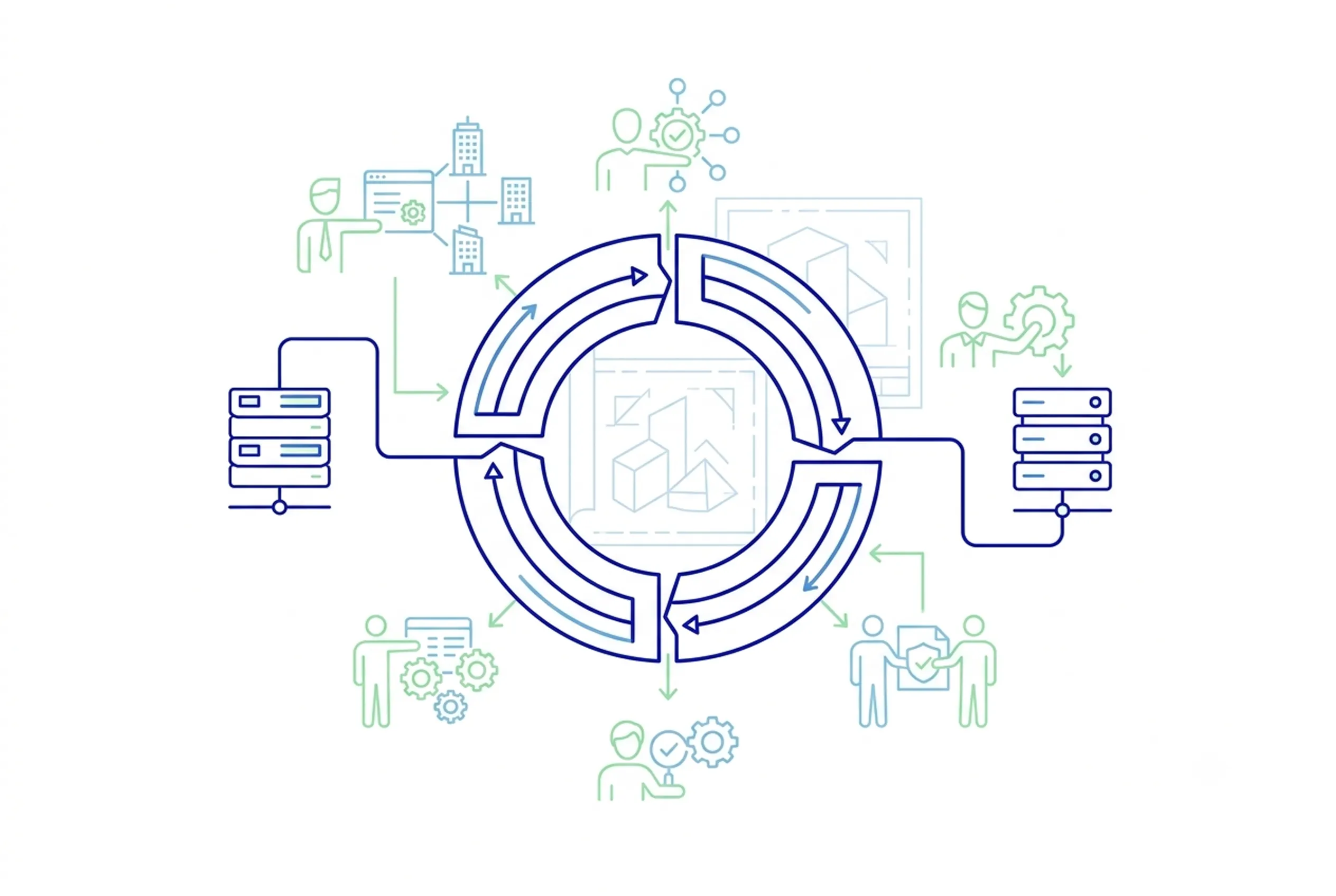
Every BluEnt BCP and DR engagement follows the same five-stage methodology, scaled to the size of the application portfolio and the regulatory profile.
Stage 1: BIA and Recovery Objective Assessment
Workshops with business leaders and IT identify critical functions and dependencies. Financial, regulatory, and reputational impact is quantified over multiple timeframes. RTO and RPO are set per function and validated against the BIA. The output is the foundation for every subsequent stage of both the BCP and the DR tracks.
Stage 2: Business Continuity Plan and DR Architecture Design
We author the BCP (people, process, technology, alternate-location plan, communications, regulator and customer notification templates) and design the DR architecture (recovery site, backup strategy aligned to 3-2-1-1-0, replication topology, runbook structure). Both deliverables are versioned in Git from day one.
Stage 3: DR Engineering and Backup Implementation
We engineer the technical recovery controls: immutable backup configuration, replication setup, failover orchestration, recovery-infrastructure-as-code, runbook automation for tier-one applications. Restore tests are scheduled and integrated into the operations calendar.
Stage 4: Exercise Program Launch
We run the first tabletop exercise within Stage 4 to validate the BCP. Findings drive immediate plan updates. The first failover test follows within ninety days to validate the DR architecture. After-action reviews capture gaps and improvements.
Stage 5: Continuous Operations and Quarterly Refresh
BluEnt operates the exercise calendar, refreshes the BCP and DR documentation quarterly, runs the annual full-scale exercise, and produces audit-evidence packs. Continuity is integrated with vendor risk (supplier-outage scenarios) and platform engineering (change-driven architecture review).
For platform controls supporting recovery, see Cloud Security Services. For risk programs feeding continuity scenarios, see Risk Management.
Capabilities at a Glance
Eight capability areas frame the BCP and DR practice. The first two are shared foundations; cards three and four sit in the Business Continuity track; cards five and six sit in the Disaster Recovery track; the final two are cross-cutting operations.

Foundation: Business Impact Analysis Workshops
Critical-function identification, dependency mapping, Maximum Tolerable Downtime per function, RTO and RPO target setting validated against business tolerance.

Foundation: Recovery Objective (RTO and RPO) Engineering
Per-function and per-system RTO and RPO design, validated against the BIA and engineered into the recovery architecture.

Business Continuity: Plan Authoring
BCP document covering people, process, and technology. Alternate work locations, manual workarounds, communication protocols, named section owners. Version-controlled in Git, refreshed quarterly.

Business Continuity: Tabletop and Communications Program
Quarterly tabletop exercises against named scenarios. Communication templates and regulator and customer notification timelines reviewed by legal. After-action reviews drive plan updates.

Disaster Recovery: Immutable Backup Architecture (3-2-1-1-0)
Three copies, two media, one off-site, one immutable, zero restore errors. Encryption with customer-managed keys. Cross-region replication. Restore-test cadence enforced per system.

Disaster Recovery: Recovery Architecture and Failover Engineering
Recovery site design (warm or cold), replication topology, failover orchestration, recovery-infrastructure-as-code, runbook automation, drift detection between exercises.

Regulator and Audit Evidence
Evidence packs aligned to ISO 22301, APRA CPS 230, NIST SP 800-34, HIPAA 164.308(a)(7), OSFI B-13 operational resilience, and cyber insurer questionnaires.

Continuous Continuity Operations
Monthly metrics, quarterly dashboards, annual BIA refresh, integration with vendor risk and change management so that supplier and platform changes trigger plan and architecture review.
For continuity-aware compliance evidence, see Cybersecurity Compliance Services. For continuity-aware vendor risk, see Risk Management.
Industries We Serve
BluEnt delivers BCP and DR programs across four regulated verticals. Each vertical’s continuity scenarios, regulatory pressures, and recovery priorities differ.

Architecture, Engineering, and Construction
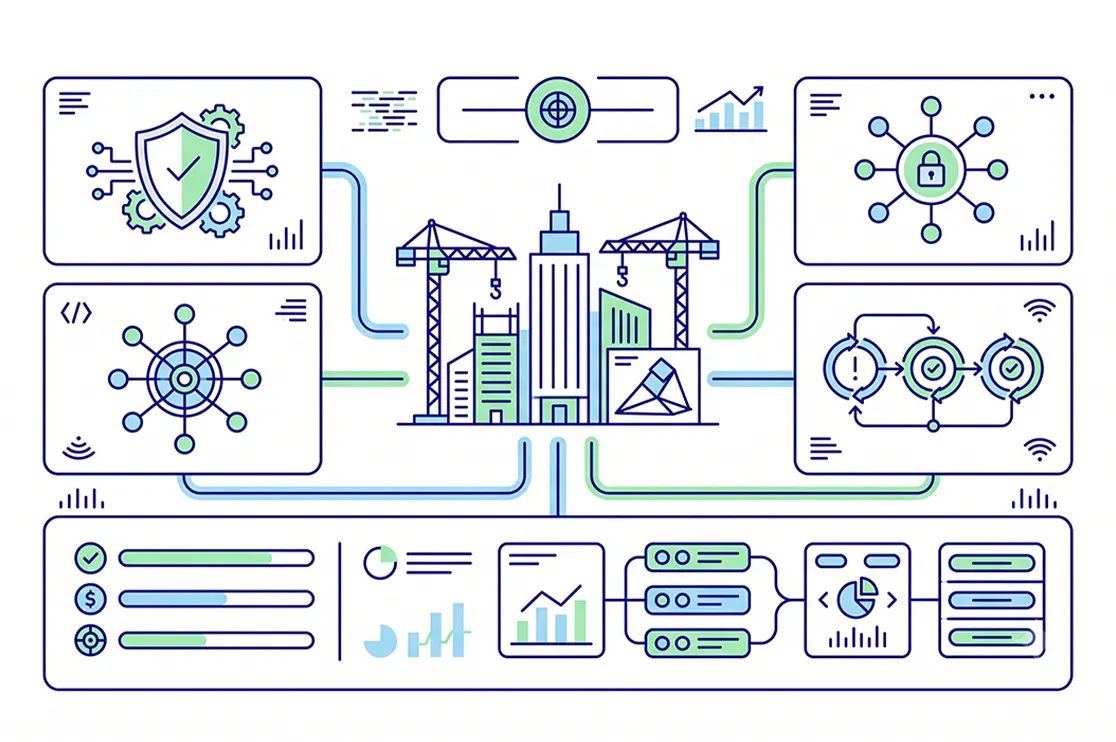
AEC continuity centers on project-site outages, BIM platform availability, and supplier-chain disruptions. A single major project at a single site can be material to revenue. BluEnt designs project-bound continuity (alternate-site work, document recovery, supplier failover) alongside enterprise-level recovery for BIM platforms and design collaboration tools.

Healthcare and Life Sciences
Healthcare continuity centers on clinical operations: EHR availability, medical device functionality, lab results delivery, and patient communication. HIPAA Security Rule 164.308(a)(7) Contingency Plan applies. NIST SP 800-66 Rev. 2 references the same. BluEnt designs clinical-priority recovery with manual workarounds, downtime procedures, and patient-communication timelines aligned to the Contingency Plan rule.

E-Commerce and Retail
Retail continuity centers on storefront uptime, especially during peak season (Black Friday, Cyber Monday, holiday gift periods). BluEnt designs peak-season-tested recovery, region-failover for storefronts, and customer-notification templates aligned to consumer-protection breach windows. PCI DSS v4.0 Requirement 12.10.1 references business-continuity content within the broader incident-response requirement; BluEnt covers the continuity content only.

Manufacturing and Industrial
Manufacturing continuity centers on production-line uptime, OT system recovery, and supply chain continuity. IEC 62443 and NIST SP 800-82 Rev. 3 cover OT-specific recovery. BluEnt designs OT-aware continuity with safety-system priority, MES recovery, and supplier-failure scenarios built into the exercise calendar.
Vertical-specific compliance programs are detailed on Cybersecurity Compliance Services. For risk programs underlying continuity scenarios, see Risk Management.
Cybersecurity Services Across Six Markets
BluEnt delivers BCP and DR programs across six markets, each with its own regulatory expectations on continuity and operational resilience.

United States HIPAA Security Rule 164.308(a)(7) Contingency Plan; NIST SP 800-34 Rev. 1 Contingency Planning; FFIEC IT Examination Handbook Business Continuity Management booklet (regulatory context for financial institutions).
United Kingdom ISO 22301 Business Continuity Management; FCA SYSC 15A Operational Resilience for in-scope firms (regulatory context); Bank of England SS1/21 Operational Resilience for PRA-regulated firms.
Australia APRA CPS 230 Operational Risk Management; ASD Essential Eight (Regular Backups maturity level); Australian Government ISM contingency planning controls; Security of Critical Infrastructure Act 2018 critical-infrastructure continuity expectations.
Canada OSFI Guideline B-13 technology and cyber risk; OSFI Guideline E-21 Operational Risk Management; federal critical-infrastructure continuity expectations under the National Strategy for Critical Infrastructure.
Netherlands and EU ISO 22301 Business Continuity Management; DORA operational resilience and ICT third-party risk for financial entities (regulatory context); NIS2 Directive operational continuity expectations for essential and important entities.
Broader Europe NIS2 national transpositions for essential-entity continuity; German BSI Act operational resilience expectations; French ANSSI sectoral operational resilience guidance; EU Cyber Resilience Act continuity expectations for connected products.
For region-specific compliance evidence, see Cybersecurity Compliance Services. For region-specific risk programs, see Risk Management.
Make Continuity an Engineering Discipline, Not a Binder
Effective continuity is engineered, not written. The organizations that handle disruption well measure recovery objectives rather than declare them, exercise plans rather than archive them, and test backups rather than configure them. The output is a BCP that the audit committee trusts and a DR architecture that meets the RTO and RPO documented in the BIA.
BluEnt designs the Business Continuity Plan and engineers the Disaster Recovery architecture as two distinct services within one integrated program.
We do not offer incident response; that scope sits with your SOC and IR partner. Whether you are starting from a BIA, modernizing a legacy DR plan, building toward APRA CPS 230 or OSFI B-13, or preparing for a cyber insurance renewal, our team works alongside yours from day one.
Explore the IT Security and Cybersecurity Practice
Frequently Asked Questions
What is the difference between Business Continuity and Disaster Recovery?
Business Continuity (BCP) covers how the entire organization keeps operating during a disruption: people (alternate locations, manual workarounds), process (notification, escalation, customer communication), and technology.
Disaster Recovery (DR) is the technical subset focused on restoring IT systems and data within measured RTO and RPO. BCP is broader; DR is more specific. A complete program needs both; BluEnt designs and engineers both, as two distinct services within one integrated program.
What is the difference between RTO and RPO?
Recovery Time Objective (RTO) is the maximum allowable downtime for a function or system before unacceptable consequences occur. Recovery Point Objective (RPO) is the maximum allowable data loss measured in time (for example, one hour of transactions).
Both are set per function and per system, validated against the Business Impact Analysis, and engineered into the recovery architecture. RTO drives the failover architecture; RPO drives the backup and replication strategy.
What is the 3-2-1-1-0 backup model?
Three copies of data, on two different media types, with one copy off-site, one copy immutable, and zero restore errors. The original 3-2-1 model has been extended with the immutability and restore-test requirements as ransomware response standards.
Immutable storage (object-lock, WORM) prevents ransomware from encrypting or deleting backups. The restore-test cadence ensures backups actually work when needed.
What is ISO 22301, and how is it different from NIST SP 800-34?
ISO 22301 is the international standard for Business Continuity Management Systems, certifiable, audit-defensible globally, and increasingly required in EU and UK procurement. NIST SP 800-34 Rev. 1 is the US federal contingency planning guide, mandatory for federal systems and widely referenced in US private sector.
The two cover similar ground; ISO 22301 is more prescriptive about the management system, NIST SP 800-34 is more prescriptive about the technical contingency plan. BluEnt aligns with both, where applicable.
How often should we exercise our BCP and DR?
BluEnt’s standard cadence is quarterly tabletop exercises (ninety-minute facilitated scenario) for the BCP, semi-annual failover tests of one critical system at a time (live failover with measurement of actual RTO and RPO) for the DR architecture, and an annual full-scale recovery exercise with an independent observer. ISO 22301 and APRA CPS 230 both expect at least annual full-scale testing for material services.
What does an immutable backup architecture look like in cloud?
AWS S3 Object Lock with Compliance mode, Azure Storage Immutable Blob Storage with time-based retention, Google Cloud Storage Bucket Lock.
Combined with cross-region replication and customer-managed encryption keys, this satisfies the immutability requirement of cyber insurer questionnaires and most regulator expectations. BluEnt engineers’ immutability at the storage layer, not at the policy layer.
How do we exercise a ransomware recovery scenario without disrupting production?
The BCP tabletop runs the scenario in a workshop format with leadership, IT, security, legal, and communications teams. The DR failover test runs the recovery in an isolated environment using snapshot-based restore.
The aim is to measure team coordination, decision-making, and recovery procedure validity without impacting production. The annual full-scale exercise may include limited production failover for a non-critical system to measure actual RTO and RPO.
What is APRA CPS 230 and who needs it?
APRA CPS 230 Operational Risk Management is a prudential standard for APRA-regulated financial institutions in Australia, effective July 2025. It mandates operational resilience, including critical operations identification, tolerance levels, exercise programs, and material service provider management.
While limited to APRA-regulated entities, the framework is now influencing operational resilience expectations across regulated industries globally and is referenced in BluEnt’s continuity methodology where relevant.
How does cyber insurance affect our continuity program?
Cyber insurance carriers increasingly require evidence of immutable backups, segregated recovery environments, MFA on all administrative access, EDR on all endpoints, and documented continuity arrangements with measured RTO and RPO.
Failure to maintain these controls can result in premium increases, coverage limitations, or claim denials. BluEnt designs continuity programs that pass insurer scrutiny and maintains evidence packs aligned to top-five carrier questionnaires.
Does BluEnt offer incident response, threat hunting, or forensic services?
No. BluEnt does not provide incident response, threat hunting, or forensic services. Our scope is Business Continuity and Disaster Recovery engineering: BIA, BCP authoring, DR architecture, backup engineering, and exercise programs.
During a real cyber incident, your incident response partner handles detection, containment, and forensics. BluEnt’s recovery architecture and runbooks activate at handoff to restore systems within the documented RTO and RPO.
View Our Projects
Dive into our portfolio and witness how BluEnt transforms bold ideas into powerful digital solutions.
From enterprise-grade applications to data-driven platforms, each project tells a story of innovation,
ROI, and long-lasting impact.

HubSpot | Case Study
Asana-HubSpot Integration
Discover how BluEnt help HFS in achieving task automation with real-time data synchronization and efficient ecosystem.

Wordpress | Case Study
HFS Website Overhaul
Learn how BluEnt modernized the website to support heavy research content & deliver consistent UI/UX with better performance.
Wordpress | Case Study
Author Dashboard Transformation
Explore how BluEnt developed a unified & comprehensive dashboard for better performance tracking and report collaboration.

Wordpress | Case Study
Custom Elementor Widget
Learn how the custom elementor widget, developed by BluEnt, let HFS Research get off from its dependency over expensive…
Wordpress | Case Study
Custom WordPress Videocast Plugin
Discover how BluEnt created a custom WordPress videocast plugin to improve loading time & performance of HFS Research podcast…

Wordpress | Case Study
Report Analytic Dashboard
Discover how BluEnt designed & developed a comprehensive report analytic dashboard for HFS to generate accurate data.
Industry Trends & Innovation
Ideas That Drive Industries
Explore a 360° content hub featuring expert-written blogs, practical use cases, and FAQs,
all designed to spark innovation, solve challenges, and sharpen your competitive edge.
Whether you're shaping strategy or validating decisions, our insight-driven content
equips you with clarity, confidence, and the direction you need to stay ahead.