











The complexity of data grows exponentially as organizations expand analytics, AI projects, multi-cloud ecosystems, among others. Data is distributed across systems, teams, and platforms—making it difficult to understand how it is defined, where it originates, and how it should be governed.
This lack of visibility is one of the primary reasons governance programs fail. In the absence of clear definitions and ownership, as well as lineage, organizations find it hard to implement policies, data quality and offer credible insights.
Table of Contents:
- Introduction
- Why Metadata Matters for Data Governance
- Understanding Enterprise Metadata Management
- Metadata as the Foundation of Governance
- Key Components of a Metadata Management Framework
- Best Practices for Implementing Metadata Management
- Metadata and the Future of Governance
- Why Enterprises Partner with BluEnt
- Conclusion
- Frequently Asked Questions
The vast majority of enterprises are not deprived of governance frameworks, but lack the context concerning their data. This is where an enterprise metadata management strategy is very crucial.
It forms the basis of transparency, control and scale- able governance that shifts decision-making on policies to an insight based decision making. For CIOs, CDOs, and data leaders, metadata is no longer a backend capability—it is a strategic enabler of trusted analytics and AI.
Why Metadata Matters for Data Governance?
Modern data governance relies on visibility of data flows, its definition and ownership. In the absence of this, governance is just theoretical and hard to implement.
The industry reports suggest that the market of metadata management tools in the world is developing at a fast pace due to the growing demand on the transparency of data, compliance, and the readiness of AI.
The global data governance metadata management tools market size was valued at US$ 4,838.7 million in 2024 and is estimated to grow at a compound annual growth rate (CAGR) of 21.7% from 2024 to 2030. The basis of this visibility is metadata. It allows organizations to document definitions, trace data lineage and align the business user with the technical data assets.
Key governance challenges without metadata:
-
Inequalities in the definition of data across business units.
-
Inability to trace data streams.
-
Poor quality of data and duplication.
-
Delays in analytics and reporting
-
Increased regulatory and compliance risk
By embedding metadata into governance programs, organisations can:
-
Establish a single source of truth for data definitions
-
Facilitate end to end data lineage.
-
Improve collaboration between business and IT teams
-
Enhance audit compliance and audit readiness.
-
Accelerate analytics and AI initiatives
Metadata is widely used by many enterprises to support metadata-driven governance, in which metadata insight (lineage, ownership, usage patterns, and others) are used to guide governance decisions.
Understanding Enterprise Metadata Management
Enterprise metadata management is defined as the processes and technologies that capture, organize and manage metadata on the enterprise level.
Metadata defines the characteristics of data assets, such as definitions, relationships, ownership and usage.
A comprehensive metadata management framework typically includes:
-
Business metadata describing definitions and ownership.
-
Technical metadata describing system structures and data flows.
-
Operational metadata capturing usage patterns and data lifecycle information.
These components enable organizations to know how data flows among the systems as well as the way governance policies are implemented. Metadata management in mature organizations is built into the larger data governance and metadata initiatives to make sure that governance policies are backed by correct data documentation.
Decision Framework: When Do You Need a Metadata Strategy?[
For enterprise leaders, investing in metadata management should be driven by clear business triggers.
1. Indicators You Need Metadata Management
-
Data teams have a hard time determining reliable sources of data.
-
Reports differ across departments
-
Manual work is needed on regulatory audits.
-
Data lineage is unclear or undocumented
2. Business Priorities Alignment
-
Compliance-focused → Metadata for auditability and lineage
-
Analytics-driven → Metadata for discovery and trust
-
AI-driven → Metadata for training data transparency
3. Maturity-Based Approach
-
Early stage → Focus on business glossary
-
Mid stage → Implement data catalog and lineage
-
Mature stage → Enable metadata-driven governance
Executive Takeaway:
Metadata management is not only an investment of a technical nature but it is an investment of strategic capacity which directly affects the speed of decision making and the trust of the data.
Data Governance Maturity Assessment
A structured diagnostic for CDOs, CIOs, and Chief Compliance Officers. 18 questions across six governance dimensions. Receive a scored maturity profile and prioritised recommendations.
Your Details
Your Assessment Results
Overall Governance Maturity Level
Receive Your Full Report
A BluEnt governance consultant will prepare a personalised report with specific recommendations for your highest-priority gaps. Book a 60-minute discovery call to discuss your findings.
Metadata as the Foundation of Governance
Effective governance relies on proper situational awareness of enterprise data assets. In the absence of metadata, organizations are not in a position to trace the usage of data, where risks lie and what should be the implementation of policies.
Metadata helps organizations to transition between disjointed data environments to interconnected and managed ecosystems with decisions made using trusted and traceable data.
An effective metadata management strategy will allow organizations to develop governance capabilities including:
-
Data ownership identification
-
Business definition alignment
-
Data lineage tracking
-
Data quality monitoring
-
Policy enforcement across systems
Metadata is also used in governance technologies like RBAC and data lineage, which allows organizations to govern access and still be able to see how data is used within enterprise settings. Organizational governance can be transformed to metadata-driven governance with metadata embedded in the governance processes, which enables governance decisions to be informed by real-time data insights.
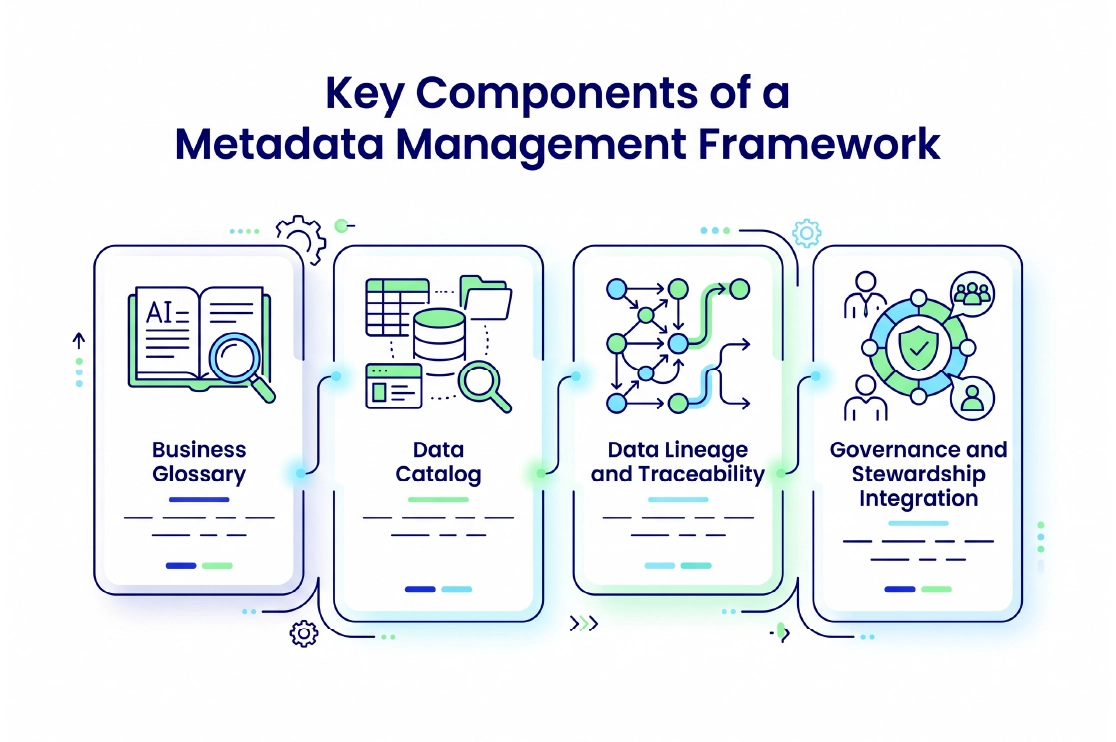
Key Components of a Metadata Management Framework
An effective metadata management framework has a number of essential elements that assist in the enterprise governance programs.
Business Glossary
Business glossary is a set of standard definitions of essential data elements in an enterprise. Using business glossary implementation, companies can bring business and technical teams together using a consistent terminology.
Data Catalog
A strong data catalog strategy enables organizations to find, categorize and record data assets across the enterprise. Data catalogs can assist the users to find reliable sources of data and understand how data should be used.
Data Lineage and Traceability
Metadata platforms often have lineage features that trace the movement of data within the systems. This disclosure assists in governance, compliance and operational troubleshooting.
Governance and Stewardship Integration
Metadata management must be consistent with data governance & stewardship services where operational stewardship activities underpin the policies of governance.
Common Challenges in Metadata Management
Despite its importance, metadata management is one area that is not well implemented in many organizations.
Fragmented Data Ecosystems
Metadata is distributed between tools and hence integration is challenging.
Lack of Ownership
None of the obvious accountability in terms of metadata quality.
Manual Processes
High dependency of manual documentation minimizes scalability.
Low Business Adoption
Business users often do not engage with metadata tools
Tool-Centric Approach
Emphasis on tools rather than governance results in minimal effects.
Insight:
Metadata programs that are successful are oriented on operating models and adoption as opposed to technology implementation.
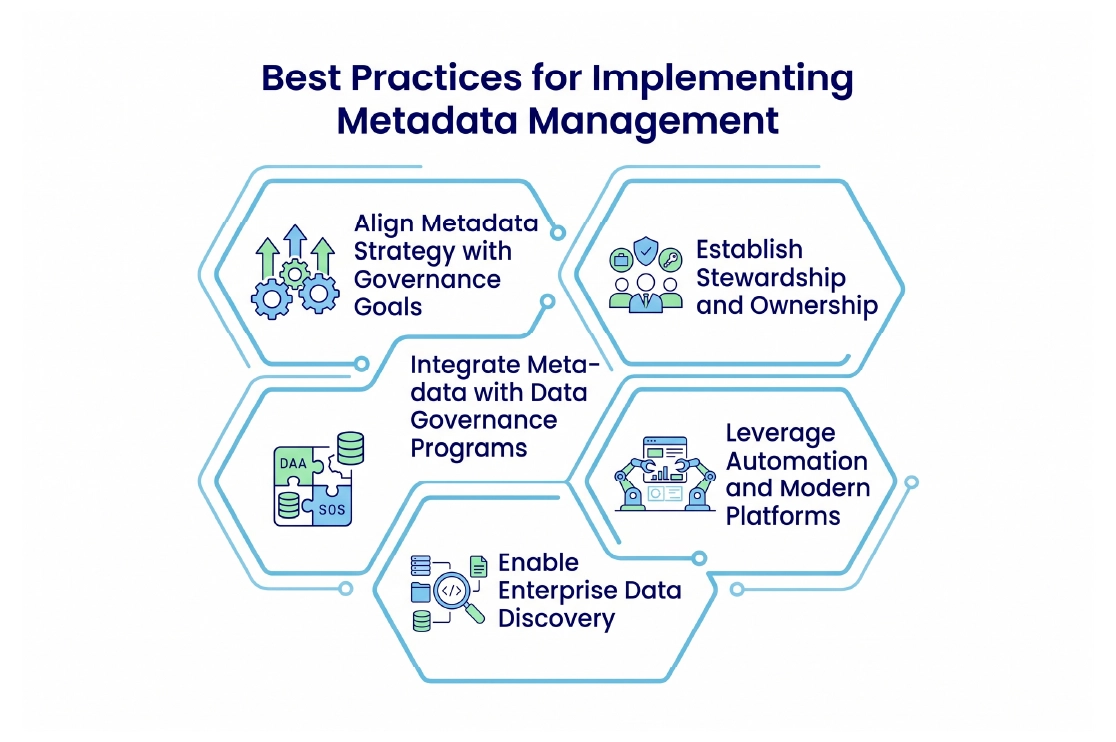
Best Practices for Implementing Metadata Management
Metadata management best practices are applicable to organizations that use metadata management so as to ensure long term success.
Align Metadata Strategy with Governance Goals
Metadata programs are expected to underpin other governance purposes, including compliance, analytics enablement, and more effective data quality.
Integrate Metadata with Data Governance Programs
Successful organizations combine metadata management as a part of their enterprise metadata management strategy instead of viewing it as a singular project.
Establish Stewardship and Ownership
Metadata governance needs to have well-defined data owner and data steward roles which ensure maintaining data owner and lineage information, and metadata quality.
Enable Enterprise Data Discovery
The excellent data catalog strategy enables organizations to empower analysts and business users to find trusted data sources easily.
Leverage Automation and Modern Platforms
Modern metadata tools automatically include lineage, usage patterns, technical metadata across systems, and minimize the manual governance efforts.
Real-World Enterprise Use Cases
Banking Institution
Applied metadata-based lineage to enhance better regulatory reporting and less audit.
E-commerce Company
Catalog and metadata tagging of used data to enhance product and customer analytics to ensure quick decision-making.
Healthcare Provider
Engaging metadata governance to enable compliance of patient data and allow analytics to optimize care.
These illustrations show that metadata can make a direct contribution to business performance and risk minimization.
Metadata and the Future of Governance
Metadata will be a more significant part of governance as enterprise data environments continue to grow.
Organizations that have embraced metadata-driven governance are in a better position to govern complex data ecosystems and implement governance policies as well as empower trusted analytics.
Emerging governance functionalities, automated policy enforcement, artificial intelligence data surveillance, and real-time data lineage view are also enabled by metadata.
Investment in scalable enterprise metadata management strategy is becoming a necessity to facilitate long-term governance achievement to data leaders.
Recommended Reading:
Why Enterprises Partner with BluEnt?
Although most organizations have accepted the significance of metadata, the problem is how to incorporate metadata in governance, analytics and enterprise architecture.
BluEnt assists companies with developing metadata-based governance structures that synchronize strategy, stewardship and technology- to achieve quantifiable business results.
Our services support:
-
Metadata management strategy development
-
Data catalog and glossary implementation
-
Governance and stewardship alignment
-
Data lineage and metadata integration
BluEnt assists companies to develop metadata-based governance strategies through the integration of its governance expertise and current data architecture capabilities that will expand with enterprise growth.
Conclusion
Metadata is not a backup feature anymore, it is the backbone of contemporary data governance.
In the absence of metadata, organizations cannot see, trust and have control over their data ecosystems. Enterprises can allow:
-
Transparent and traceable data flows
-
Improved data quality and governance enforcement
-
Faster and more reliable analytics
-
Scalable AI and digital transformation initiatives
In the case of CIOs and CDOs, they should stop implementing tools and instead develop metadata-driven governance capabilities, which respond to business strategy.
Next Step:
Find out the level of maturity of your current metadata, what cannot be seen, and what can be seen, and how to create a strategy to permit governance scale.
Companies investing in metadata in the current day will be in vanguard of making decisions based on the data tomorrow.
Frequently Asked Question (FAQs)
What is enterprise metadata management?Enterprise metadata management refers to the processes and technologies that are applied to capture, organize and manage metadata in enterprise data environments.
Why is metadata important for data governance?Metadata supports metadata for data governance, as it gives an insight of data definitions, data ownership, lineage and usage across systems.
What is a metadata management framework?The metadata management framework defines procedures, applications, and governance networks of operating metadata throughout an organization.
How does metadata support data governance initiatives?Metadata facilitates data governance and metadata integration through defining data and tracking lineage as well as enforcing governance policies.
What are metadata management best practices?Common metadata management best practices include the implementation of business glossary, data catalog deployment, determination of stewardship roles, and the combination of metadata and governance programmes.

 Governing AI Tools in AEC: Copilot, Digital Twins, and Generative Design
  Data Governance for AI and Advanced Analytics: Building the Foundation That Works
 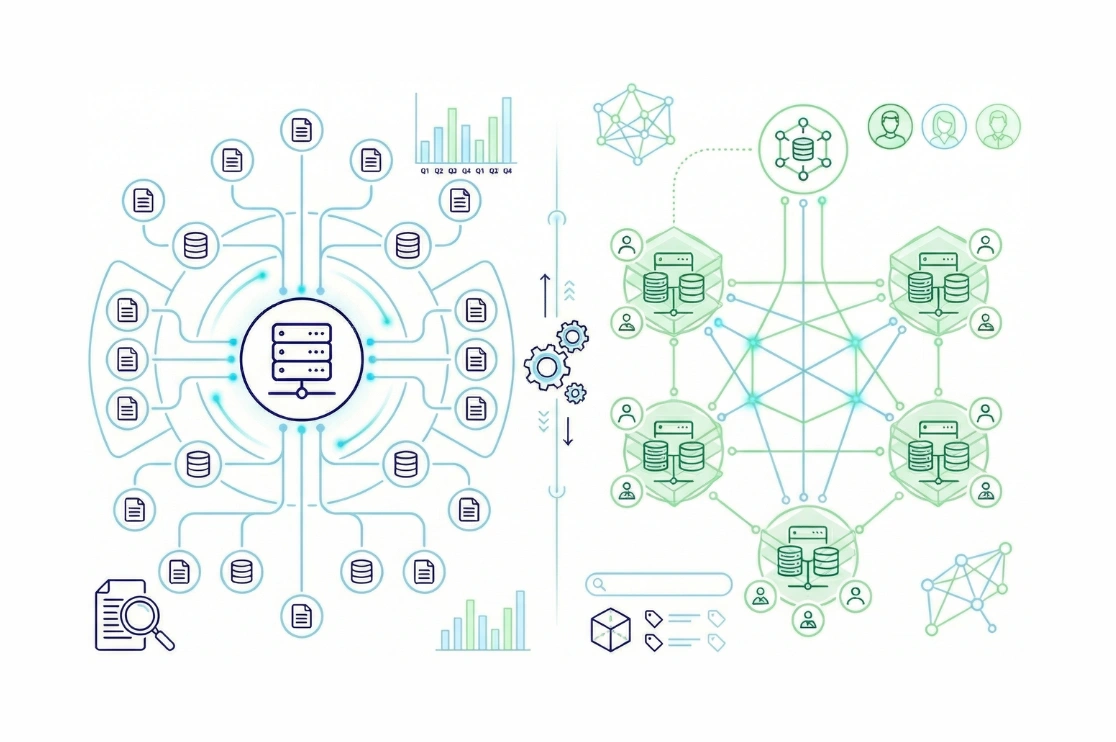 Centralized vs. Federated Data Governance: Which Model Fits Your Organization
 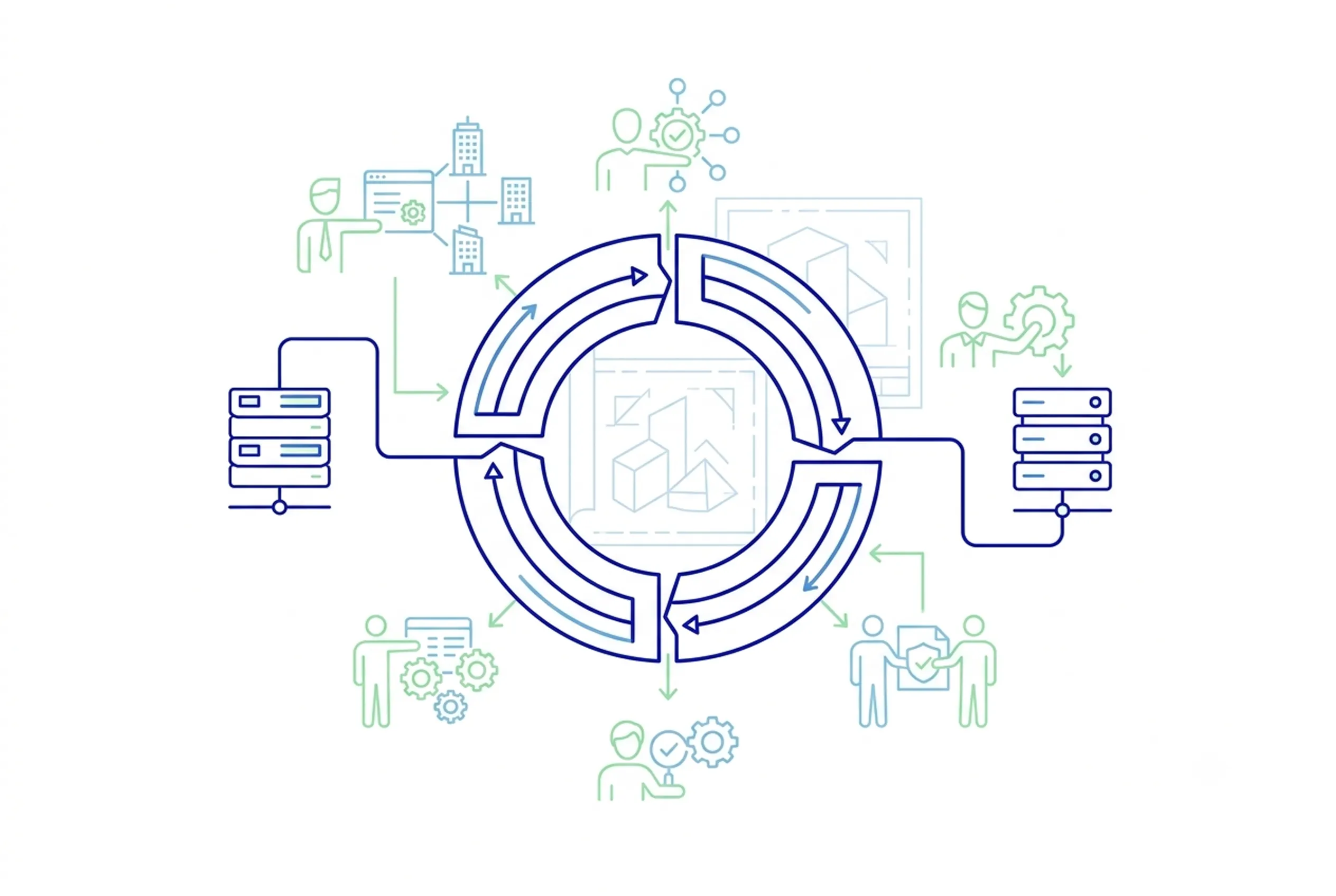 Data Governance Roles and Responsibilities in AEC Organizations