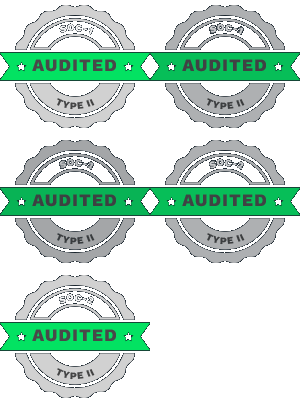









Cybersecurity compliance is the practice of designing, engineering, and operating controls that demonstrate continuous conformance to named regulatory and industry frameworks: SOC 2 Type II, HIPAA Security Rule, GDPR Article 32, and PCI DSS v4.0.
Policies and procedures are authored to map clause-by-clause to those frameworks and the underlying control catalogs (NIST 800-53 Rev. 5, ISO 27001 Annex A, CIS Controls v8).
BluEnt is a compliance readiness and engineering partner for regulated enterprises. Our team engineers the controls, authors the policy library, automates evidence collection, and runs the mock audit that lets your external auditor issue a clean opinion.
Engagements are scoped to the framework or frameworks you are audited against. Many organizations engage us for one framework first (SOC 2 is the most common entry point) and add others as the program matures.
Every engagement delivers four artifacts: a framework-by-framework gap report mapped to control catalogs; a versioned policy library aligned to NIST 800-53 Rev. 5 and ISO 27001 Annex A; engineered controls with evidence automated into a GRC tool; and a mock audit report identifying every observation an auditor is likely to raise.
BluEnt is your readiness partner, never your auditor. AICPA and PCI SSC independence rules require those roles to be separate. We coordinate handover to your chosen audit firm.
For framework-specific detail, see the dedicated pages: SOC 2, HIPAA, GDPR, and PCI DSS.
Trusted By
Organizations That Trust BluEnt With Their Data

- Gift Card Management, Reporting, Data Integration, Analytics Solutions, Book Keeping NetSuite Reporting, NetSuite Records Maintenance, Income Statement, Audit Support

- Gift Card Management, Reporting, Data Integration, Analytics Solutions

- Invoicing, AP Reports, Sales Data Analytics

- MuleSoft Integration, Analytics & Dashboards - [Tableau, MS SQL Server, SSIS]

- ERP Onboarding and Implementation, Data Migration, Custom Report Building, Audit Support and Finalization, Draft Financials Statements, Bidding Website Development

- Data Analytics and Dashboards

- V-Bucks Gift Card Sales Analytics, Reconciliation, Financial Tracking and Reporting
- Web Asset Creation

- HubSpot Campaign Management, Workflow Automation, UX/UI Development, Mobile App Development, Application Development

- Data Analytics and Dashboards, Website Development, Website Maintenance, Application Development, HubSpot Automation and Integration, Asana Management

- SEO, Website UX/UI Development, Data Management, Third-Party Integration, Website Maintenance

- Shopify Website Development, Klaviyo Email Marketing, Email Campaign Setup, Third-Party Shopify App Integration
- Website and SEO Audit, Shopify Website Maintenance, SEO and Analytics

- Website Design and Development, Website Maintenance

- Website Design and Development, Website Maintenance

- Website Design and Development, Website Maintenance, SEO and Analytics
Is This Your Situation?
BluEnt is the right compliance partner if any of the following describe your current state. The pattern across regulated enterprises is consistent: tooling exists, evidence does not flow, and audits force quarterly heroics.
-
A prospect or customer is asking for your SOC 2 Type II report and your team is rebuilding the evidence pack from scratch every renewal cycle.
-
Your HIPAA Security Rule controls live in a Word document last reviewed eighteen months ago, and the audit log retention you actually have does not meet 164.530(j).
-
GDPR Article 32 is in your contracts but your evidence of pseudonymization, encryption, and breach response capability is informal at best.
-
PCI DSS v4.0 became enforceable in March 2025 and you are not certain whether your current controls satisfy the new requirements or qualify for the customized approach.
-
You are audited under three or more frameworks and there is no consolidated control catalog, so each audit feels like the first.
-
Cyber insurance renewal is approaching and the questionnaire asks for evidence you cannot produce in the time available.
If two or more of these apply, this page is the right starting point. For framework-specific depth, see SOC 2 Compliance Services, HIPAA Compliance Services, GDPR Compliance Services, or PCI DSS Compliance Services. For the cloud control plane that underpins audit evidence, see Cloud Security Services. For the identity layer required by every framework, see Identity and Access Management.
What Makes BluEnt Different
Compliance partners come in three shapes: audit firms (who issue findings but do not remediate), GRC tool resellers (who sell software but not engineering), and Big 4 consultancies (who write strategy but rarely build controls). BluEnt occupies the engineering and governance gap between them.
| Without an Engineering-Led Compliance Partner | With BluEnt |
|---|---|
|
Policies that exist on paper but are not enforced in platforms. |
Policies authored once and engineered into IAM, encryption, logging, and detection. |
|
Audit evidence rebuilt under deadline every quarter. |
Continuous evidence collection from the controls themselves, exported to GRC tooling on a schedule. |
|
A different binder for SOC 2, HIPAA, GDPR, and PCI DSS. |
One control catalog mapped to NIST 800-53 and ISO 27001 Annex A, with framework-specific overlays. |
|
Mock audits that rehearse interviews, not controls. |
Mock audits that test operating effectiveness on real evidence, with closure of findings before fieldwork. |
|
Tool purchases without operating model. |
Drata, Vanta, OneTrust, or Archer configured against the operating model BluEnt designed. |
|
Strategy decks promising future readiness. |
Engineered controls, signed-off policies, and a closed evidence pack ready for the auditor. |
For the technical control plane behind every framework, see Cloud Security Services and Identity and Access Management.
Compliance Controls Catalog by Framework
BluEnt engineers compliance as concrete controls in the platforms you run. The catalog below names the framework, the in-scope clauses or articles, the engineering work BluEnt performs, and the tooling commonly used. Every recommendation maps to NIST 800-53 Rev. 5 control families so the same engineering work satisfies multiple audits.
| Control Family | Control IDs | What BluEnt Engineers | Tooling Examples |
|---|---|---|---|
| SOC 2 Type II (AICPA TSC) | CC1 to CC9, plus A, C, P, PI | Trust Services Criteria mapped to NIST 800-53 AC, AU, CM, CP, IR, RA, SC. Continuous evidence collection from IAM, SIEM, and configuration tooling. Policy library aligned to TSC clauses. Quarterly mock audit before fieldwork. | Drata, Vanta, Tugboat Logic, OneTrust GRC, Archer. |
| HIPAA Security Rule | 164.308, 164.310, 164.312, 164.530(j) | Administrative, physical, and technical safeguards engineered into platforms. ePHI inventory and classification. Six-year audit-log retention. Business Associate Agreement workflow. Risk analysis under 164.308(a)(1)(ii)(A). | Microsoft Purview, BigID for ePHI discovery, Splunk or Sentinel for AU-2 logging, Carta or Ostendio for HIPAA evidence. |
| GDPR Article 32 and Adjacent | Art. 25, 30, 32, 33, 35, plus ISO 27701 | Security of processing controls (Art. 32). Data Protection Impact Assessments (Art. 35). 72-hour breach notification capability. Records of Processing (Art. 30). Privacy by design and default. ISO 27701 PIMS extension. | OneTrust, Securiti, BigID, TrustArc, Microsoft Priva, ENISA-aligned templates. |
| PCI DSS v4.0 | Requirements 1 to 12; Customized Approach Option | Twelve numbered requirements engineered against the in-scope cardholder data environment. Network segmentation, encryption, key management, logging, vulnerability management, and policy. Customized Approach option for compensating controls. | Qualys PCI, Tenable, Tripwire, Splunk PCI, Akamai or Cloudflare PCI WAF, Tokenization gateways. |
| ISO 27001 and ISO 27017 | Annex A controls (93 in 2022 revision) | Information Security Management System scope, risk treatment plan, Statement of Applicability. Annex A 5.1 to 5.37 organizational, 6.1 to 6.8 people, 7.1 to 7.14 physical, 8.1 to 8.34 technical. ISO 27017 cloud control extensions. | OneTrust ISO module, Vanta ISO 27001, Drata, ServiceNow GRC. |
| NIST CSF 2.0 (outer frame) | GV, ID, PR, DE, RS, RC categories | Govern, Identify, Protect, Detect, Respond, Recover function coverage. Sub-categories mapped to NIST 800-53 implementation. Tier ratings (Partial, Risk Informed, Repeatable, Adaptive). Roadmap to target tier. | NIST CSF Profile spreadsheets, Archer, ServiceNow GRC, custom Power BI or Tableau scorecards. |
| FedRAMP and CMMC 2.0 | FedRAMP Moderate or High; CMMC L2 | FedRAMP boundary definition, control implementation, 3PAO assessment support. CMMC Level 2 control implementation against NIST 800-171 Rev. 3 (110 controls). System Security Plan and Plan of Action and Milestones. | Hyperproof, Telos Xacta, RegScale, GovCloud-specific tooling. |
| Continuous Compliance Operations | AU-2, AU-12, CA-2, CA-7 | Continuous control monitoring with automated evidence collection. Dashboard for executive and audit committee review. Control failure alerting. Quarterly control effectiveness review. Annual policy refresh cycle. | Drata, Vanta, ServiceNow GRC, Splunk dashboards, custom Power BI scorecards. |
For framework-by-framework depth, see SOC 2, HIPAA, GDPR, or PCI DSS. For the cloud control plane behind these frameworks, see Cloud Security Services. For the identity controls every framework requires, see Identity & Access Management.
How to Choose a Cybersecurity Partner
Procurement teams under audit pressure ask the same six questions of compliance partners. The answers below are the criteria BluEnt is built to meet.

Engineering, not just attestation services
An attestation firm issues findings; a true compliance partner closes them. Look for engineers who configure the IAM policy, the SIEM rule, and the evidence pipeline, not consultants who hand a binder to your team.

Multi-framework mapping in a single control catalog
If your business spans SOC 2, HIPAA, GDPR, and PCI DSS, you need one control catalog, not four. The right partner authors policies once and maps clauses to NIST 800-53 and ISO 27001 Annex A so the same engineering work satisfies every framework.

Independence from the audit firm
The auditor cannot be the same party that built the program. BluEnt designs and engineers the program; you choose your audit firm or 3PAO. This is mandatory under SOC 2 and FedRAMP and is best practice elsewhere.

Continuous evidence over periodic snapshots
Audit evidence collected continuously is more defensible and dramatically less expensive than evidence reconstructed every quarter. Look for a partner who builds evidence into the control itself and exports it to GRC tooling on a schedule.

Vendor-agnostic GRC tooling recommendations
Drata, Vanta, OneTrust, ServiceNow GRC, Archer, Hyperproof: each fits different scopes. The right partner recommends the tool that fits your environment, not the one with the highest reseller margin. BluEnt does not resell GRC platforms.

Track record across regulated verticals
HIPAA in healthcare, PCI DSS in retail, NIS2 in manufacturing, GDPR everywhere: framework expertise must be paired with vertical context. Look for a partner with depth across multiple verticals.
Score your cybersecurity program in under seven minutes
The free Cybersecurity Maturity Assessment scores your program across six domains aligned to NIST CSF 2.0 and produces a prioritized remediation roadmap. No sales call required to receive the report.
How We Deliver: A Five-Stage Methodology
Every BluEnt compliance engagement follows the same five-stage methodology, scaled to the framework, scope, and target audit date. Timelines below assume a SOC 2 Type II or ISO 27001 program of typical mid-enterprise complexity.
Stage 1: Gap Assessment
We map your current controls clause-by-clause against the target framework (SOC 2 TSC, HIPAA 164 Series, GDPR Articles, PCI DSS Requirements). Output is a control-level scoring with evidence gaps named explicitly and a prioritized remediation plan tied to NIST 800-53 control IDs.
Stage 2: Policy and Procedure Authoring
We author or refresh the policy library, supporting procedures, and standards. Every clause is mapped to NIST 800-53 Rev. 5 and ISO 27001 Annex A so the same policy supports multiple audits. Approval workflows, version control, and training materials are scoped at this stage.
Stage 3: Control Engineering
We engineer the technical controls into platforms: IAM and PAM rollouts, encryption configuration, audit log retention and integrity, SIEM detection content, vulnerability management cadence, change management workflow. Evidence collection is automated where possible.
Stage 4: Mock Audit and Remediation
We run a mock audit alongside the engaged third-party auditor. Findings are closed, evidence packs validated, interviews rehearsed. The aim is to make the external audit a confirmation rather than a discovery exercise.
Stage 5: External Audit Support and Continuous Operations
We stand alongside the auditor through fieldwork, evidence requests, and any final remediation. After the audit, continuous compliance operations begin: monthly control effectiveness reviews, quarterly evidence refresh, annual policy review.
For the cloud platform controls underlying every framework, see Cloud Security Services. For the identity controls (mandatory under every framework), see Identity and Access Management.
Capabilities at a Glance
Eight capability areas frame the cybersecurity compliance practice. All eight are delivered in-house by BluEnt engineers and consultants. External audit attestation is performed by an audit firm of your choice; BluEnt does not perform certification audits.

SOC 2 Type II Readiness and Continuous Evidence
Trust Services Criteria mapped to NIST 800-53. Drata or Vanta configuration, continuous evidence collection, mock audit, and external audit support.

HIPAA Security and Privacy Rule Compliance
ePHI inventory, 164.308 / 310 / 312 safeguards engineered into platforms, six-year audit log retention, BAA workflow, breach response capability.

GDPR Article 32 and ISO 27701 PIMS
Security of processing controls, DPIA process, 72-hour breach notification capability, Records of Processing automation, ISO 27701 PIMS extension.

PCI DSS v4.0 Readiness and Customized Approach
Twelve-requirement engineering against the cardholder data environment. Customized Approach Option for compensating controls. Annual ASV and quarterly internal scans.

ISO 27001 and ISO 27017 Implementation
ISMS scoping, risk treatment plan, Statement of Applicability, 93 Annex A controls (2022 revision) engineered. ISO 27017 cloud control extensions.

NIST CSF 2.0 Profile and Roadmap
Govern, Identify, Protect, Detect, Respond, Recover function profiling. Tier rating against Partial / Risk Informed / Repeatable / Adaptive. Target-tier roadmap with quarterly milestones.

FedRAMP and CMMC 2.0 Readiness
FedRAMP Moderate or High boundary, control implementation, 3PAO support. CMMC Level 2 against NIST 800-171 Rev. 3 (110 controls). System Security Plan and POAM.

Continuous Compliance Operations
Continuous control monitoring, automated evidence collection, executive scorecards, quarterly control effectiveness review, annual policy refresh.
For dedicated framework pages, see SOC 2 Compliance, HIPAA Compliance, GDPR Compliance, and PCI DSS Compliance. For technical platform controls, see Cloud Security Services and Identity and Access Management.
Industries We Serve
BluEnt delivers compliance programs across four regulated verticals. The relevant frameworks differ by industry, and the same control engineered once satisfies multiple audits when the catalog is built correctly.

Architecture, Engineering, and Construction
AEC firms handling US federal projects fall under FAR and DFARS, with CMMC Level 2 and NIST SP 800-171 Rev. 3 obligations on controlled unclassified information. UK and EU projects bring ISO 19650-5 information security obligations on BIM data. GDPR applies to subcontractor and personnel data. BluEnt engineers a unified control catalog across these frameworks so the same engineering work survives multiple audits.

Healthcare and Life Sciences
HIPAA Security Rule, HITECH breach notification within sixty days, FDA premarket cybersecurity guidance for connected medical devices (mapped to NIST SP 800-66 Rev. 2), NHS Data Security and Protection Toolkit in the UK, and GDPR Article 9 for special category data in the EU. BluEnt engineers ePHI controls aligned to 164.308, 164.310, and 164.312 with continuous evidence collection.

E-Commerce and Retail
PCI DSS v4.0 enforcement is now active. The twelve numbered requirements have been updated, and the Customized Approach Option allows compensating controls. Combined with GDPR and CCPA breach notification, ePrivacy Regulation cookie obligations, and account takeover defense, retail compliance is a continuous program. BluEnt engineers the segmentation, encryption, and logging controls required for PCI scope reduction.

Manufacturing and Industrial
NIS2 Directive applies to essential and important entities in the EU with strict incident reporting timelines. NIST SP 800-82 Rev. 3 covers ICS security. NIST SP 800-161 Rev. 1 covers supply chain risk. ITAR and EAR govern controlled technical data. ISO 9001 and ISO 13485 sit alongside cybersecurity frameworks. BluEnt engineers OT-IT convergence so the same evidence pack supports operational and information-security audits.
Vertical-specific cloud controls are detailed on Cloud Security Services, and risk programs on Risk Management.
Cybersecurity Services Across Six Markets
Compliance frameworks vary by jurisdiction. BluEnt engineers programs for six markets, with the same control catalog adapted to the named frameworks of each.

United States SOC 2 Type II, HIPAA Security Rule, HITECH, SOX ITGCs, GLBA Safeguards Rule, FTC Safeguards Rule, NIST CSF 2.0, NIST SP 800-53 Rev. 5, NIST SP 800-171 Rev. 3, FedRAMP, CMMC 2.0, CCPA and CPRA, NY DFS 23 NYCRR 500.
United Kingdom UK GDPR Article 32, Data Protection Act 2018, Cyber Essentials and Cyber Essentials Plus, NCSC Cyber Assessment Framework, ICO security guidance, NHS Data Security and Protection Toolkit, ISO 27001 Annex A.
Australia Privacy Act 1988 with APP 11, Notifiable Data Breaches scheme, APRA CPS 234, APRA CPS 230, ASD Essential Eight, Information Security Manual, Security of Critical Infrastructure Act 2018, IRAP for government workloads.
Canada PIPEDA governs personal information at the federal level. Provincial legislation applies in Quebec (Law 25), British Columbia (PIPA), and Alberta (PIPA). Organizations in federally regulated industries are additionally subject to OSFI guideline B-13 on technology and cyber risk management.
Netherlands and EU: GDPR Article 32, NIS2 Directive, DORA for financial entities (regulatory context only), EU AI Act, Cyber Resilience Act, eIDAS 2.0, ISO 27001, ISO 27701, ISO 27017.
Broader Europe NIS2 national transpositions, the German BSI Act and IT-SiG 2.0, BSI C5 cloud security catalogue, the French Loi de Programmation Militaire, SecNumCloud sovereign cloud, Italian NIS implementation, Cyber Resilience Act conformity.
For region-aware identity governance, see Identity and Access Management. For region-aware cloud security, see Cloud Security Services
Make Audit a Confirmation, Not a Fire Drill
Compliance has matured beyond binders and quarterly heroics. The enterprises that get it right author policies once, engineer evidence collection into the controls themselves, and treat the audit as a confirmation of operating effectiveness rather than an annual scramble. The result is lower audit cost, higher renewal velocity, and a security program that stands up to regulator and customer scrutiny.
BluEnt designs and engineers the program; you choose your audit firm or 3PAO. Whether you are preparing for first SOC 2, expanding from SOC 2 to ISO 27001, getting ahead of PCI DSS v4.0, or building toward CMMC Level 2, our team brings the policy authoring, control engineering, and evidence automation that make audits routine.
Explore the IT Security and Cybersecurity Practice
Frequently Asked Questions
What does BluEnt actually deliver in a compliance engagement?
BluEnt designs the compliance program, authors the policy library and supporting procedures, engineers the technical controls into your platforms, configures the GRC tool of choice, automates evidence collection, runs mock audits, and stands alongside the external auditor of your choice through fieldwork. BluEnt does not perform certification audits; that work goes to an independent audit firm or 3PAO.
How is SOC 2 Type II different from SOC 2 Type I?
SOC 2 Type I attests that controls are designed appropriately at a point in time. SOC 2 Type II attests that controls operated effectively over a period (typically six to twelve months). Type II is the version most enterprise customers and regulators expect to receive. The engineering work to support Type II is the same as Type I plus continuous evidence collection.
What is the Customized Approach Option in PCI DSS v4.0?
PCI DSS v4.0 introduced a Customized Approach Option that allows organizations to implement compensating controls that meet the intent of a Defined Approach requirement. It requires a Targeted Risk Analysis and detailed documentation. BluEnt designs the Customized Approach where a Defined Approach is impractical, with the documentation and risk analysis required for QSA acceptance.
How long does HIPAA Security Rule readiness take?
An enterprise HIPAA Security Rule readiness program typically takes four to six months from kickoff to audit-ready: Weeks 1 to 3 for ePHI inventory and gap assessment, Weeks 3 to 8 for policy authoring, Weeks 6 to 18 for technical control engineering (encryption, IAM, logging, BAA workflow), Weeks 16 to 22 for mock audit and remediation. Continuous compliance operations begin from Month 6.
Does GDPR require ISO 27001 or ISO 27701?
GDPR Article 32 does not name ISO standards but states that controllers and processors must implement appropriate technical and organizational measures. ISO 27001 with the ISO 27701 PIMS extension is the most widely accepted demonstration of those measures. Many EU supervisory authorities and contracts now reference ISO 27001 implicitly as the de facto baseline.
How does BluEnt handle multi-framework programs?
We build one control catalog mapped to NIST 800-53 Rev. 5 and ISO 27001 Annex A as the underlying engineering layer, then add framework-specific overlays for SOC 2, HIPAA, GDPR, PCI DSS, and others. This means the same engineering work satisfies multiple audits, evidence is collected once and used many times, and the cost of adding a new framework is incremental rather than additive.
What is NIST 800-171 Rev. 3 and who needs it?
NIST SP 800-171 Rev. 3 (released May 2024) defines 110 security requirements for protecting Controlled Unclassified Information in non-federal systems. It is mandatory for organizations handling CUI under DoD contracts via DFARS 7012, and is the basis for CMMC Level 2. BluEnt engineers the 110 controls and prepares the System Security Plan and POAM required for assessment.
Can BluEnt help with cyber insurance renewal?
Yes. Cyber insurance questionnaires increasingly ask for evidence of MFA coverage, EDR deployment, backup architecture, and incident response capability. BluEnt designs and engineers the controls required to answer these questionnaires affirmatively and provides the evidence packs underwriters expect to review.
Which GRC tool does BluEnt recommend?
It depends on scope. Drata and Vanta fit SOC 2 and ISO 27001 mid-market scopes well. OneTrust covers privacy-heavy programs (GDPR, ISO 27701). ServiceNow GRC and Archer fit large enterprise multi-framework programs. Hyperproof and RegScale fit FedRAMP and CMMC. BluEnt does not resell any of these and selects on fit, not margin.
How is continuous compliance different from a one-time audit?
A one-time audit is a snapshot. Continuous compliance is an operating model where evidence is collected from controls automatically, dashboards expose drift in real time, and audit fieldwork becomes confirmation rather than discovery. The cost difference compounds: enterprises that move to continuous compliance typically reduce audit-cycle effort by half within two years.
View Our Projects
Dive into our portfolio and witness how BluEnt transforms bold ideas into powerful digital solutions.
From enterprise-grade applications to data-driven platforms, each project tells a story of innovation,
ROI, and long-lasting impact.

HubSpot | Case Study
Asana-HubSpot Integration
Discover how BluEnt help HFS in achieving task automation with real-time data synchronization and efficient ecosystem.

Wordpress | Case Study
HFS Website Overhaul
Learn how BluEnt modernized the website to support heavy research content & deliver consistent UI/UX with better performance.
Wordpress | Case Study
Author Dashboard Transformation
Explore how BluEnt developed a unified & comprehensive dashboard for better performance tracking and report collaboration.

Wordpress | Case Study
Custom Elementor Widget
Learn how the custom elementor widget, developed by BluEnt, let HFS Research get off from its dependency over expensive…
Wordpress | Case Study
Custom WordPress Videocast Plugin
Discover how BluEnt created a custom WordPress videocast plugin to improve loading time & performance of HFS Research podcast…

Wordpress | Case Study
Report Analytic Dashboard
Discover how BluEnt designed & developed a comprehensive report analytic dashboard for HFS to generate accurate data.
Industry Trends & Innovation
Ideas That Drive Industries
Explore a 360° content hub featuring expert-written blogs, practical use cases, and FAQs,
all designed to spark innovation, solve challenges, and sharpen your competitive edge.
Whether you're shaping strategy or validating decisions, our insight-driven content
equips you with clarity, confidence, and the direction you need to stay ahead.
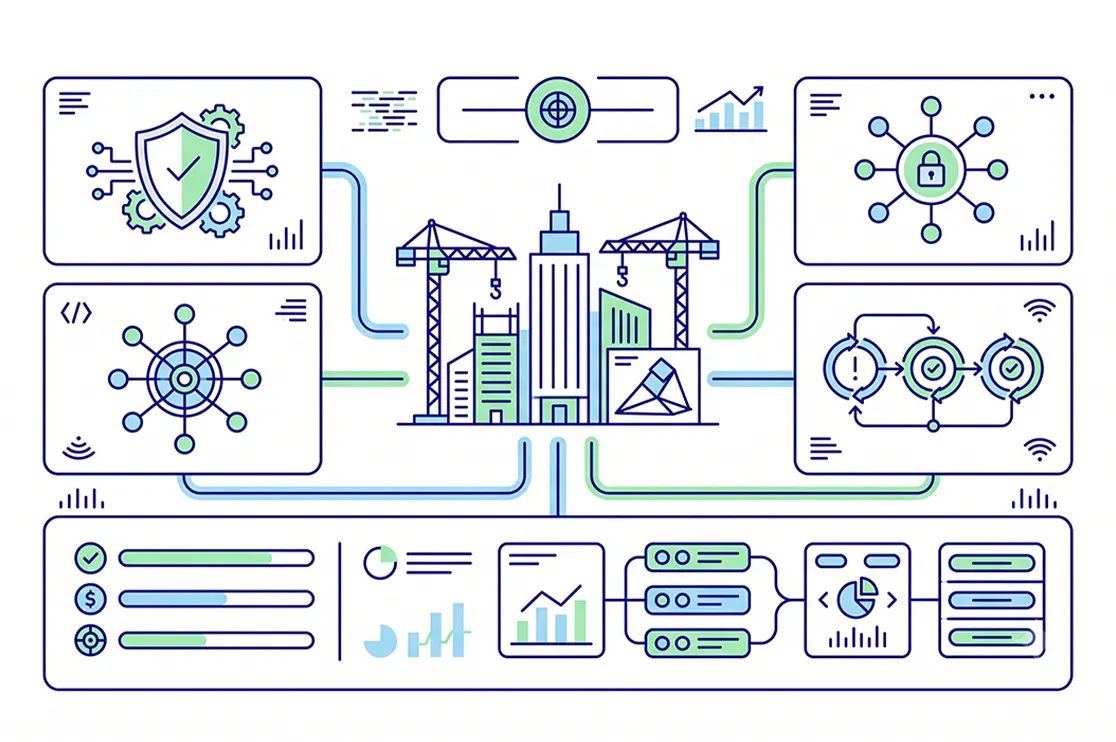 Governing AI Tools in AEC: Copilot, Digital Twins, and Generative Design
 Data Governance for AI and Advanced Analytics: Building the Foundation That Works
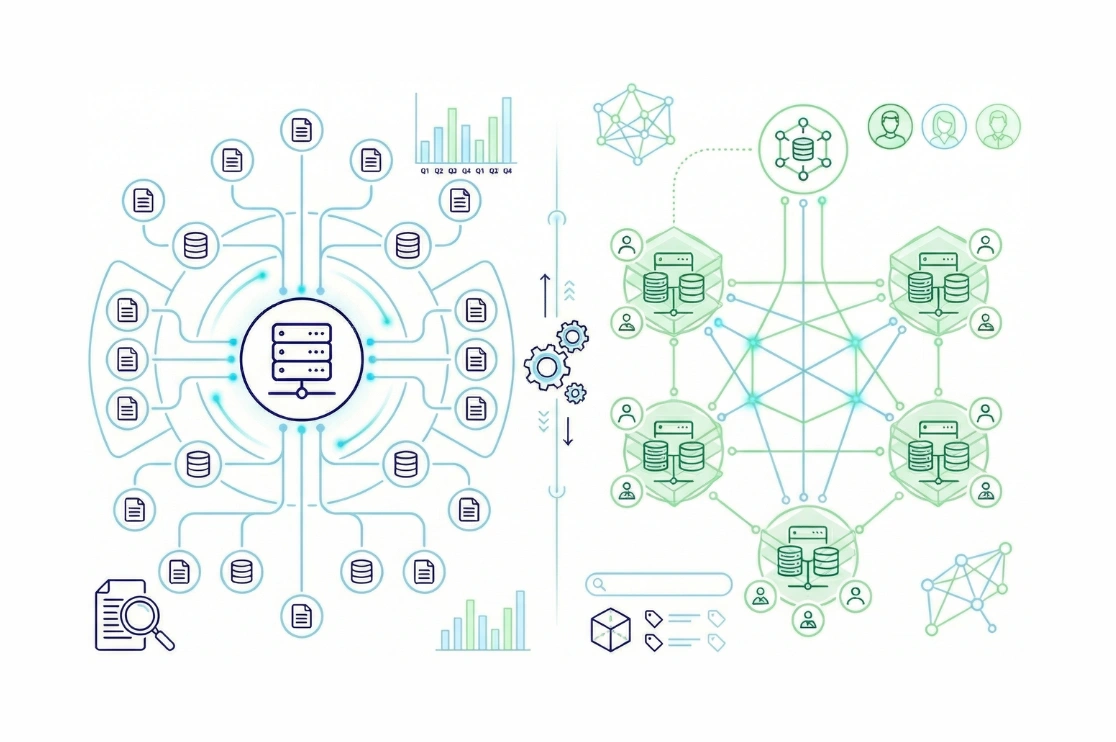 Centralized vs. Federated vs. Hybrid Data Governance: Which Model Fits Your Organization
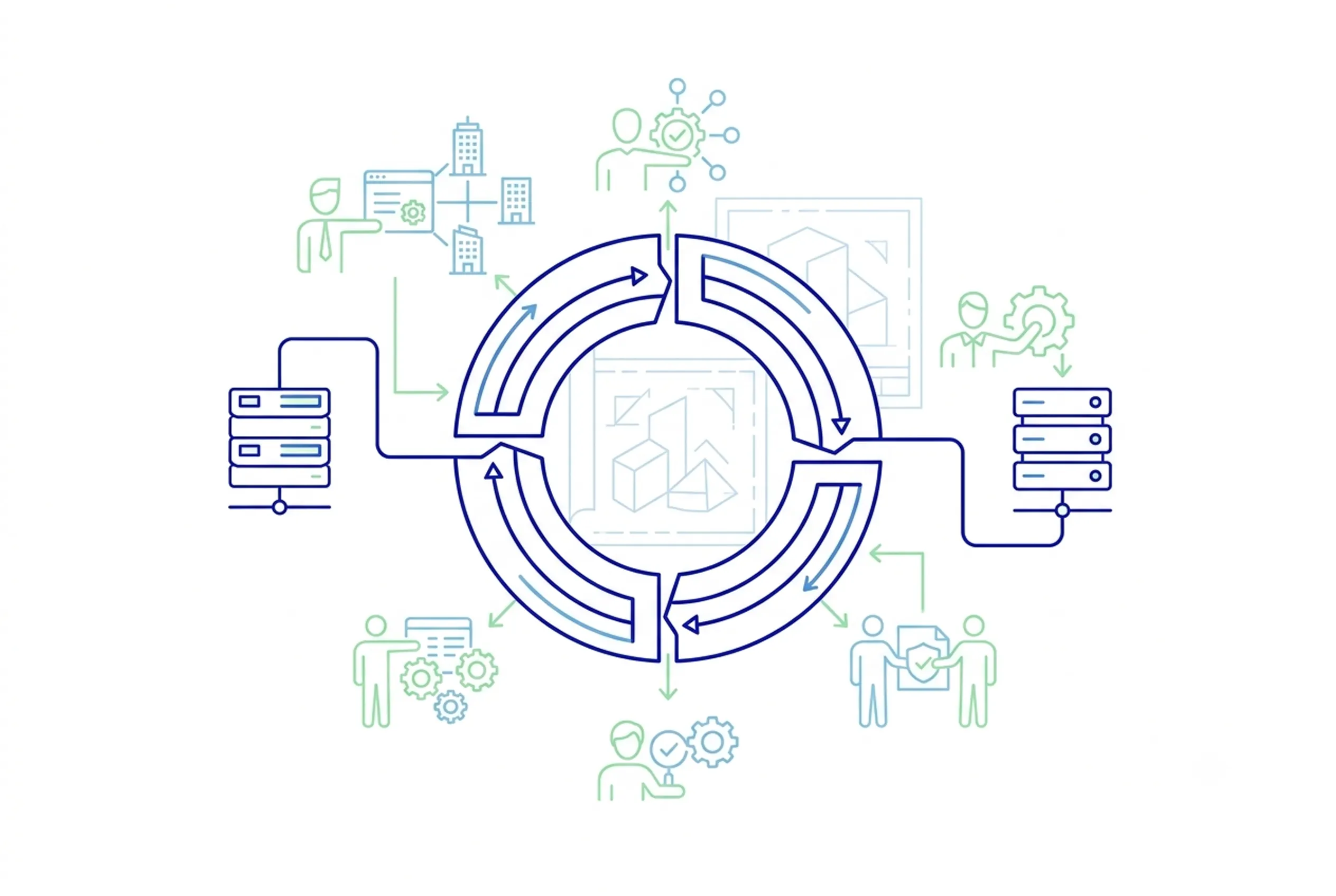 Data Governance Roles and Responsibilities in AEC Organizations