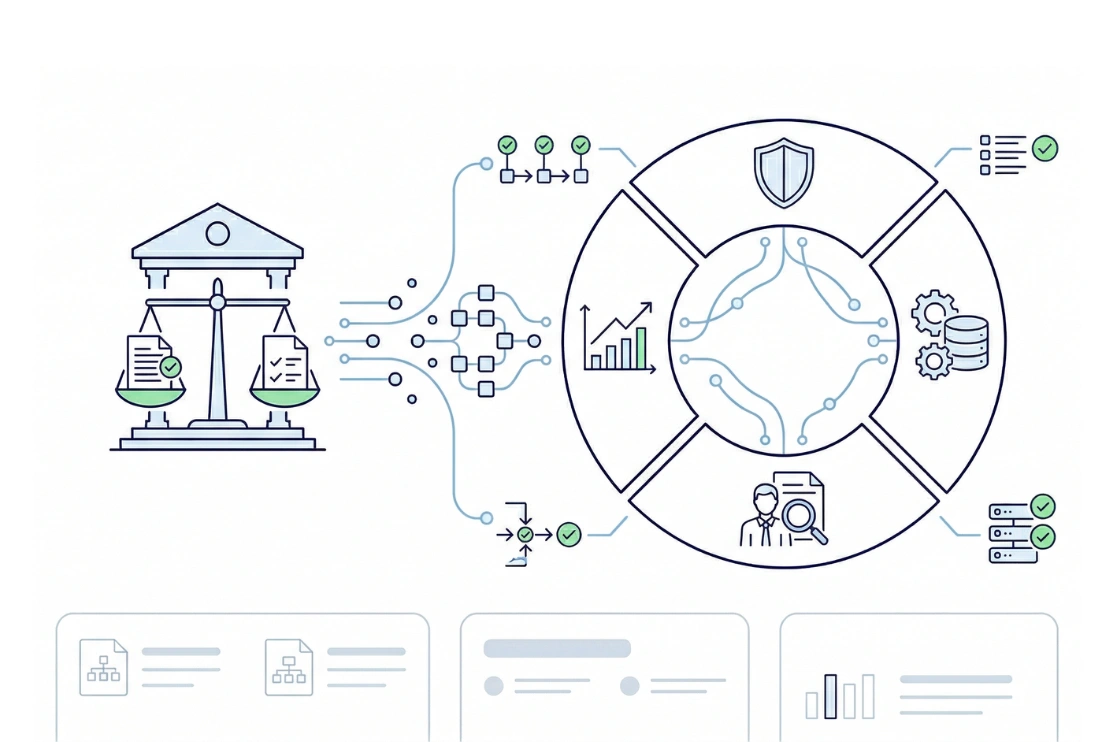










Most data governance programs fail not in design but in execution. Learn how to move your governance strategy from a policy document into daily operations, with ownership, tooling, and metrics that hold.
Most organizations fail in their data governance efforts not because of the absence of tools or outlay, but because of the absence of accounting responsibility at both business and IT operations as well as the strategic challenge of identification of the decision maker.
The complexity of data grows exponentially as organizations expand analytics, AI projects, multi-cloud ecosystems, among others. Data is distributed across systems, teams, and platforms—making it difficult to understand how it is defined, where it originates, and how it should be governed.
The CFO asks why quarterly close takes 12 days when it used to take 5. The answer is buried in three manual reconciliation steps that exist because nobody trusts the numbers without verification.
Generative AI is quickly gaining acceptance by enterprises in the United States to enhance productivity, customer experience, and innovation.
AI has passed beyond experimentation to expectation. The boards, investors and customers now require AI investments to deliver quantifiable value. However, the same challenge is being faced by many CDOs, CTOs, and AI leaders.
A strong data governance strategy eliminates silos, improves data trust, and enables faster, compliant, and scalable digital transformation across enterprise systems.
Data governance enables regulatory compliance by improving data visibility, audit readiness, and risk control, helping enterprises reduce compliance costs while building trusted, AI-ready data ecosystems.
Most enterprises today are not struggling with a lack of data. They are struggling with a lack of trust in their data.
In the United States, data governance is no longer just a compliance activity. It is now an urgent strategy with its own stringent rules, increased cybersecurity concerns, and accelerated AI implementation.
 Compliances
Let's Talk Fixed form
"*" indicates required fields