








Enterprise cloud security is the discipline of designing, engineering, and operating identity-centric and data-centric controls across public cloud, private cloud, and hybrid environments.
It uses continuous configuration assessment, infrastructure-as-code guardrails, and detection content tuned to cloud-native attack patterns, aligned to recognized frameworks such as NIST CSF 2.0, NIST 800-53 Rev. 5, the Cloud Security Alliance Cloud Controls Matrix, and ISO 27017.
Cloud adoption has changed where the perimeter sits. The control plane is now an API, identity is the new boundary, and a single misconfiguration in an IAM policy or a storage bucket setting can expose data that no firewall is positioned to defend.
The complexity grows further across multi-cloud and hybrid environments, where each provider has its own identity model (AWS IAM, Azure RBAC, Google Cloud IAM), its own service catalog, and its own audit-logging conventions (CloudTrail, Activity Log, Cloud Audit Logs).
BluEnt has built this cloud security service over our past experience with cloud: more than twenty years of enterprise cloud delivery across AWS, Microsoft Azure, and Google Cloud.
Security has been embedded in that delivery throughout: IAM and encryption design, secure landing zone construction, audit-log architecture, and DevSecOps pipeline engineering.
We now deliver that experience as a named service combining Zero Trust identity, Cloud Security Posture Management, CNAPP, and DevSecOps integration with co-managed detection and response operations from established SOC partners. Every recommendation maps to NIST 800-53 Rev. 5 control IDs and CIS Benchmarks for the specific cloud platform.
Trusted By
Organizations That Trust BluEnt With Their Data
- Gift Card Management, Reporting, Data Integration, Analytics Solutions, Book Keeping NetSuite Reporting, NetSuite Records Maintenance, Income Statement, Audit Support

- Gift Card Management, Reporting, Data Integration, Analytics Solutions
- Invoicing, AP Reports, Sales Data Analytics
- MuleSoft Integration, Analytics & Dashboards - [Tableau, MS SQL Server, SSIS]

- ERP Onboarding and Implementation, Data Migration, Custom Report Building, Audit Support and Finalization, Draft Financials Statements, Bidding Website Development
- Data Analytics and Dashboards

- V-Bucks Gift Card Sales Analytics, Reconciliation, Financial Tracking and Reporting
- Web Asset Creation
- HubSpot Campaign Management, Workflow Automation, UX/UI Development, Mobile App Development, Application Development

- Data Analytics and Dashboards, Website Development, Website Maintenance, Application Development, HubSpot Automation and Integration, Asana Management
- SEO, Website UX/UI Development, Data Management, Third-Party Integration, Website Maintenance

- Shopify Website Development, Klaviyo Email Marketing, Email Campaign Setup, Third-Party Shopify App Integration
- Website and SEO Audit, Shopify Website Maintenance, SEO and Analytics
- Website Design and Development, Website Maintenance
- Website Design and Development, Website Maintenance

- Website Design and Development, Website Maintenance, SEO and Analytics
Is This Your Situation?
BluEnt is the right cloud security partner if any of the following describe your current state. Cloud security failures rarely stem from a missing tool. They typically stem from a missing operating model around the tools already in place.
-
Multiple cloud accounts have grown faster than your governance, and no single team has a current map of who owns what across AWS, Azure, and Google Cloud.
-
A cloud migration or modernization is underway and security controls are being added after the fact, not engineered into the landing zone from day one.
-
Auditors are asking for evidence of CIS Benchmark compliance and NIST 800-53 control coverage, and you do not have a single source of truth that spans all your providers.
-
Identity sprawl across cloud and SaaS makes least-privilege impossible to enforce, and Joiner-Mover-Leaver workflows leak entitlements across systems.
-
A breach in your industry has prompted a board-level review of your cloud posture, and you cannot summarize it in one document with current evidence.
-
Developers see security as friction and have built workarounds, leaving exceptions undocumented and outside your detection coverage.
If two or more of these apply, this page is the right starting point. For the broader program, see the IT Security and Cybersecurity Hub, or move directly to Identity and Access Management for the cloud identity layer.
What Makes BluEnt Different
Most cloud security vendors specialize in one tool, one cloud, or one phase of the program. BluEnt is built to deliver the whole picture, with engineering depth, multi-cloud experience, and partner-SOC integration where 24×7 detection is required. The comparison below shows where that difference shows up in practice.
| Without a Cloud Security Partner | With BluEnt |
|---|---|
|
Console clicks repeated by hand across accounts and regions. |
Infrastructure-as-Code guardrails (Terraform, Bicep, Pulumi, Crossplane) enforced consistently across every account. |
|
Visibility limited to one cloud at a time. |
Cross-cloud posture and identity governance from a single CNAPP and SIEM operating model. |
|
DevOps and security in conflict over delivery cadence. |
DevSecOps with SAST, SCA, and IaC scanning shifted left into pull requests, not slowing delivery. |
|
Security tooling deployed but never tuned. |
Detection content engineered against your data flows, identity model, and Kubernetes admission policies. |
|
Audit evidence rebuilt every quarter under deadline pressure. |
Continuous evidence collection from controls themselves, mapped to NIST 800-53 and ISO 27017. |
|
A SOC that sees alerts but not architecture. |
Detection co-delivered by partner SOCs against the architecture BluEnt designed. |
For the identity layer that underpins cloud security, see Identity and Access Management. For audit defensibility, see Cybersecurity Compliance Services.
Cloud Security Controls Catalog
BluEnt delivers eight pillars of cloud security as concrete controls engineered into the platforms you run.
The catalog below names the control families, the NIST 800-53 control IDs, the engineering work BluEnt performs, and the tooling commonly used. Every recommendation maps clause-by-clause to your audited frameworks (SOC 2, ISO 27017, HIPAA, PCI DSS v4.0, FedRAMP).
| Control Family | Control IDs | What BluEnt Engineers | Tooling Examples |
|---|---|---|---|
| Cloud IAM and Privileged Access | AC-2, AC-3, AC-6, IA-2, IA-5 | RBAC and ABAC policy design. Conditional access policies in Entra ID or Okta. Privileged Access Management with session recording. Just-In-Time elevation. Quarterly access reviews. SCIM provisioning from HRIS. | Microsoft Entra ID, Okta, Ping, CyberArk, BeyondTrust, AWS IAM Identity Center. |
| Data Encryption and Key Management | SC-12, SC-13, SC-28, MP-4 | AES-256 at rest with customer-managed KMS keys on annual rotation. TLS 1.3 enforced at the load balancer. Object-store encryption using SSE-KMS rather than SSE-S3 for full audit trail. Tokenization for PCI scope reduction. | AWS KMS, Azure Key Vault, Google Cloud KMS, AWS CloudHSM, HashiCorp Vault. |
| Network Segmentation and Perimeter | SC-7, SC-8, AC-4, SI-4 | VPC and VNet topology with hub-and-spoke transit. Web Application Firewall with managed rule sets. API Gateway throttling and OWASP coverage. Micro-segmentation. Service mesh mTLS. DDoS Standard or Advanced. | AWS WAF, Azure Front Door WAF, Cloudflare, Istio, Cilium, AWS Shield, Azure DDoS Protection. |
| Cloud Posture and Configuration | CM-2, CM-6, CM-8, RA-5 | CSPM continuously evaluating against CIS Benchmarks for the specific cloud. CNAPP correlating posture with workload risk. IaC scanning gates in CI. Drift detection. Auto-remediation playbooks for high-confidence findings. | Wiz, Prisma Cloud, Microsoft Defender for Cloud, AWS Security Hub, Checkov, tfsec. |
| Container and Kubernetes Security | SC-7, SC-39, SI-3, CM-7 | CIS Kubernetes Benchmark hardening. Image signing (Cosign). Admission controls with OPA Gatekeeper or Kyverno. Network policies. Runtime protection. Pod Security Standards. Cluster audit logging into SIEM. | Wiz Runtime, Prisma Cloud, Sysdig Secure, Falco, OPA Gatekeeper, Kyverno, Cosign. |
| DevSecOps Pipeline Controls | SA-11, SA-15, RA-5, CM-7 | SAST in pull request. SCA dependency scanning with auto-merge for clean updates. DAST against staging. Secrets scanning pre-commit. SBOM generation. Signed builds. Provenance attestation. | Snyk, Checkmarx, SonarQube, GitHub Advanced Security, GitLab Ultimate, Trivy, Sigstore. |
| Threat Detection and Response | SI-4, IR-4, IR-6, AU-6 | SIEM detection content authored against MITRE ATT&CK Cloud Matrix techniques. SOAR playbooks for top incident types. EDR and XDR rollout. Cloud-native telemetry forwarded with normalized schema. 24×7 analyst function via partner SOC. | Microsoft Sentinel, Splunk Enterprise Security, Google Chronicle, IBM QRadar, CrowdStrike Falcon, Microsoft Defender XDR. |
| Compliance Engineering | AU-2, AU-12, CA-2, CA-7 | Continuous control monitoring with evidence collection automated to a GRC tool. Audit log retention aligned to framework requirements (HIPAA 6 years, PCI DSS 12 months online). Quarterly mock audit. SOC 2, HIPAA, ISO 27017, PCI DSS v4.0, FedRAMP coverage. | Drata, Vanta, OneTrust, ServiceNow GRC, Archer. |
For the identity layer of these controls, see Identity and Access Management. For the audit-readiness side, see Cybersecurity Compliance Services.
How to Choose a Cybersecurity Partner
Procurement teams at regulated enterprises ask the same six questions when evaluating cloud security partners. The answers below are the criteria BluEnt is built to meet.

Multi-cloud experience, not single-vendor depth
A partner deep in only one cloud will architect every solution to fit that cloud. BluEnt’s cloud delivery experience spans AWS, Azure, and Google Cloud, plus hybrid and on-premises. Recommendations are made against the architecture you actually run.

Infrastructure-as-Code first, not console-driven
Console-driven security controls drift the moment a team makes a change. The right partner delivers controls as Terraform, Bicep, OpenTofu, Pulumi, or Crossplane modules with policy-as-code enforcement (OPA, Sentinel, Checkov). Ask for a sample module before you sign.

Identity-centric architecture, not perimeter-only
Modern cloud security is identity-centric. A partner still leading with network perimeter is solving a problem that no longer exists in the way it once did. Look for IAM, PAM, and IGA as core capabilities, not bolt-ons, and CIEM coverage across cloud entitlements.

Detection content engineered, not just SIEM installed
A SIEM with vendor default rules is noise. The right partner writes detection content tuned to your data flows, your identity model, and your application stack, mapped to MITRE ATT&CK Cloud Matrix techniques, and maintains it as your environment evolves.

DevSecOps integration without slowing delivery
Security that adds days to a deployment will be worked around. The right partner integrates SAST, DAST, SCA, IaC scanning, and secrets management into the pipeline so engineers see findings in pull requests, not in tickets weeks later.

Co-managed operations with established SOC partners
An honest cloud security partner is transparent about how 24×7 detection is delivered. BluEnt designs the operating model and engineers the detection content; established SOC partners staff the analyst function. This co-managed model gives clients audit-defensible 24×7 coverage from day one.
Score your cybersecurity program in under seven minutes
The free Cybersecurity Maturity Assessment scores your program across six domains aligned to NIST CSF 2.0 and produces a prioritized remediation roadmap. No sales call required to receive the report.
How We Deliver: A Five-Stage Methodology
Every BluEnt cloud security engagement follows the same five-stage methodology, scaled to the size of the cloud estate and the regulatory profile. Timelines below are indicative for an enterprise multi-cloud program.
Stage 1: Cloud Security Posture Assessment
We baseline your cloud estate against CIS Benchmarks for each cloud, NIST SP 800-53 Rev. 5, and the Cloud Security Alliance Cloud Controls Matrix. Configuration review, IAM analysis, network topology review, and audit-log inventory across all in-scope cloud accounts produce a current-state map and a prioritized risk register.
Stage 2: Cloud Security Architecture and Landing Zone Design
We design the secure landing zone or remediate the existing one: account structure, network topology, identity foundation, encryption strategy, logging and monitoring, and Shared Responsibility Model documentation. The output is what your platform team will run against, not a generic reference download.
Stage 3: Engineer Cloud Controls
We engineer controls as Infrastructure-as-Code: guardrail modules, IAM policies, KMS configurations, WAF rules, CSPM and CNAPP integrations, EDR and XDR rollout, container and Kubernetes hardening, secrets management, and DevSecOps pipeline integration. Engineering proceeds in parallel with operating-model work.
Stage 4: Cloud Security Operations Co-managed
Cloud security operations are delivered through a co-managed model. BluEnt owns continuous configuration monitoring, vulnerability and patch management, IAM access reviews, and policy operations. Detection, threat hunting, and incident response are co-delivered alongside established SOC and incident response partners.
Stage 5: Continuous Posture Improvement
Each quarter we run a control effectiveness review, refresh the threat model, retire outdated detections, validate IaC drift, and prepare audit evidence. Continuous improvement keeps the cloud program aligned to new services, new regulations, and new attack patterns.
For Stage 2 identity foundation work, see Identity and Access Management. For Stage 5 quarterly evidence work, see Cybersecurity Compliance Services.
Capabilities at a Glance
Eight capability areas frame the cloud security practice. Seven are delivered fully in-house by BluEnt engineers and consultants, drawing on twenty-plus years of cloud delivery. Detection and 24×7 SOC operations are co-delivered with established SOC partners; BluEnt owns the design, integration, and tuning of detection content.

Cloud Security Strategy and Landing Zone Design
Zero Trust blueprint, secure landing zones, Shared Responsibility Model documentation, multi-cloud reference architecture across AWS, Azure, and Google Cloud.

Cloud Identity and Privileged Access
RBAC and ABAC, SSO, MFA, JIT, PAM with session recording, JML lifecycle automation. Built on identity work from enterprise data governance programs.

Data Security and Encryption Engineering
AES-256 KMS at rest with annual rotation, TLS 1.3 in transit, tokenization for PCI scope reduction, masking, DSPM, DLP through Microsoft Purview or BigID.

Network Segmentation and Perimeter Hardening
Hub-and-spoke VPC topology, WAF with managed rule sets, API Gateway, DDoS Standard or Advanced, micro-segmentation, service mesh mTLS.

Threat Detection and Co-Managed SOC
SIEM detection content mapped to MITRE ATT&CK Cloud Matrix, SOAR playbooks, EDR and XDR. Co-delivered with established SOC partners; design and tuning by BluEnt.

DevSecOps and Pipeline Integration
SAST, SCA, DAST, IaC scanning, secrets management, SBOM generation, signed builds, provenance attestation, all in pull request and pre-merge.

Cloud Compliance Engineering
SOC 2 Type II, ISO 27001, ISO 27017, HIPAA Security Rule, GDPR Article 32, PCI DSS v4.0, FedRAMP readiness with continuous evidence collection.

Container, Kubernetes, and Serverless Security
CIS Kubernetes Benchmark, image signing, admission controls (OPA Gatekeeper, Kyverno), network policies, runtime protection across EKS, AKS, GKE, OpenShift, Fargate, Cloud Run.
For continuity within the cloud program, see Business Continuity and Disaster Recovery. For risk programs around cloud vendor and application choices, see Risk Management.
Industries We Serve
BluEnt delivers cloud security across four regulated verticals. The cloud architecture and controls look different in each because the underlying data, regulations, and operational constraints differ.

Architecture, Engineering, and Construction
AEC firms increasingly run BIM platforms, design collaboration tools, and project management systems in the cloud, with subcontractors connecting from many regions. Multi-region project data residency, supplier-portal identity (often outnumbering internal staff), and FAR and DFARS compliance for US federal projects all push security obligations down to the cloud configuration layer. BluEnt’s approach focuses on residency-aware storage, identity governance for subcontractor populations, and CIS-Benchmark-driven CSPM coverage.

Healthcare and Life Sciences
ePHI in the cloud requires a Business Associate Agreement with every cloud provider, AES-256 encryption at rest with customer-managed keys, TLS 1.3 in transit, audit-log retention for six years per HIPAA 164.530(j), and FDA premarket cybersecurity guidance for connected medical devices. BluEnt designs ePHI controls aligned to HIPAA Security Rule audit, with co-managed detection from partner SOCs experienced in healthcare incident response.

E-Commerce and Retail
PCI DSS v4.0 enforcement raised the bar with twelve numbered requirements covering segmentation, encryption, access, vulnerability, and monitoring, plus a customized approach option. Combined with multi-region storefronts, peak-season auto-scaling under attack pressure, account takeover, and Magecart-style supply chain skimming, retail cloud security is a board-level conversation. BluEnt unifies storefront security, marketplace integrations, and customer identity into one cloud program with PCI DSS v4.0 alignment as the baseline.

Manufacturing and Industrial
As manufacturing workloads move from on-premises to cloud (MES integrations, predictive-maintenance pipelines, supplier portals), the IT and OT boundary blurs. NIS2 essential-entity status in the EU, NIST SP 800-82 Rev. 3 for ICS, NIST SP 800-161 Rev. 1 for supply chain, and ITAR and EAR controls on technical data all apply. BluEnt designs the convergence of IT and OT security under one operating model, with OT-specific tooling and incident response co-delivered with specialist partners.
Vertical-specific compliance programs are detailed on Cybersecurity Compliance Services, and vertical-specific risk programs on Risk Management.
Cybersecurity Services Across Six Markets
BluEnt delivers cloud security programs across six markets, each with its own regulatory expectations, audit cadence, and cloud-region preferences. Geography shapes both program design and the cloud-region strategy.

United States HIPAA Security Rule, HITECH, SOX IT general controls, GLBA Safeguards Rule, FTC Safeguards Rule, NIST CSF 2.0, NIST SP 800-53 Rev. 5, NIST SP 800-171 Rev. 3, FedRAMP, CMMC 2.0, CCPA and CPRA security obligations, NY DFS 23 NYCRR 500.
United Kingdom UK GDPR Article 32, Data Protection Act 2018, Cyber Essentials, Cyber Essentials Plus, NCSC Cyber Assessment Framework, ICO security guidance, NHS Data Security and Protection Toolkit.
AustraliaPrivacy Act 1988 and APP 11, Notifiable Data Breaches scheme, APRA CPS 234, APRA CPS 230, ASD Essential Eight, the Information Security Manual, Security of Critical Infrastructure Act 2018, IRAP for government cloud workloads.
Canada PIPEDA governs personal information at the federal level. Provincial legislation applies in Quebec (Law 25), British Columbia (PIPA), and Alberta (PIPA). Organizations in federally regulated industries are additionally subject to OSFI guideline B-13 on technology and cyber risk management. CCCS Cloud Security Risk Management Framework applies for federal cloud workloads.
Netherlands and EU GDPR Article 32, NIS2 Directive, DORA for financial entities, EU AI Act, Cyber Resilience Act, eIDAS 2.0, ENISA Cloud Cybersecurity Framework guidance.
Broader Europe NIS2 national transpositions, the German BSI Act and IT-SiG 2.0, BSI C5 cloud security catalogue, the French Loi de Programmation Militaire, SecNumCloud sovereign cloud, Italian NIS implementation, Cyber Resilience Act conformity.
Region-specific compliance programs are covered on Cybersecurity Compliance Services. For region-aware identity governance, see Identity and Access Management.
Build a Cloud Security Program Your Auditors and Engineers Both Trust
Cloud security has matured beyond perimeter thinking. The enterprises that get it right treat identity, data, configuration, and detection as one program engineered into the cloud platform itself, not bolted on after deployment. The best programs run as code: guardrails as Infrastructure-as-Code modules, detection as content packs, evidence as API exports.
BluEnt has built this cloud security service over our past experience with cloud: twenty-plus years of cloud engineering across AWS, Azure, and Google Cloud, where security controls have always been embedded in delivery.
We pair that engineering depth with partner-SOC integration for 24×7 detection and an operating model designed for audit defensibility from day one. Whether you are migrating, consolidating, or scaling a multi-cloud estate, our team works alongside yours from day one.
Explore the IT Security and Cybersecurity Practice
Frequently Asked Questions
How experienced is BluEnt with cloud security?
BluEnt has built this cloud security service over our past experience with cloud: more than twenty years of enterprise cloud delivery across AWS, Azure, and Google Cloud. Security has been embedded throughout that work: identity and access design, encryption and key management, secure landing zone construction, audit-log architecture, and DevSecOps pipeline engineering. We now deliver that experience as a named service, aligned to NIST CSF 2.0 and CSA Cloud Controls Matrix, with detection and 24×7 operations co-delivered alongside established SOC partners.
What does cloud security cover beyond a CSPM tool?
Cloud Security Posture Management is one component. A complete program also covers identity and privileged access, data security and encryption, network segmentation, threat detection and response, DevSecOps and application security, compliance engineering, and continuous operations. CSPM is necessary but never sufficient on its own.
How is cloud security different from on-premises security?
Cloud security shifts the perimeter from network edge to identity and configuration. Controls deploy as code rather than appliances. Evidence comes from API queries rather than physical inspection. The Shared Responsibility Model splits accountability between you and the provider. The disciplines are similar; the implementation is fundamentally different.
Do I need separate tooling for AWS, Azure, and GCP?
Each cloud has native security services that should be used (AWS GuardDuty and Security Hub, Microsoft Defender for Cloud, Google Security Command Center). On top of those, most enterprises run a multi-cloud Cloud-Native Application Protection Platform such as Wiz or Prisma Cloud, plus a single SIEM such as Microsoft Sentinel, Splunk, Chronicle, or QRadar to consolidate detection across providers.
What is a secure landing zone and why does it matter?
A secure landing zone is the foundational account structure, network topology, identity foundation, encryption strategy, and logging architecture every workload in your cloud inherits. Building it correctly upfront is materially cheaper and more secure than retrofitting controls account by account. AWS Control Tower, Azure Landing Zones, and Google Cloud Foundation are reference patterns; BluEnt customizes them to your regulatory and architectural context.
How does Zero Trust apply to cloud?
Zero Trust in cloud means no user, service, or workload is trusted by default, even if it is inside your virtual network. Every access request is authenticated, authorized, and continuously evaluated against context such as device posture, location, and risk score. NIST SP 800-207 describes the canonical model. In practice it shifts cloud security spending from network perimeter firewalls to identity, micro-segmentation, and continuous verification.
How do you secure Kubernetes and serverless workloads?
Kubernetes security covers image scanning, image signing (Cosign), admission controls (OPA Gatekeeper, Kyverno), runtime protection, network policies, Pod Security Standards, and audit logging into SIEM. Serverless covers function permissions, dependency vulnerabilities, secrets handling, and cold-start abuse patterns. BluEnt engineers controls into EKS, AKS, GKE, OpenShift, Fargate, Cloud Run, Lambda, and Azure Functions using cloud-native and Kubernetes-native tooling.
What is the difference between CSPM, CWPP, CIEM, and CNAPP?
CSPM (Cloud Security Posture Management) checks configurations against best practice. CWPP (Cloud Workload Protection Platform) protects running workloads such as VMs and containers. CIEM (Cloud Infrastructure Entitlement Management) governs cloud identity and permissions. CNAPP (Cloud-Native Application Protection Platform) consolidates CSPM, CWPP, and CIEM into a single platform. Most enterprises today buy a CNAPP rather than three separate tools.
How does BluEnt secure DevOps without slowing delivery?
Security findings appear in pull requests rather than tickets weeks later. SAST, DAST, SCA, IaC scanning, and secrets detection run in the pipeline; remediation guidance is automated; and exceptions are tracked with explicit owners and expiry dates. The aim is shift-left security that engineers experience as faster feedback, not a separate gate.
How do you handle 24×7 cloud threat detection?
BluEnt designs the SIEM and detection content (mapped to MITRE ATT&CK Cloud Matrix), integrates the cloud-native telemetry, and writes the response runbooks. The 24×7 analyst function is delivered through partnerships with established SOC providers experienced in cloud incident response. This co-managed model gives clients audit-defensible 24×7 coverage from day one without waiting for in-house operations capacity to mature.
Can BluEnt help us achieve FedRAMP, ISO 27017, or PCI DSS in cloud?
Yes. BluEnt designs the architecture, engineers the controls, and prepares the evidence so that a FedRAMP, ISO 27017, ISO 27001, or PCI DSS v4.0 audit becomes an export of continuously collected evidence rather than a quarterly fire drill. Audits are performed by an external auditor or third-party assessment organization of your choice; BluEnt does not perform certification audits.
View Our Projects
Dive into our portfolio and witness how BluEnt transforms bold ideas into powerful digital solutions.
From enterprise-grade applications to data-driven platforms, each project tells a story of innovation,
ROI, and long-lasting impact.

CRM, ERP & Business Apps | Case Study
Asana-HubSpot Integration
Discover how BluEnt help HFS in achieving task automation with real-time data synchronization and efficient ecosystem.

CMS & E-Commerce Platforms | Case Study
HFS Website Overhaul
Learn how BluEnt modernized the website to support heavy research content & deliver consistent UI/UX with better performance.
CMS & E-Commerce Platforms | Case Study
Author Dashboard Transformation
Explore how BluEnt developed a unified & comprehensive dashboard for better performance tracking and report collaboration.

CMS & E-Commerce Platforms | Case Study
Custom Elementor Widget
Learn how the custom elementor widget, developed by BluEnt, let HFS Research get off from its dependency over expensive…
CMS & E-Commerce Platforms | Case Study
Custom WordPress Videocast Plugin
Discover how BluEnt created a custom WordPress videocast plugin to improve loading time & performance of HFS Research podcast…

CMS & E-Commerce Platforms | Case Study
Report Analytic Dashboard
Discover how BluEnt designed & developed a comprehensive report analytic dashboard for HFS to generate accurate data.
Industry Trends & Innovation
Ideas That Drive Industries
Explore a 360° content hub featuring expert-written blogs, practical use cases, and FAQs,
all designed to spark innovation, solve challenges, and sharpen your competitive edge.
Whether you're shaping strategy or validating decisions, our insight-driven content
equips you with clarity, confidence, and the direction you need to stay ahead.
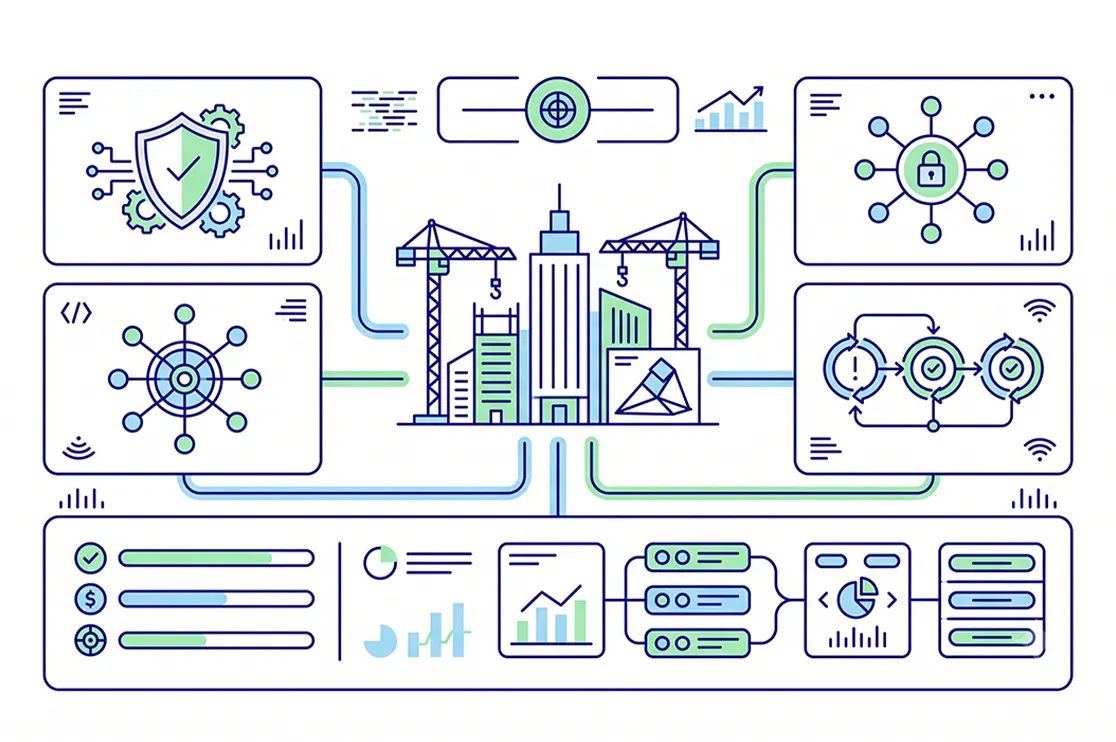 Governing AI Tools in AEC: Copilot, Digital Twins, and Generative Design
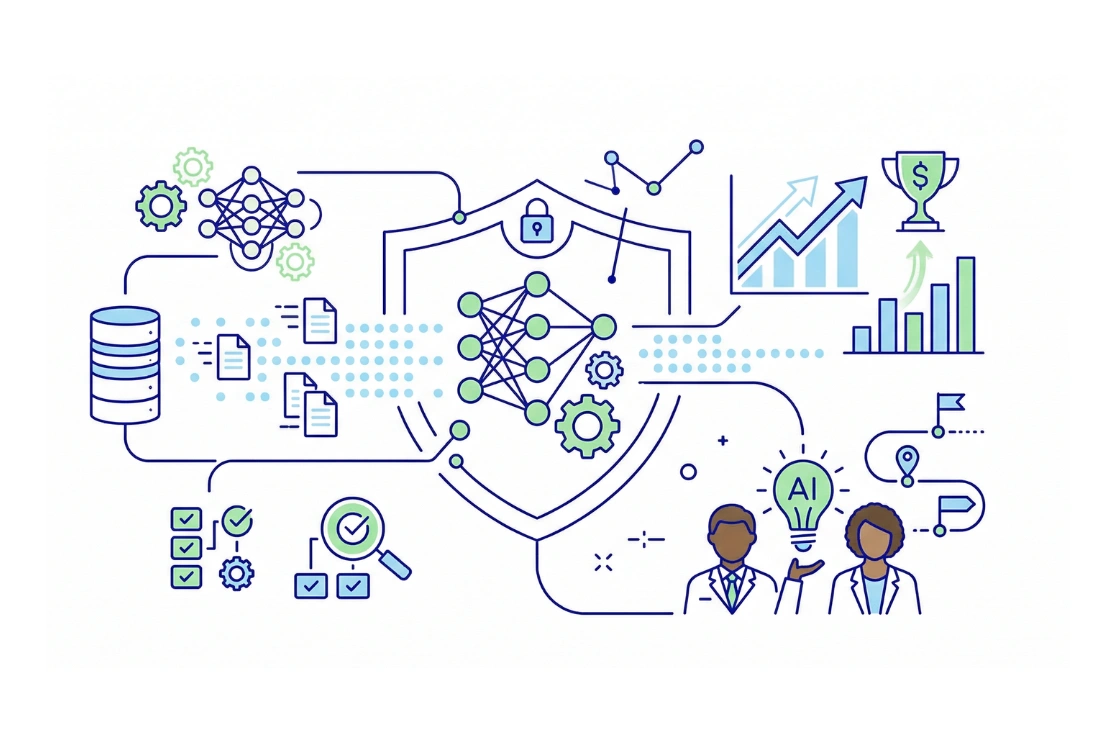 Data Governance for AI and Advanced Analytics: Building the Foundation That Works
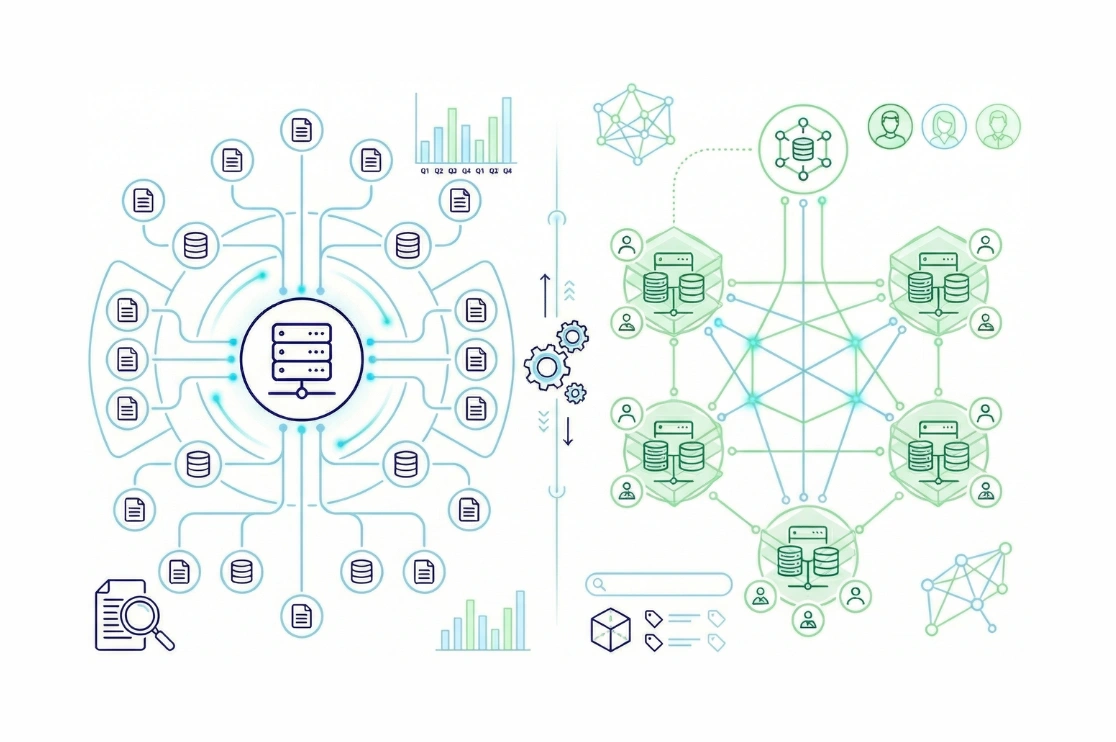 Centralized vs. Federated vs. Hybrid Data Governance: Which Model Fits Your Organization
 Data Governance Roles and Responsibilities in AEC Organizations