











What Is Data Privacy Governance?
Data privacy governance is the structured set of policies, roles, and controls that govern how an organization identifies, classifies, manages, and protects sensitive and personal data. It bridges the gap between what privacy regulations require and how organizations actually manage data assets day to day. In enterprise environments, it covers personally identifiable information (PII), financial records, health data, legally privileged information, and any data subject to regulatory protection under frameworks like GDPR, HIPAA, & CCPA.
Your enterprise holds more sensitive data than you think.
Employee records. Client financials. Legal correspondence. Vendor contracts. Proprietary source code. And in most organizations, that data is sitting in shared drives, cloud platforms, and collaboration tools, co-mingled with operational data, accessible to anyone who can log in.
A regulatory audit is not the same as a data breach. But by the time either one happens, the governance gap has already created liability.
Data privacy governance is the framework that determines which data is sensitive, who can access it, how it is classified when it is created, and what happens to it when its purpose expires. Without it, your privacy policy is a document. With it, privacy compliance becomes an operational capability.
Table of Contents:
- What Is Data Privacy Governance?
- Why Sensitive Data Is Your Biggest Governance Risk
- The Regulatory Landscape You Are Already Operating In
- Five Pillars of Privacy-Aware Data Governance
- BluEnt in Practice: Sensitive Data at Scale
- How to Start: A 4-Step Privacy Governance Foundation
- Frequently Asked Questions
What Is Data Privacy Governance?
Most organizations have data privacy policies. Fewer have the governance infrastructure to operationalize those policies consistently, across every platform, team, geography, and third-party relationship where their data lives.
A policy that says ‘we protect personal data’ without defining who owns it, where it lives, and how access is controlled is not governance. It is documentation.
The average cost of an enterprise data breach reached $4.45 million in 2023, per IBM’s Cost of a Data Breach Report, a 15% increase over three years. Regulatory fines, legal costs, and reputational damage are not included in that figure.
Why Sensitive Data Is Your Biggest Governance Risk
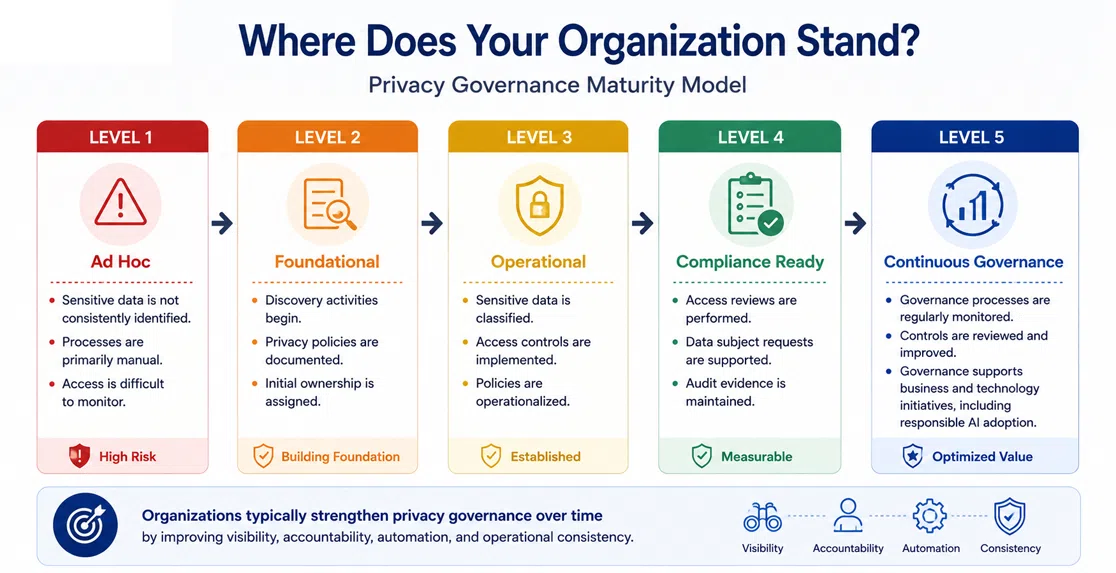
Every enterprise has data risks. But sensitive data creates a specific category of exposure that operational data does not: regulatory liability, contractual breach, and reputational damage that cannot be undone after the fact.
Sensitive data is scattered, not centralized
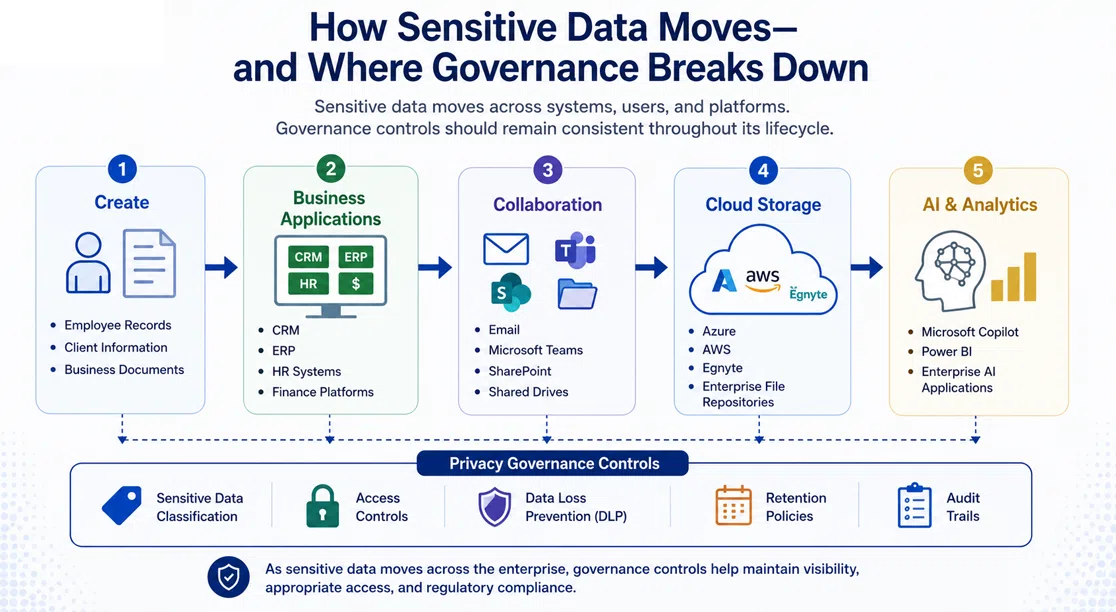
In most enterprises, sensitive data does not live in one place. It accumulates across email platforms, shared drives, CRM systems, HR platforms, collaboration tools, and cloud storage environments, often without any classification applied at the point of creation.
Tools like Microsoft Purview, BigID, and Varonis exist specifically to discover and classify sensitive data across distributed environments. Without them, organizations are governing based on assumptions about where their sensitive data is, not evidence.
Classification depends on context, not just content
A spreadsheet containing employee names and project assignments is not sensitive in most contexts. The same spreadsheet with salary bands or performance ratings is. Classification rules that treat data as inherently sensitive or inherently safe miss the context that determines actual risk.
Effective data privacy governance classifies data based on the combination of content, context, and intended use, and re-evaluates that classification when any of those factors change.
Access controls degrade faster than you expect
Access permissions are set when systems are configured; projects are created, or teams are onboarded. They are rarely updated when people change roles, leave the organization, or when projects end.
A governance program that includes access certification, regular, scheduled reviews of those who have access to sensitive data, is no optional foral for hygiene. It is a core privacy control. Microsoft Purview and Varonis both support automated access governance at scale.
You cannot govern what you haven’t classified.
BluEnt’s Data Governance Maturity Assessment maps your sensitive data exposure across 18 dimensions specific to enterprise data environments. 15 minutes. No sales call is required.
Data Governance Maturity Assessment
A structured diagnostic for CDOs, CIOs, and Chief Compliance Officers. 18 questions across six governance dimensions. Receive a scored maturity profile and prioritised recommendations.
Your Details
Your Assessment Results
Overall Governance Maturity Level
Receive Your Full Report
A BluEnt governance consultant will prepare a personalised report with specific recommendations for your highest-priority gaps. Book a 60-minute discovery call to discuss your findings.
The Regulatory Landscape You Are Already Operating In
Enterprise data privacy governance does not exist in isolation from regulation. The frameworks your organization must comply with shape the data privacy governance program you need to build.
GDPR applies to any organization handling personal data of EU residents, regardless of where the organization is headquartered. It requires documented lawful bases for data processing, enforceable data subject rights, breach notification within 72 hours, and demonstrable data governance practices. Fines reach 4% of global annual turnover.
CCPA and its successor to CPRA impose similar obligations for California residents, and given California’s economic size, most mid-to-large enterprises are in scope. Virginia, Colorado, Connecticut, and Texas have passed comparable state privacy laws. The US regulatory landscape is fragmented, not simplifying.
HIPAA applies to any organization handling protected health information, including enterprise clients in healthcare and life sciences. SOC 2 Type II certification, a commercial requirement for many enterprise software and services vendors, requires documented evidence of data security and privacy controls.
ISO 27001 provides the internationally recognized framework for information security management, with privacy controls embedded in its Annex A. Organizations pursuing ISO 27001 certification are building the foundations of a data privacy governance program whether they frame it that way or not.
Recommended Reading:
Five Pillars of Privacy-Aware Data Governance
A data privacy governance program that works in practice, not just on paper, is built on five interconnected capabilities.
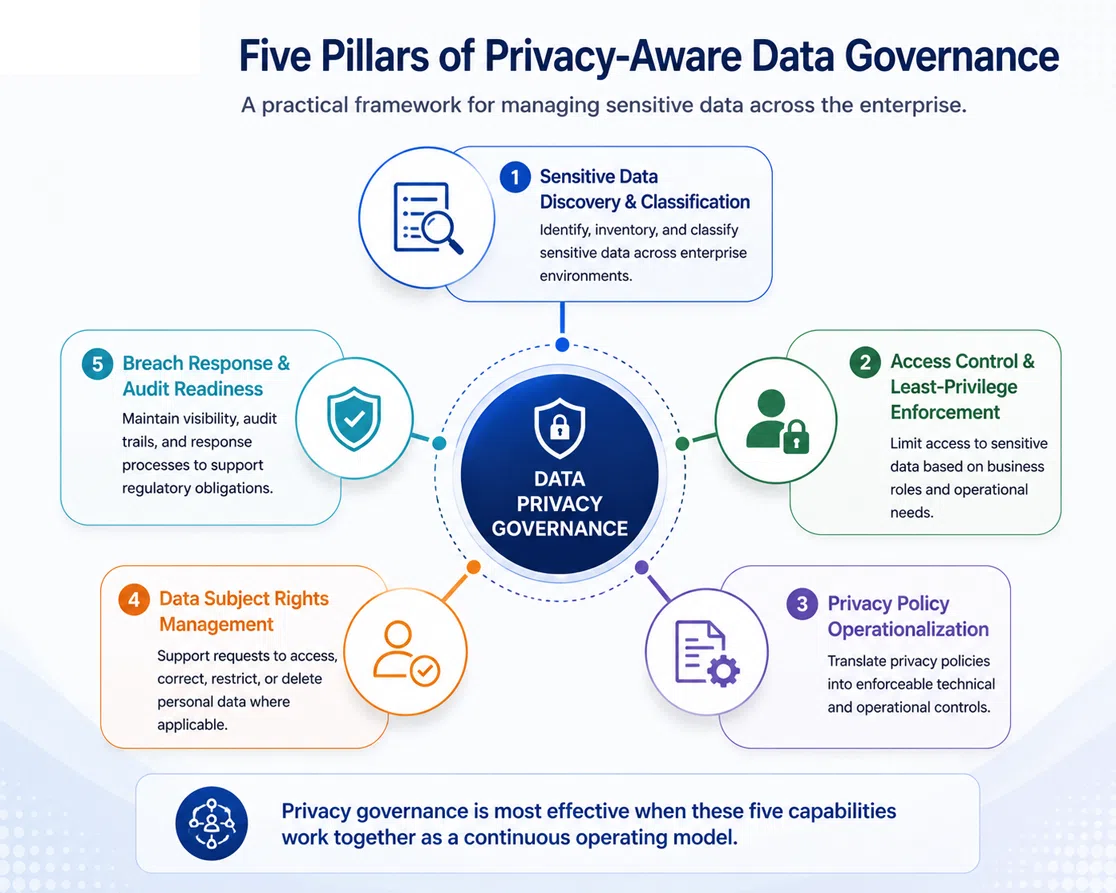
Sensitive Data Discovery and Classification Know what you have before you govern it
You cannot protect data you have not found. Automated discovery tools, Microsoft Purview, BigID, AWS Macie for cloud environments, scan data stores, apply classification labels, and produce an evidence-based inventory of where sensitive data lives and what category it falls into.
Classification labels (confidential, restricted, internal, public) applied at the point of creation persist as data moves between systems. This is the foundational layer every other privacy governance control builds on.
Access Control and Least-Privilege Enforcement Reduce the blast radius before an incident occurs
At least-privilege access means every user and system has access to the minimum data required to perform their function, and nothing more. In practice, implementing a least-privilege requires both an identity governance framework and an automated access certification process.
Platforms like Varonis and Microsoft Entra ID Governance automate access reviews, flag over-privileged accounts, and remove stale access automatically. Without automation, access governance is a manual process that does not scale.
Privacy Policy Operationalization Make policy enforceable, not aspirational
A data privacy policy that is not embedded in platform-level controls is not operationalized; it is published. Operationalization means data loss prevention (DLP) rules in Microsoft Purview that block sensitive data from being emailed externally, retention policies that automatically archive or delete data when its purpose expires, and consent management workflows in OneTrust that enforce lawful basis requirements before personal data is collected.
Data Subject Rights Management Respond to rights requests without manual scrambling
GDPR, CCPA, and similar regulations give data subjects the right to access, correct, restrict, and delete their personal data. Fulfilling these rights requires knowing where personal data lives, which brings you back to classification.
OneTrust and Collibra both provide data subject request management workflows that automate the discovery and fulfillment process. Manual fulfillment of DSRs at scale is not sustainable, and a delayed or incomplete response is itself a regulatory violation.
Breach Response and Audit Readiness When the worst happens, governance determines the outcome
Data governance does not prevent any breach. It determines how quickly you can identify what was exposed, notify the right parties within regulatory deadlines, and demonstrate to regulators that you had appropriate controls in place.
An organization with governed data, classified, access-controlled, with documented lineage and audit trails, can respond to a breach or regulatory inquiry in hours, not weeks. That difference is measured in fines avoided; litigation settled, and executive liability managed.
Your sensitive data has access control gaps you haven’t found yet.
BluEnt’s enterprise data governance consultants have implemented privacy governance programs across 14 business units in regulated industries. Request a proposal tailored to your organization’s regulatory obligations and data environment.
BluEnt in Practice: Sensitive Data Governance at Scale
A US-based enterprise operating across 14 business units engaged BluEnt when its AI deployment strategy stalled. The immediate blocker: 58 terabytes of enterprise data in Egnyte, unclassified and ungoverned, with no clear inventory of what sensitive data existed or who had access to it.
The privacy challenge embedded in this environment was significant. Employee PII, client financials, vendor contracts, and legally privileged correspondence were co-mingled with operational project files. No classification framework existed. Access to permissions had not been reviewed in years. Before any AI tool could be deployed safely, the organization needed to know where its sensitive data was and who could see it.
BluEnt delivered a privacy governance framework as part of a 10-week engagement. Sensitive data categories were identified and classified across the Egnyte environment. Access controls were reviewed and restructured on least-privilege principles. A data privacy policy framework was documented and embedded in platform-level DLP rules.
The outcome was not just compliance with readiness. The classification and access governance work became the technical prerequisite for responsible Microsoft Copilot deployment, because Copilot’s security model surfaces data based on existing access permissions. Governing the sensitive data first meant AI could be deployed safely, with data protection controls in place from day one.
Client details are shared with permission. Engagement delivered by BluEnt’s data governance practice, US.
Recommended Reading:
How to Start: A 4-Step Privacy Governance Foundation
Most enterprises do not need a multi-year transformation to reduce their sensitive data risk meaningfully. They need a clear starting point and a structured approach that delivers measurable results within 90 days.
Run a Sensitive Data Discovery Scan
Before you assign ownership or write policies, know what you have. A discovery scan using Purview, BigID, or equivalent tools produces an evidence-based inventory of sensitive data categories, locations, and current access permissions. This is the foundation for every subsequent governance decision to rest on.
Assign a Data Privacy Owner for Each Sensitive Domain
Governance without ownership is an administration without accountability. Assign a named owner for each sensitive data domain, HR data, client financial data, legal records, with defined authority to make access and classification decisions within that domain.
Operationalize One Policy Before Writing the Next
Start with the policy that addresses your highest-risk sensitive data category. Embed it in platform controls. Measure compliance. Prove it works before expanding. Organizations that write comprehensive policy frameworks before operationalizing a single one consistently fail at implementation.
Schedule Access Certification on a Quarterly Cadence
Access rights decay faster than annual reviews can manage. Set up automated access certification reviews on a quarterly cycle for your highest-sensitivity data domains. Automate the removal of stale access where platform tooling supports it. This single control reduces your exposure surface faster than most other governance investments.
Hire data governance consultants who specialize in sensitive data at enterprise scale.
BluEnt’s data governance consulting team has delivered privacy governance programs across regulated industries and multi-jurisdictional enterprises. Book a strategy session to discuss your regulatory obligations and receive a scoped proposal.
Frequently Asked Questions
What is the difference between data privacy and data governance?Data governance is the broader framework covering all data assets: ownership, quality, policies, and lifecycle management. Data privacy governance is a specific application of data governance principles to personal and sensitive data, the subset of governance that addresses regulatory compliance, access control, and data subject rights. You need data governance to do data privacy governance well. The two are not interchangeable.
Which regulations require data privacy governance?GDPR (EU residents), CCPA/CPRA (California residents), HIPAA (US health data), and SOC 2 (enterprise software and services) are the most common drivers for enterprise data privacy governance programs. An increasing number of US states have passed or are passing their own privacy laws. ISO 27001 embeds privacy controls within its information security management framework. If your enterprise operates across multiple jurisdictions, you are likely in scope for several of these simultaneously.
How is data privacy governance different from data security?How is data privacy governance different from data security? Data security covers the technical controls that protect data from unauthorized access, theft, or destruction: encryption, firewalls, endpoint protection, access authentication. Data privacy governance covers the policies and accountability frameworks that determine what data should be collected, how it should be used, who owns it, and how long it is retained. Security protects data from external threats. Privacy governance ensures that the data you hold is managed appropriately in the first place.
What tools support enterprise data privacy governance?Microsoft Purview provides data classification, sensitivity labeling, data loss prevention, and compliance management for Microsoft 365 and Azure environments. BigID and Varonis specialize in sensitive data discovery and access governance across cloud and on-premises environments. OneTrust covers privacy management, consent management, and data subject rights workflows. Collibra provides enterprise data governance with privacy capabilities including data cataloging and policy management. The right toolset depends on your existing infrastructure and data estate.
How long does it take to implement a data privacy governance program?A focused first phase covering sensitive data discovery, ownership assignment, and one operationalized policy can show measurable risk reduction within 60 to 90 days. A full enterprise privacy governance program covering all sensitive data domains, automated access governance, and regulatory compliance workflows typically takes 6 to 12 months to design and operationalize. Based on BluEnt’s engagements, initial classification and access control frameworks have been delivered within 10 weeks in complex, multi-platform enterprise environments.
Where should an enterprise start with data privacy governance?Start with a sensitive data discovery scan to build an evidence-based inventory of what sensitive data you hold and where it lives. Then identify the one data domain where a privacy failure would cause the most immediate regulatory or reputational harm, typically employee PII, client financial data, or health-related records, and govern that domain first. Demonstrate measurable results before expanding to additional domains. Attempting to govern all sensitive data simultaneously is the most common reason privacy governance programs fail to deliver.

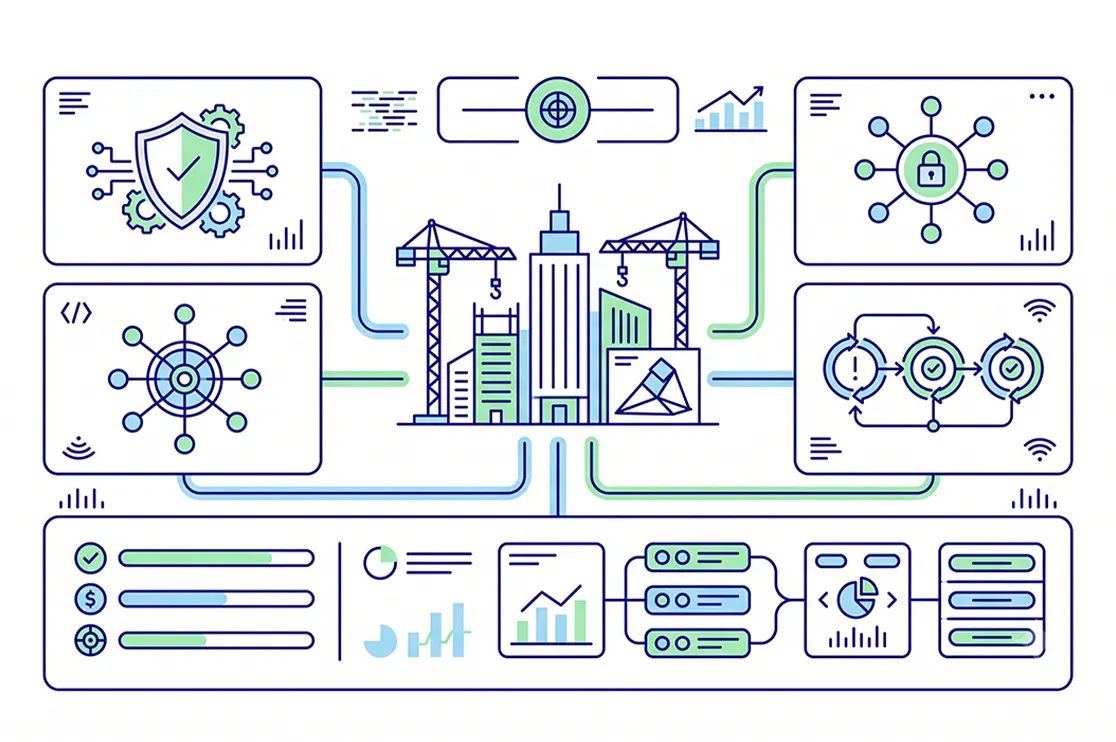 Governing AI Tools in AEC: Copilot, Digital Twins, and Generative Design
 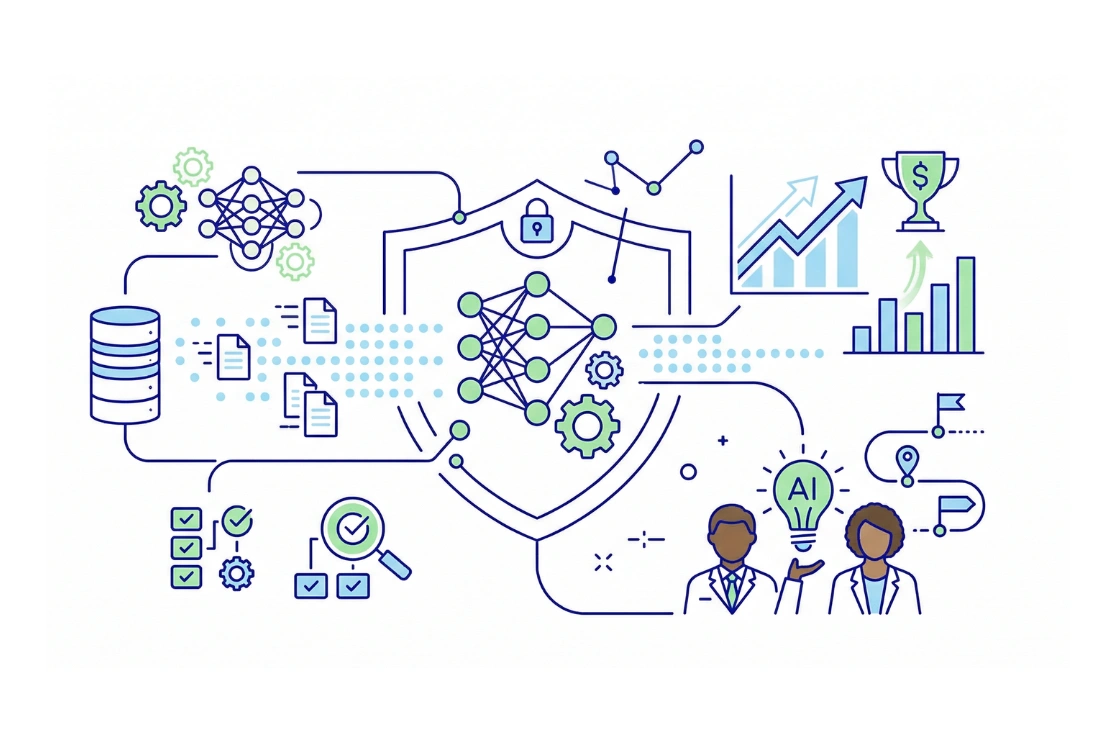 Data Governance for AI and Advanced Analytics: Building the Foundation That Works
 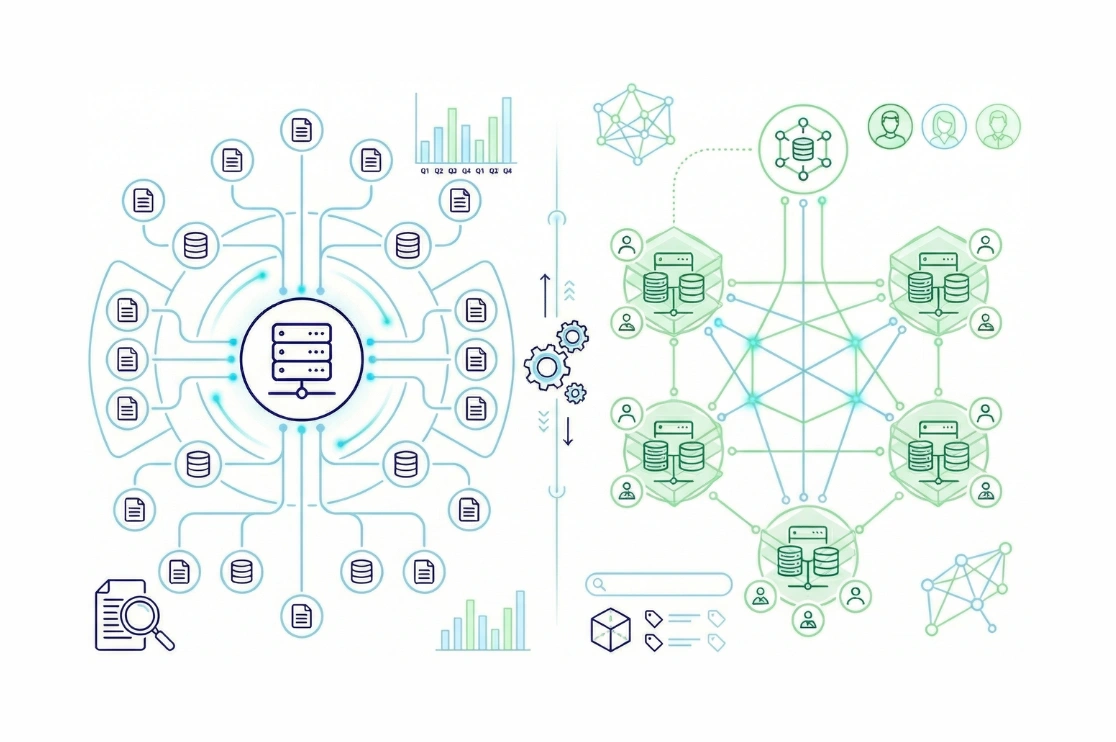 Centralized vs. Federated vs. Hybrid Data Governance: Which Model Fits Your Organization
  Data Governance Roles and Responsibilities in AEC Organizations